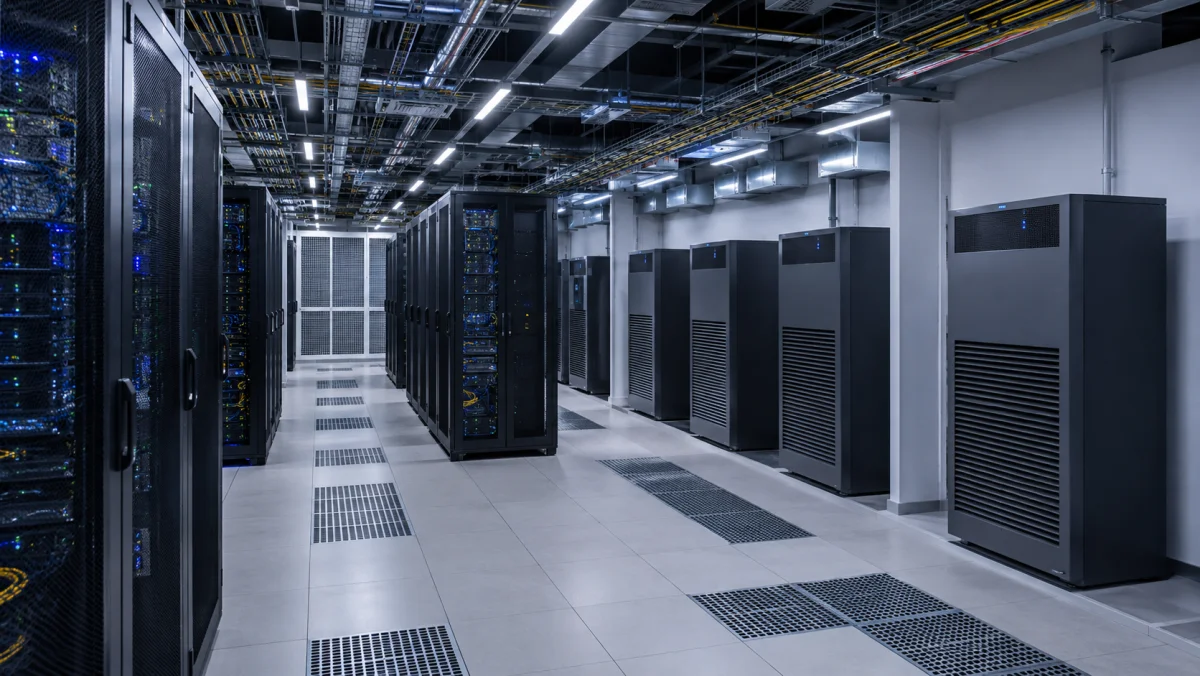
Server room air-conditioning redundancy keeps temperatures within limits during equipment failure, maintenance or a temporary increase in IT load. In an ordinary room, an air-conditioner failure causes discomfort. In a server room, it may overheat racks, shut down IT equipment and interrupt digital services.
One of the most common arrangements is N+1. N represents the number of cooling units required to cover the design heat load, while the additional unit provides redundancy. If one duty unit fails or is removed for service, the remaining equipment must maintain acceptable conditions.
What N+1 means
An N+1 cooling arrangement is based on actual capacity, not simply the number of installed units. The design first calculates heat from servers, UPS systems, lighting, occupants, the building envelope and future expansion. It then determines how many cooling units are required.
For example, a server room needing 60 kW of cooling may require three units with 20 kW of available capacity each. N equals three, so N+1 requires four units. Three can cover the design load while the fourth remains available or participates in rotation.
Why an extra unit alone is not enough
An additional unit provides resilience only when power, the refrigerant or water circuit, drainage, controls and automatic startup are available. A shared breaker, pump or chiller remains a single point of failure.
A standby server room air conditioner must be tested under load and included in regular duty rotation.
Air-conditioner rotation
Air-conditioner rotation distributes running hours by changing duty and standby roles according to time or run hours. Frequent changeover creates unnecessary starts, while long intervals may hide a standby fault.
Automatic air-conditioner changeover
Automatic air-conditioner changeover occurs after a unit alarm, high temperature, airflow loss or communication failure. The controller starts standby cooling and sends a BMS alarm. If temperature keeps rising, all available units may be enabled.
Capacity calculation for N+1
The calculation includes server power, UPS losses, lighting, occupants, the building envelope and future expansion. Nearly all IT electrical power becomes heat.
Cooling capacity must be checked at actual outdoor, chilled-water or refrigerant conditions and site elevation. Redundancy should not rely on optimistic catalog ratings.
N+1 and airflow distribution
Total capacity does not guarantee cooling at every rack. Loss of one unit changes airflow and may overheat a remote hot zone before average room temperature rises.
The design should test the loss of each unit and use aisle containment, raised-floor, overhead or in-row cooling. Sensors belong at rack air inlets.
Redundancy of the cooling source
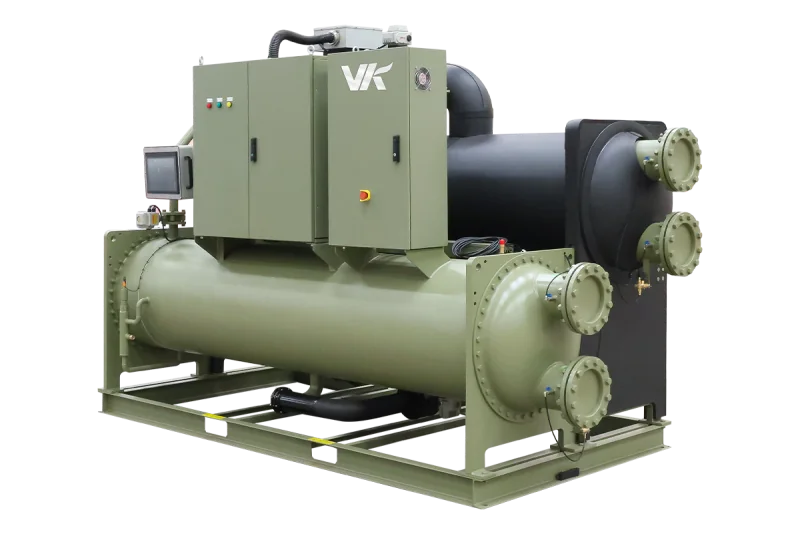
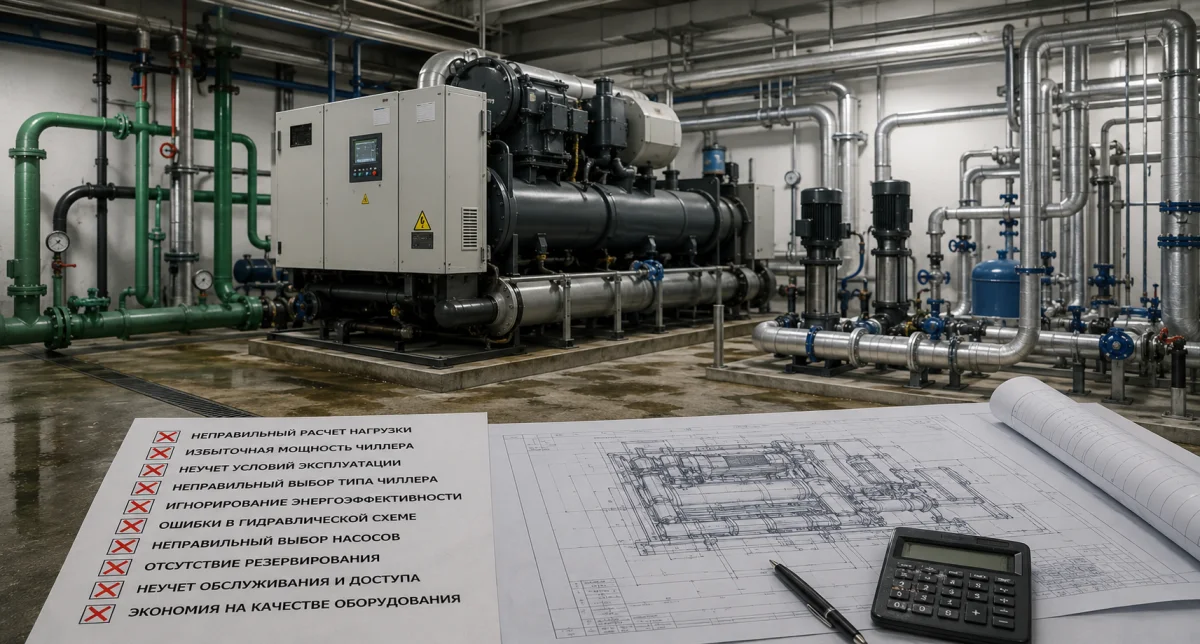
Chilled-water systems must also provide redundancy for chillers, pumps, valves, piping and power. One common pump or chiller remains a single point of failure. Critical facilities may use multiple chillers, N+1 pumps, looped piping and independent supplies.
Electrical power and controls
Data center resilience also depends on cooling power. Duty and standby units should use independent circuits and backup power. Startup order and compressor starting current must be checked so several units do not overload the generator.
Sensors and monitoring
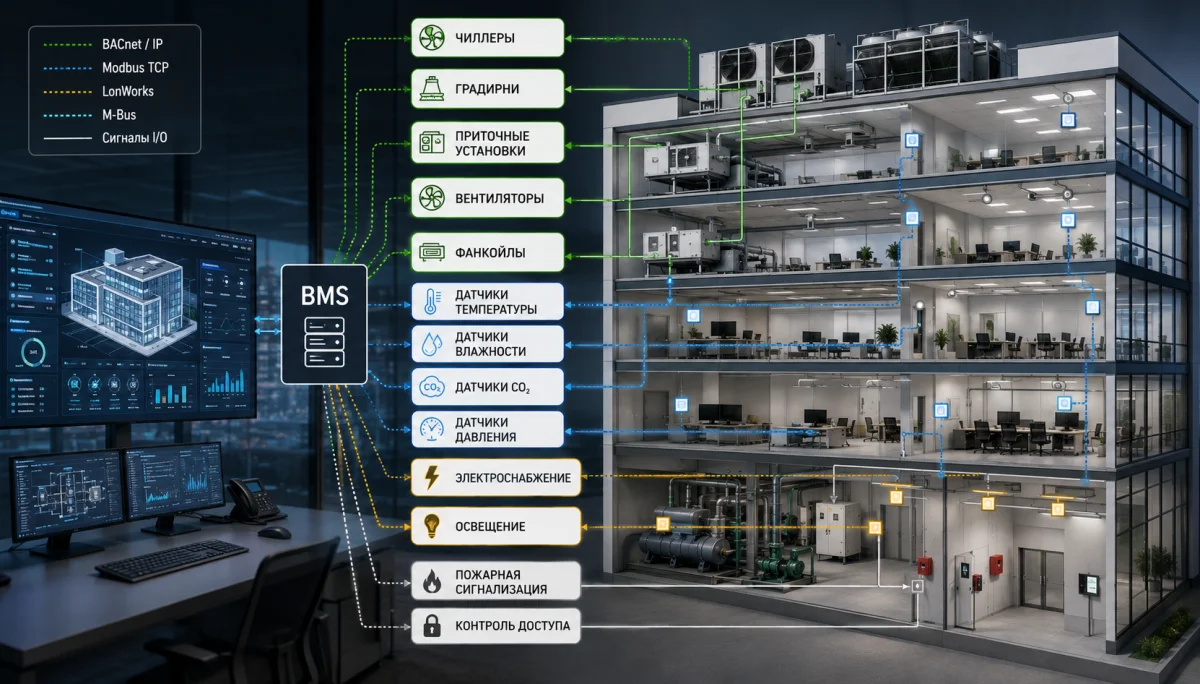
The system monitors temperature, humidity, fans, filters, leaks and compressor status. BMS or DCIM records trends, alarms, runtime and standby condition. Large rooms measure rack-inlet temperature at several heights.
Failure testing
During planned testing, duty units are stopped one at a time to confirm standby startup, stable temperature and alarm transmission. Communication loss, sensor or pump failure and power restoration should also be tested and recorded.
N+1, N+2 and 2N
N+1 protects against one equipment failure and is a common minimum for server rooms of moderate criticality. N+2 adds two spare units, allowing one failure while another unit is under planned maintenance. A 2N design creates two fully independent cooling systems, each capable of supporting the complete load.
Higher redundancy increases capital cost, plant space, electrical demand and maintenance requirements. The correct level should be based on acceptable downtime, the business impact of failure and the criticality of the hosted IT services.
Failure scenarios required in the design
The design should be checked for the loss of every cooling unit, pump, chiller, power circuit and controller. Planned maintenance, maximum summer conditions, restart after a power failure and simultaneous recovery of several systems should also be reviewed.
For each scenario, engineers determine available capacity, airflow changes, standby startup time and the expected temperature rise. A system may have enough nominal capacity but still fail operationally when the standby unit starts too slowly.
Commissioning and operating documentation
Commissioning should confirm unit capacity, airflow, sensor readings, rotation schedules, alarm thresholds and communication with BMS or DCIM. The test plan identifies which unit is isolated, the expected response and the maximum permitted rack-inlet temperature.
Operators need accurate as-built drawings, control sequences, alarm contacts and emergency procedures. The documentation should explain how to place one unit in maintenance mode, force a rotation, start standby cooling manually and respond when the automatic sequence does not complete.
Common mistakes
- defining N+1 by unit count without checking real capacity;
- using one common power source, pump or outdoor unit;
- providing no automatic standby startup;
- failing to test rotation and leaving the standby unit idle;
- measuring temperature at only one room location;
- ignoring airflow changes after a unit failure;
- performing no regular failure testing.
Conclusion
Server room air-conditioning redundancy using N+1 means that after one unit fails or is removed, the remaining equipment still covers the complete design load. This requires accurate heat-load calculation, independent engineering paths, rotation, automatic changeover, monitoring and testing. NIKLAND designs resilient cooling for server rooms and data centers according to IT load, electrical power, airflow distribution and uptime requirements.