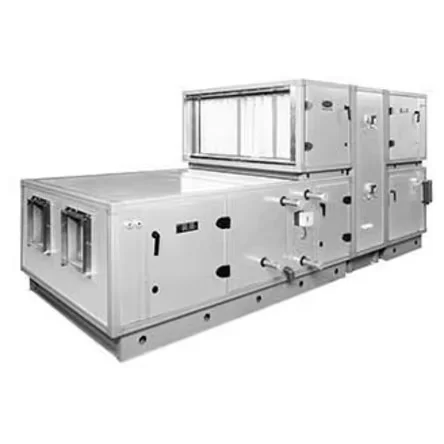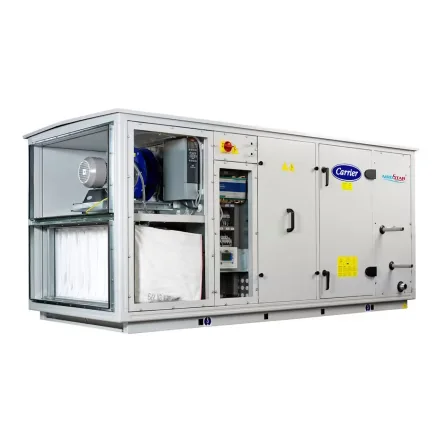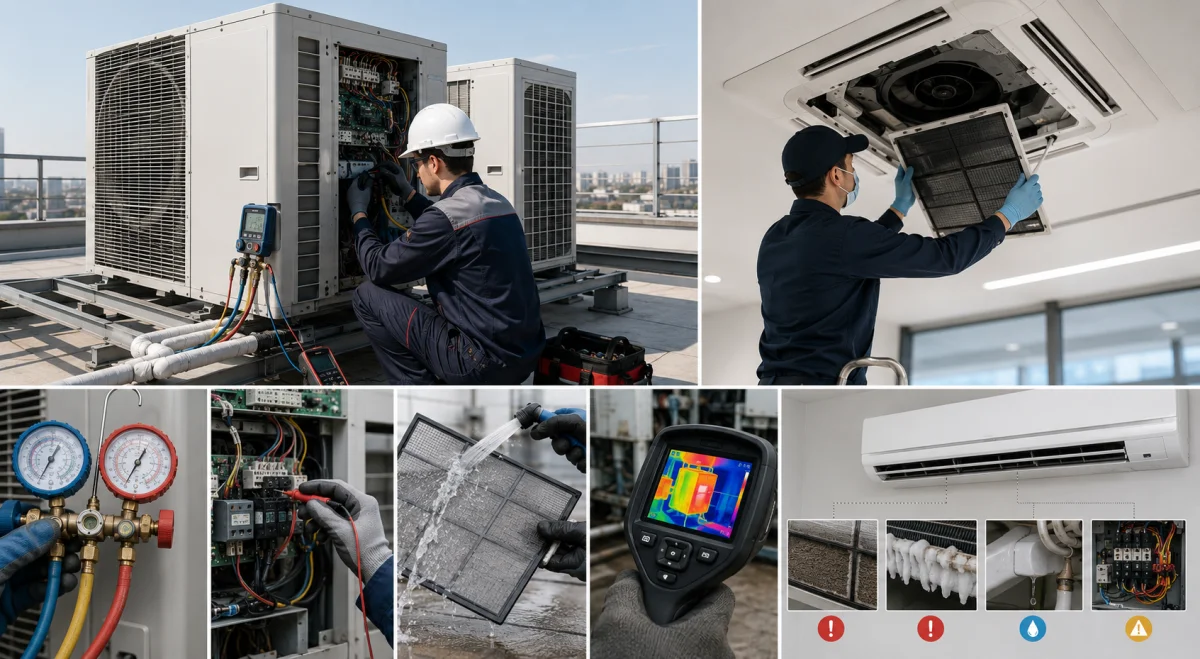

Air-handling unit maintenance is required to preserve design airflow, indoor air quality, energy efficiency and safe equipment operation. A supply-and-exhaust unit moves large volumes of air every day, so filters load with dust, coils become dirty, belts stretch, bearings wear and drainage and controls require regular inspection.
A brief annual visit is not a complete maintenance program. Service frequency depends on building use, outdoor dust levels, operating schedule, filtration class, heat recovery, heating and cooling coils, humidification and BMS integration.
What a complete maintenance procedure includes
A full procedure includes external inspection and checks of filters, fans, motors, heat exchangers, dampers, actuators, heat recovery, drainage, sensors and controls. The technician evaluates both component condition and actual operating values such as airflow, pressure drop, temperature, motor current, vibration and unusual noise.
Supply ventilation service should be recorded in a maintenance log containing the date, completed work, measured values, defects and recommendations. This makes it possible to identify declining performance and replace components before an unplanned shutdown.
Checks before maintenance
Before work begins, the AHU is placed in a safe condition, electrical power is isolated and accidental startup is prevented. Technicians review controller alarms, supply-air temperature, access doors, service panels, flexible connections and casing condition. Unusual sound, vibration, odor, leakage and condensate are also noted.
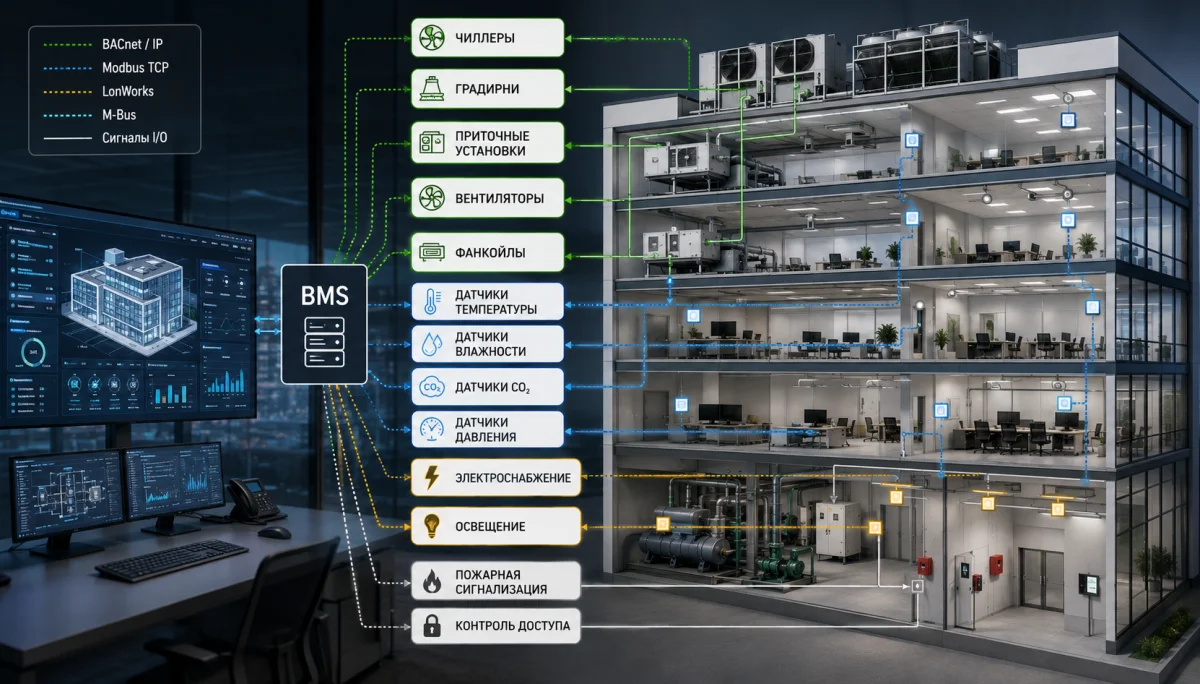
Where the unit is connected to a BMS, temperature, pressure, damper-position and energy trends should be reviewed. Sudden changes often indicate a loaded filter, sensor fault or reduced airflow.
Ventilation filter replacement
Ventilation filter replacement should be based on actual pressure drop as well as calendar time. A loaded filter increases resistance, reduces airflow and forces the fan to use more power. Severe blockage can deform the filter and allow dust to enter downstream sections.
During service, filter frames, seals and installation direction are checked. Bag filters must not be torn or collapsed. Coarse and fine filters are replaced when they reach the manufacturer pressure limit or their approved service interval. Construction work and seasonal dust can require an unscheduled replacement.
Cleaning an air-handling unit
Cleaning an air-handling unit includes removing dust, debris and moisture from internal surfaces. Special attention is given to downstream filter sections, drain pans, rails, corners and access-door areas. Vacuum equipment, soft brushes and products compatible with casing and coil materials should be used.
Motors, sensors, actuators and electrical connections must not be flooded. After wet cleaning, all sections must dry completely. Where biological contamination is present, an approved disinfectant is used and the source of persistent moisture must be corrected.
Fans and motors
Fan wheels are cleaned because uneven deposits disturb balance and increase vibration. Mountings, vibration isolators, flexible connectors, guards and bearings are inspected. Belt-driven fans require checks of belt tension, wear and pulley alignment.
Motor current is measured and compared with the nameplate value. Excessive current may result from mechanical resistance, dirt, incorrect airflow or motor damage. EC fans also require checks of control signals, speed and fault codes.
Dampers, heating and cooling coils
Outdoor-air, exhaust and recirculation dampers must open and close freely. Blades, linkages, seals, actuators and end switches are inspected. A leaking outdoor damper can admit cold winter air and increase the risk of freezing a water heating coil.
Water heating coils are checked for dirt, corrosion and leakage. Control valves, pumps, frost sensors and capillary thermostats are tested. Electric heaters require cleaning and checks of contacts, power stages, overheat thermostats and fan interlocks.
The cooling coil is cleaned and inspected for damage. Drain pans and condensate lines must remove water freely. A blocked trap causes overflow, leakage and odor. Pipe slope, joint tightness and the water seal should all be verified.
Heat-recovery maintenance
Heat-recovery maintenance depends on the design. A plate heat exchanger is inspected for blocked passages, damaged plates, bypass operation and frost protection. Dirty surfaces reduce heat transfer and increase air resistance.
A rotary heat exchanger requires checks of the wheel, belt, motor, bearings, seals and rotational speed. A failed drive sharply reduces heat-recovery efficiency. A run-around coil system requires inspection of the pump, pressure, glycol concentration, piping tightness and both heat exchangers.
Ventilation diagnostics
Ventilation diagnostics includes measurement of airflow, static and dynamic pressure, temperature, humidity and electrical values. Results are compared with design data, equipment documentation and previous service records.
If airflow has decreased, filters, dampers, coils, fan rotation, variable-frequency drives and duct condition are checked in sequence. High motor temperature, vibration or noise may indicate a dirty impeller, worn bearing or balance problem.
Controls and sensors
Temperature, pressure, humidity and air-quality sensors are compared with reference instruments and calibrated or replaced where necessary. One inaccurate sensor can cause improper operation of heaters, coolers, dampers and fans.
Technicians test frost protection, dirty-filter alarms, fire mode, schedules, BMS communication and safety interlocks. After maintenance, the AHU is started and tested in every available operating mode.
Recommended service intervals
- daily or weekly — check alarms, temperature, sound and leakage;
- monthly — inspect filters, drainage, dampers and casing;
- quarterly — check fans, actuators, controls and pressure drops;
- every six months — perform extended cleaning of heat recovery and coils;
- annually — complete diagnostics, airflow measurement and safety testing;
- as required — after renovation, failure, severe contamination or complaints.
Healthcare facilities, food production, data centers and continuously operated buildings may require much shorter intervals. The final schedule should follow operating conditions and manufacturer requirements.
Common maintenance mistakes
- replacing a filter without checking frame sealing;
- cleaning only visible surfaces;
- ignoring drain pans and traps;
- performing no airflow or pressure measurements;
- using aggressive chemicals on coils;
- starting the AHU before sections are dry;
- keeping no maintenance records;
- resetting an alarm without correcting its cause.
Conclusion
Air-handling unit maintenance should follow a defined procedure rather than begin only after noise, odor or insufficient airflow appears. Regular filter replacement, section cleaning, heat-recovery service and diagnostics of fans, drainage and controls preserve performance and reduce failure risk. NIKLAND specialists service supply-and-exhaust units, measure operating values, correct faults and prepare recommendations for continued equipment operation.