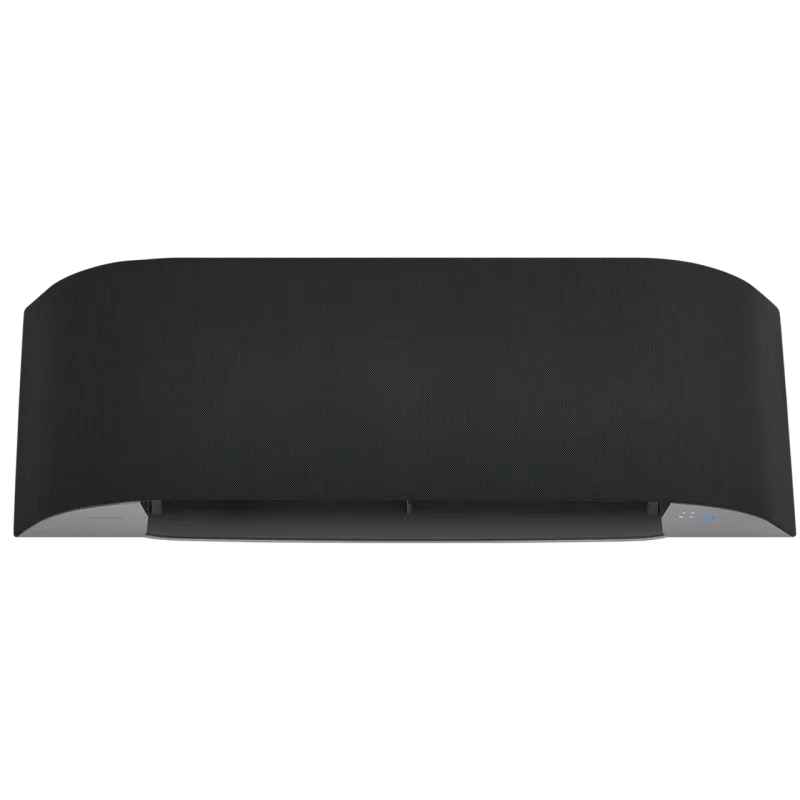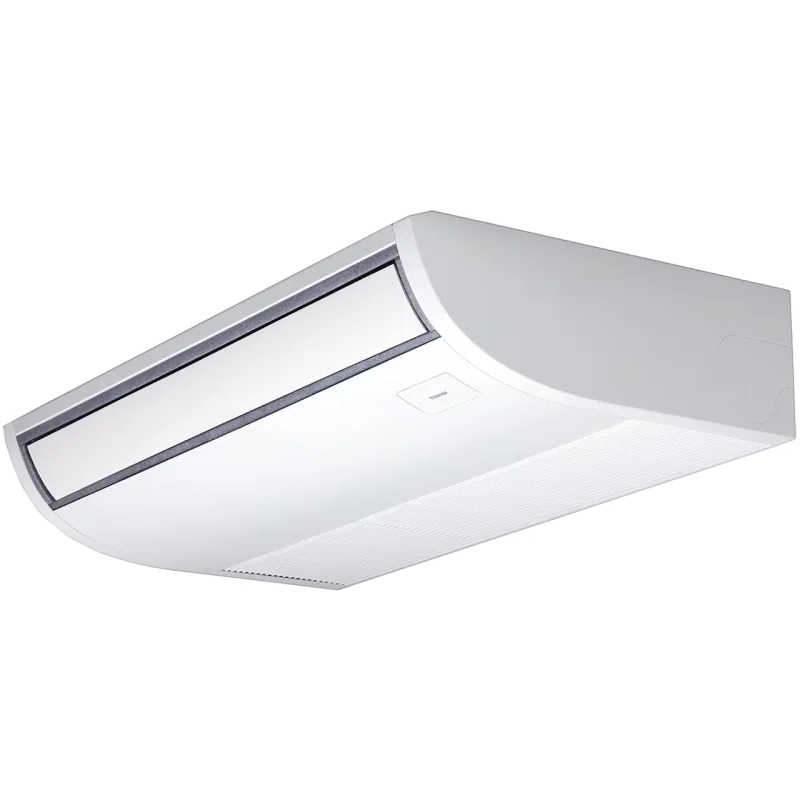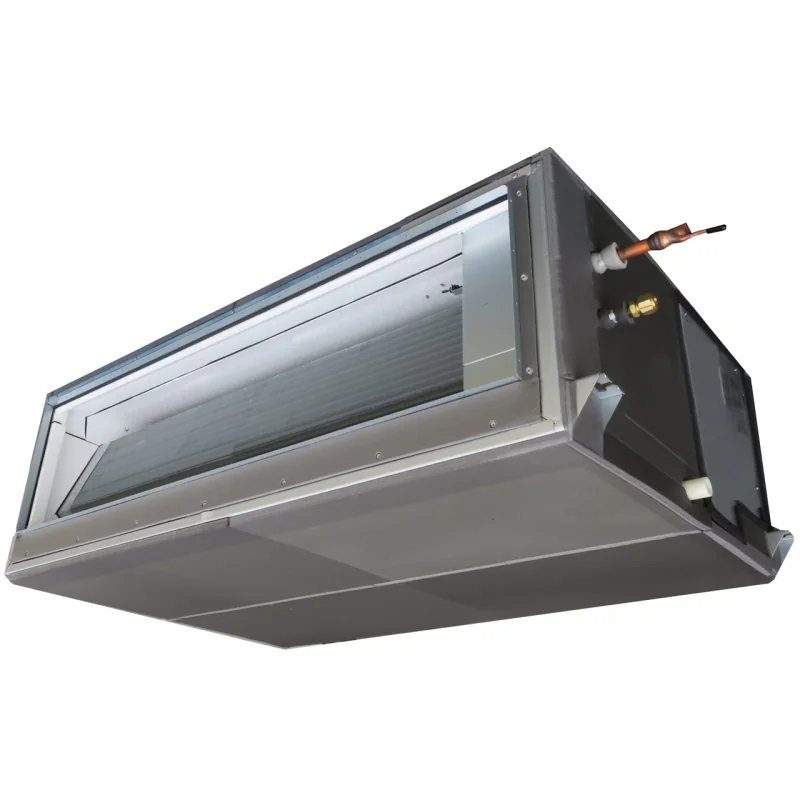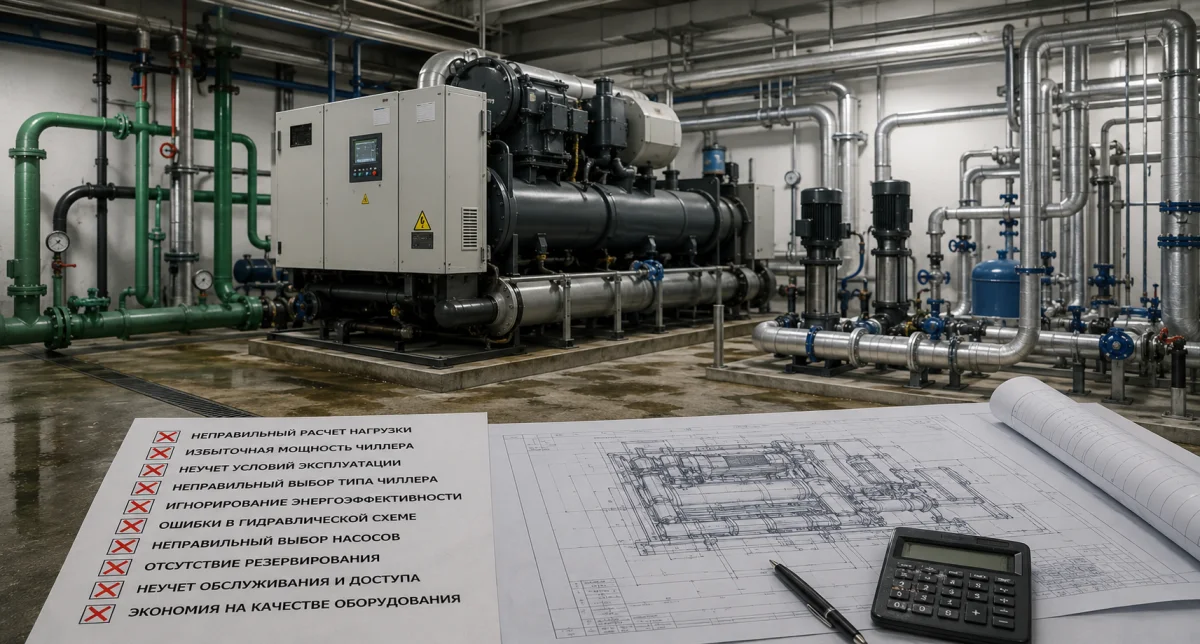
VRF system maintenance is required to keep outdoor and indoor units stable, preserve capacity and prevent expensive compressor failures. A multi-zone system combines many indoor units, long refrigerant lines, branch joints, electronic valves and complex controls. A small deviation in one component can therefore affect the complete system.
The maintenance schedule depends on building use, operating hours, air contamination, number of units and manufacturer requirements. A standard office and a hotel operating around the clock should not follow the same service interval.
What VRF service includes
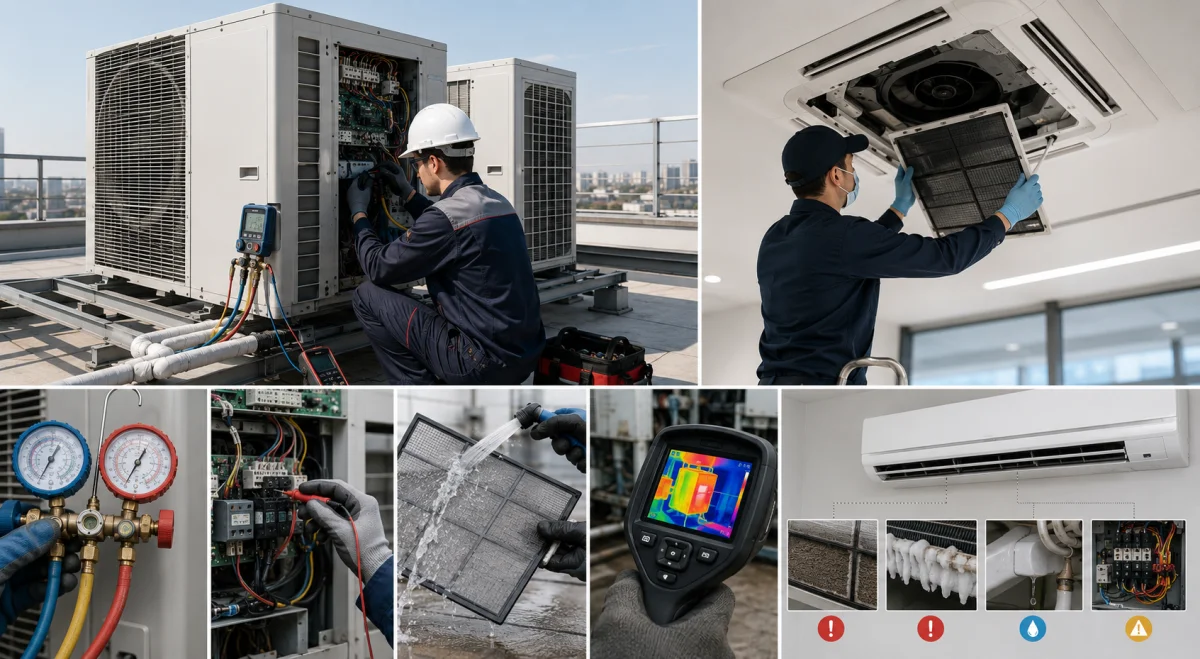
VRF service includes equipment cleaning, operating measurements, control-system checks and refrigeration-circuit analysis. Washing filters alone is not complete maintenance for a multi-zone system.
- cleaning filters and indoor heat exchangers;
- checking condensate drains and drain pumps;
- cleaning the outdoor heat exchanger;
- checking fans, supports and vibration;
- measuring temperatures, current and pressure;
- testing refrigerant-circuit tightness;
- diagnosing sensors and electronic valves;
- checking communication and error history;
- testing cooling and heating operation.
Maintenance frequency
A basic schedule normally includes two comprehensive inspections each year: before the cooling season and before the heating season when the system provides heat. Indoor filters require more frequent cleaning, usually every one to three months depending on dust and operating intensity.
Hotels, restaurants, healthcare buildings, shopping centers and industrial facilities may require shorter intervals. A contaminated filter reduces airflow, increases sound, lowers capacity and can cause the indoor coil to freeze.
Indoor units and drainage
Service begins with inspection of the casing, louvers and supports. Filters, evaporator, fan wheel and drain pan are then cleaned. Dirt on the heat exchanger reduces heat transfer, while contamination on the fan creates imbalance and additional noise.
Condensate drainage requires special attention. A blocked pipe, dirty drain pan or failed pump can cause water leakage into the room. After cleaning, technicians should pour water through the drain and confirm that it flows correctly.
Outdoor unit
The outdoor heat exchanger should be cleaned of dust, fibers, leaves and other contamination. Restricted heat transfer raises condensing pressure, increases compressor current and reduces efficiency. Cleaning must not damage aluminum fins or electrical components.
Fans, vibration isolators, supports, power terminals and circuit boards are also inspected. Unusual sound, overheating marks, darkened contacts or oil traces require further diagnosis.
VRF diagnostics
VRF diagnostics should not rely on one pressure or temperature reading. The technician compares outdoor-unit data, indoor-unit parameters, control commands, compressor current, electronic-valve position and the alarm history.
Dedicated service software displays operating parameters in real time. It helps identify unstable communication, incorrect addressing, sensor deviation, low airflow and improper refrigerant distribution.
Refrigerant-circuit checks
Low refrigerant charge reduces capacity, increases superheat and may damage the compressor. Excessive charge is also dangerous because operating pressure rises. Refrigerant should not be added only because a room does not feel cold enough.
If leakage is suspected, technicians inspect joints, branch components, service ports and heat exchangers. After repair, the affected section is evacuated and charged by calculated weight according to piping length.
VRF errors and fault symptoms
VRF errors appear as codes on a local controller, central controller or outdoor-unit board. One code can have several possible causes, so resetting power is not a proper repair.
- some rooms do not reach the set temperature;
- the system starts and stops frequently;
- sound or vibration has increased;
- water leaks from an indoor unit;
- ice forms on pipes or heat exchangers;
- error codes appear repeatedly;
- energy consumption has increased;
- heating or cooling starts after a long delay.
Common faults involve communication, sensors, fans, electronic expansion valves, compressors and drain pumps. The cause may be cable damage, loose contacts, incorrect addressing, contamination, refrigerant loss or circuit-board failure.
Why some indoor units do not operate
A problem with one indoor unit may originate elsewhere in the network. Possible causes include mode conflict, communication failure, addressing errors, a closed electronic valve, incorrect group configuration or insufficient refrigerant.
In a two-pipe VRF system, indoor units on one circuit normally cannot heat and cool at the same time. If users select opposite modes, some units may wait or operate with restrictions.
VRF system repair
VRF system repair should begin after the cause is confirmed. Replacing a board, sensor or compressor without complete diagnostics may not solve the problem and can increase cost.
Before compressor replacement, technicians should check supply voltage, winding resistance, pressure, oil condition and contamination in the circuit. If a compressor has failed mechanically, the system may require cleaning and filter replacement in addition to correcting the original cause.
Controls and communication
VRF equipment uses digital communication between outdoor and indoor units. Cable damage, reversed polarity, poor connections or electrical interference can cause unstable operation and intermittent errors.
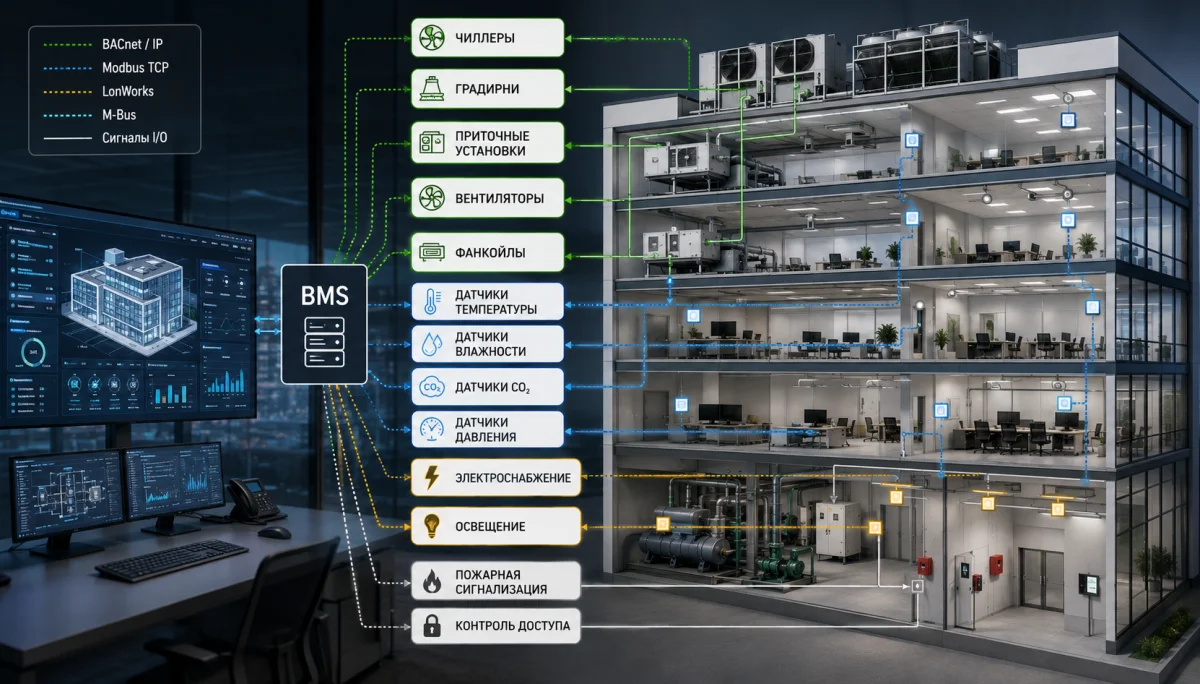
Maintenance includes checking addressing, connections, central controllers and BMS integration. After configuration changes, every connected unit must be confirmed by the control system.
Heating operation
At low outdoor temperature, the system periodically enters defrost mode. Indoor units temporarily reduce heating output or stop their fans. This is normal, but excessively frequent cycles may indicate a dirty heat exchanger, sensor problems or low refrigerant charge.
Service report
The report should record the date, completed work, error codes, temperatures, current, pressure, filter condition, drain-test results and identified defects. Comparing reports helps reveal gradual performance loss before a major failure occurs.
Large facilities should maintain a register of all outdoor and indoor units with addresses, models, serial numbers and locations. This reduces troubleshooting time and simplifies spare-parts ordering.
Common maintenance mistakes
- limiting service to filter cleaning;
- resetting an error without finding its cause;
- adding refrigerant without a leak test;
- cleaning heat exchangers with excessive pressure;
- not testing drainage after cleaning;
- ignoring the alarm history;
- replacing boards without checking power and communication;
- failing to record measured parameters.
Conclusion
VRF system maintenance should include cleaning, refrigeration-circuit diagnostics, drain checks, controls, communication and actual operating measurements. Regular service reduces energy use, prevents water leaks and identifies faults before compressor failure. NIKLAND engineers perform diagnostics, preventive maintenance and repair of multi-zone systems according to the configuration and operating profile of each facility.