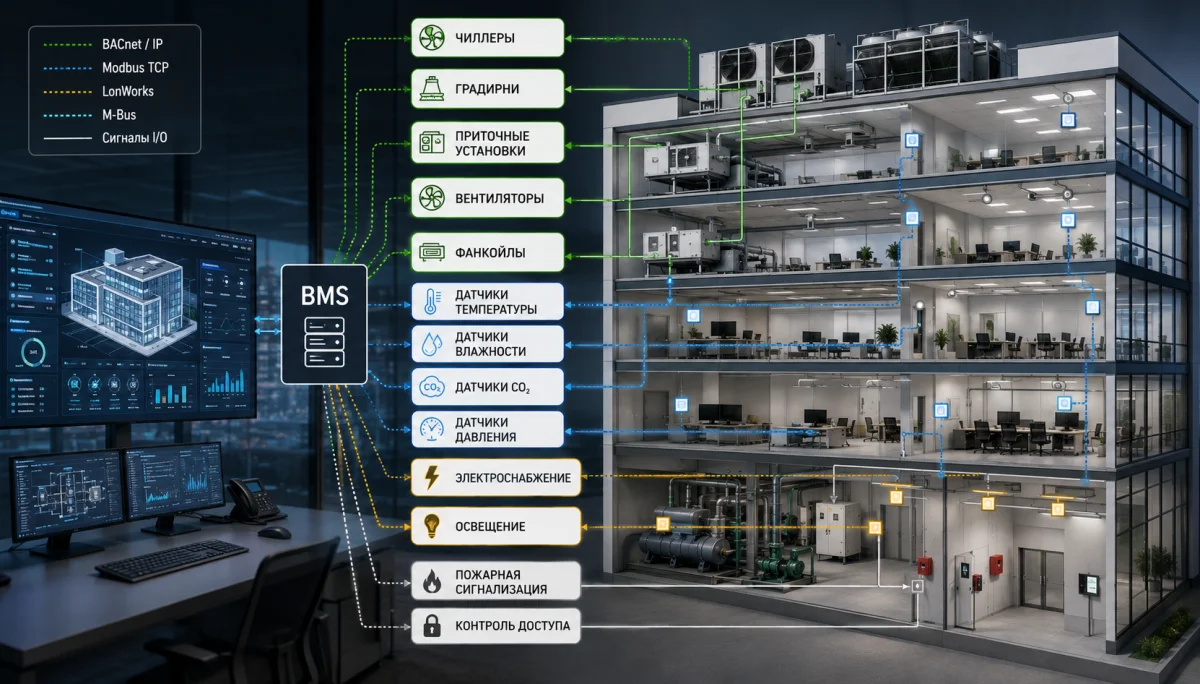
Ventilation with heat recovery supplies fresh outdoor air, removes stale indoor air and uses energy from the extract stream to preheat incoming air. In summer, cooler extract air can partly reduce the temperature of hot outdoor air. This lowers heating- and cooling-coil loads and reduces demand on the building HVAC system.
The extract air is not returned to occupied rooms. Energy passes through a separating surface or an intermediate element. Actual performance depends on airflow, temperature, humidity, pressure drop, sealing and frost protection, not only on the efficiency percentage shown in a catalog.
How heat recovery works
Heat recovery occurs while supply and extract air pass through the exchanger in separate channels. Warm extract air transfers part of its energy to cold outdoor air before discharge. The preheated supply air then needs only the remaining energy required to reach its delivery temperature.
Without recovery, all outdoor air must be heated from winter ambient temperature. The greater the airflow and annual operating hours, the more significant the potential energy saving.
Components of the air-handling unit
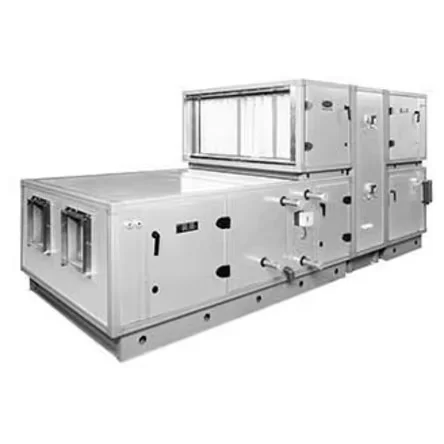
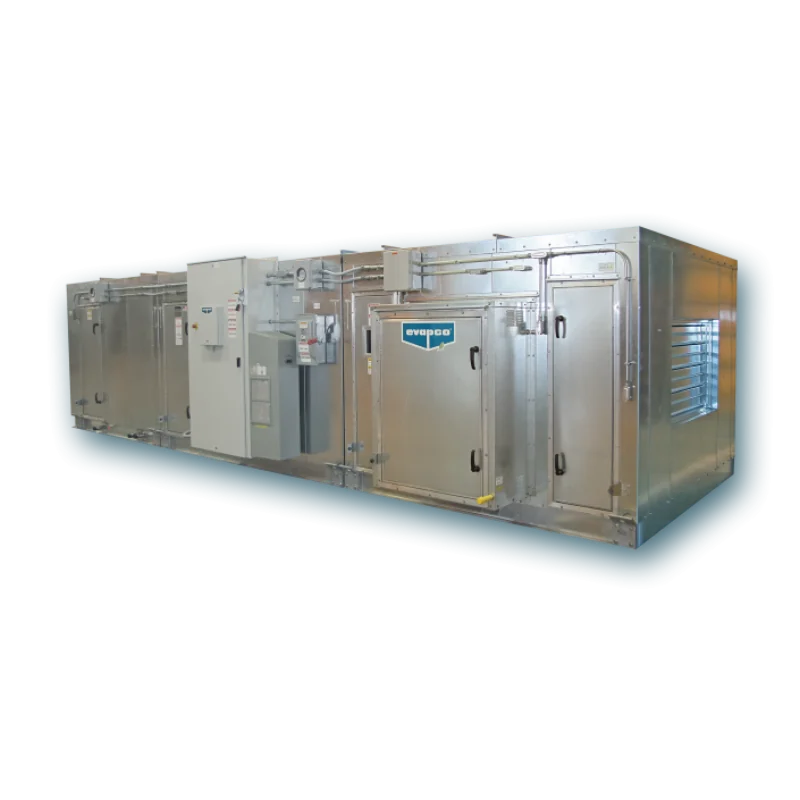
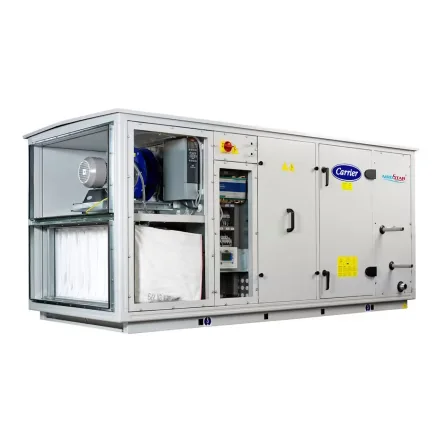
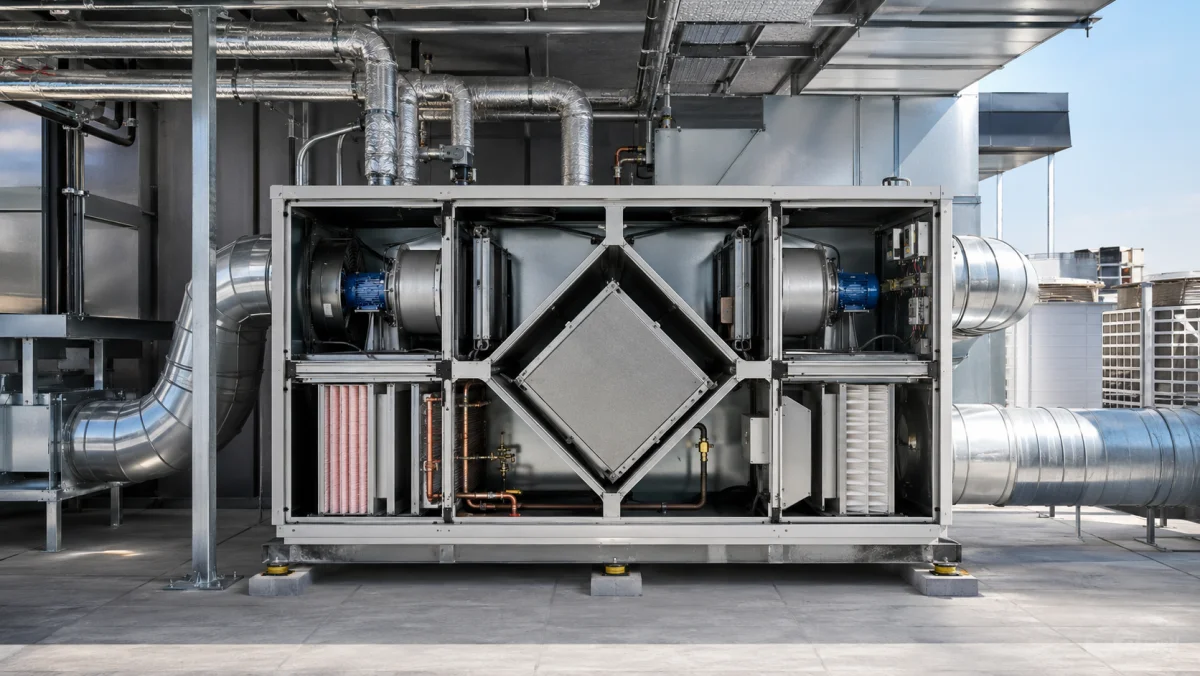
A supply and extract unit with a heat exchanger normally includes supply and extract fans, filters, dampers, a heat exchanger, a heating coil, sometimes a cooling coil, attenuators and controls. It may be supplied as one packaged unit or assembled from separate sections.
Plate heat exchanger
A plate heat exchanger consists of thin plates separating the supply and extract streams. Air passes through adjacent channels and heat crosses the plate walls. There are no moving parts in the exchanger itself, making the design mechanically simple.
Cross-flow and counterflow arrangements are available. Counterflow designs often provide higher temperature effectiveness. Standard metal plate exchangers transfer little moisture, although enthalpy membrane versions are also available.
Plate-exchanger advantages and limitations
- simple construction without a motor or drive;
- low risk of mechanical failure;
- good separation of supply and extract air;
- the possibility of summer bypass operation;
- good suitability for offices, shops and public buildings.
The main limitation is frost formation in winter. Condensate may freeze on the cold section and block the channels. The design therefore requires preheating, airflow control, bypass operation or periodic defrost.
Rotary heat exchanger
A rotary heat exchanger is a rotating wheel with a large heat-transfer surface. One section passes through extract air and stores energy, then rotates into the supply stream and releases it. Enthalpy rotors may transfer moisture as well as sensible heat.
Rotary units are compact at high airflow and perform well in cold climates. Wheel speed can be varied to control heat transfer. The system, however, requires a motor, drive components, seals and rotation monitoring.
Odor and contaminant carryover
A rotary exchanger can cause limited carryover of air, odors or contaminants between the two streams. This may be acceptable in normal offices but requires careful assessment in hospitals, laboratories, kitchens and industrial buildings.
Plate exchangers provide better separation, although poor frame sealing or physical damage can also create leakage. Exchanger type must be selected from extract-air quality rather than efficiency alone.
Frost protection
Frost protection is essential in Kazakhstan. During severe cold, exchanger surfaces may fall below the freezing point of condensate. Ice increases resistance and reduces ventilation airflow.
Protection may use electric or water preheating, reduced supply airflow, bypass control, temporary fan shutdown or rotary-speed adjustment. The sequence must preserve acceptable building pressure and avoid prolonged cold-air delivery.
Summer bypass
When outdoor air is cooler than indoor air and night cooling is useful, heat recovery may be undesirable. A bypass routes supply air around a plate exchanger or stops energy transfer by another method.
Controls compare outdoor, extract and setpoint temperatures. Sensor or logic errors may cause the system to warm supply air in summer or bypass useful recovery in winter.
How the unit is calculated
The designer first calculates supply and extract airflow from occupancy, air changes, moisture and contaminants. Winter and summer air conditions are then defined, together with the heating or cooling duty without recovery and the expected reduction from the exchanger.
Exchanger type, resistance, fans, coils, frost protection and controls are then checked. Calculations should include loaded-filter conditions so that design airflow remains available during normal operation.
When recovery is restricted
Heat should not be recovered without assessment from exhaust containing toxic substances, grease, aggressive vapors, explosive mixtures or strong odors. Contaminants may foul the exchanger or transfer to the supply stream.
Kitchens, laboratories and special industrial processes may require separate exhaust systems, run-around circuits or other arrangements. The solution must follow the process brief.
Installation and maintenance
The unit requires service space for filter replacement, exchanger cleaning, fan repair and rotary-drive access. Condensate drainage, insulation of outdoor ducts and tight shutoff dampers must be provided.
Maintenance includes filter replacement, exchanger cleaning and checks of sensors, bypass, drives, drainage and frost protection. A dirty exchanger increases pressure loss while reducing useful heat transfer.
Common mistakes
- selecting equipment only by the stated recovery percentage;
- providing no frost calculation;
- ignoring pressure loss from loaded filters;
- using an unsuitable exchanger with contaminated extract air;
- missing or incorrectly controlled summer bypass;
- insufficient access for cleaning and repair;
- unbalanced supply and extract airflow.
Conclusion
Ventilation with heat recovery reduces outdoor-air conditioning loads and improves building energy performance. Plate exchangers are simple and separate the streams well, while rotary exchangers are compact and may recover moisture. NIKLAND engineers design supply and extract units for Kazakhstan climate, taking account of airflow, frost risk, extract-air quality and operating cost.