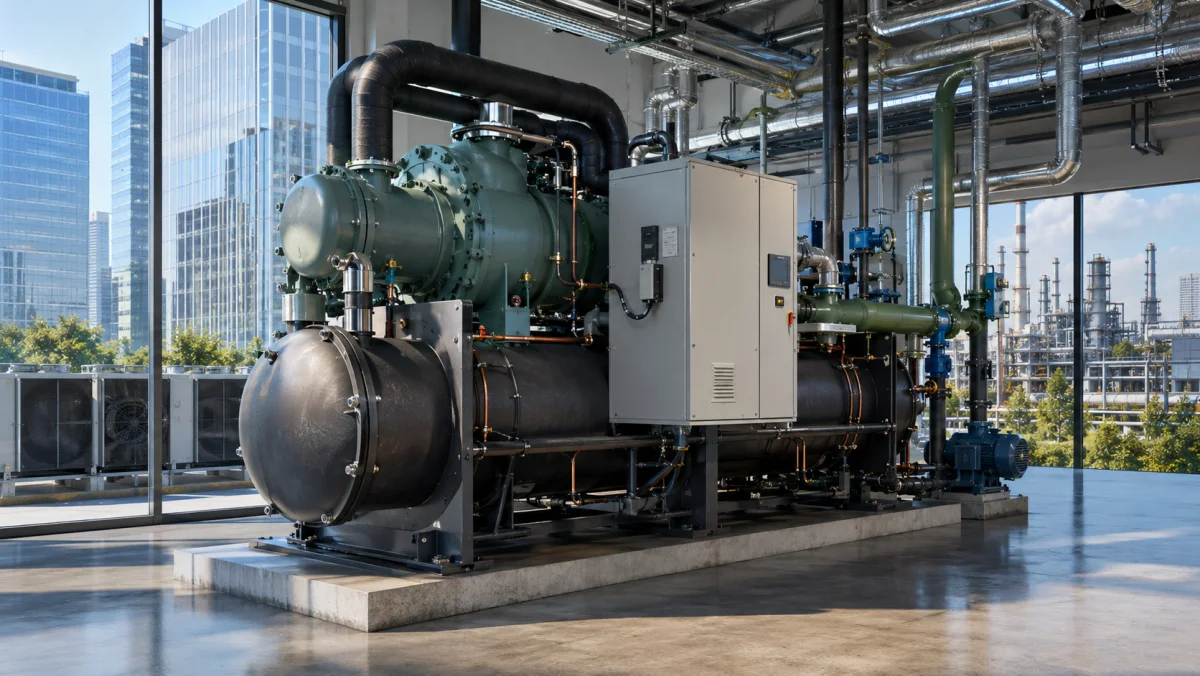
What is a chiller? It is a refrigeration machine that cools water or a water-glycol mixture and transfers cooling capacity to an air-conditioning or process system. Unlike a split air conditioner, a chiller does not normally deliver cold air directly into a room. It produces chilled liquid that circulates to fan coils, air-handling units, machine heat exchangers or industrial processes.
Chillers are used in offices, shopping centers, hotels, hospitals, data centers, factories and warehouses. One machine can serve many rooms, while the hydronic network allows cooling terminals to be installed far from the refrigeration plant.
Chiller operating principle
The operating principle of a chiller is based on the vapor-compression refrigeration cycle. Refrigerant circulates through the evaporator, compressor, condenser and expansion valve. Its pressure, temperature and physical state change throughout the cycle.
- refrigerant boils in the evaporator and absorbs heat from water;
- the compressor raises vapor pressure and temperature;
- the condenser rejects heat to outdoor air or water and turns vapor into liquid;
- the expansion valve reduces pressure before the cycle repeats.
Chilled water leaves the evaporator and flows to the cooling terminals. It returns warmer after absorbing heat. The controller maintains the supply-water setpoint by adjusting compressors, fans, pumps and valves.
Chiller design
The basic chiller design includes a compressor, evaporator, condenser and expansion valve. Additional components include a filter-drier, receiver, sensors, flow protection, safety controls and an electrical panel. Multiple refrigeration circuits preserve partial capacity during service or a fault.
The evaporator
The evaporator is the heat exchanger where refrigerant absorbs heat from water. Plate and shell-and-tube designs are common. Flow switches, pump interlocks, temperature sensors and glycol protect the heat exchanger from freezing when water circulation is lost.
The condenser
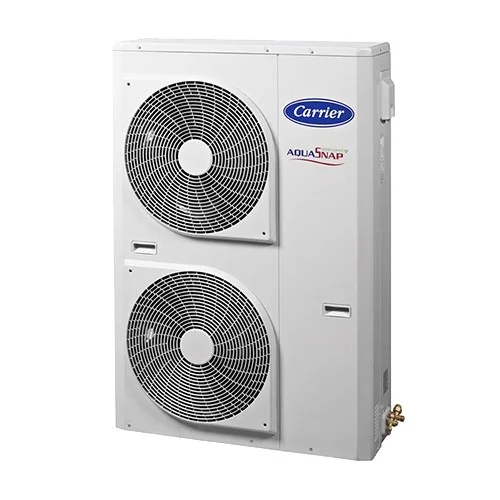
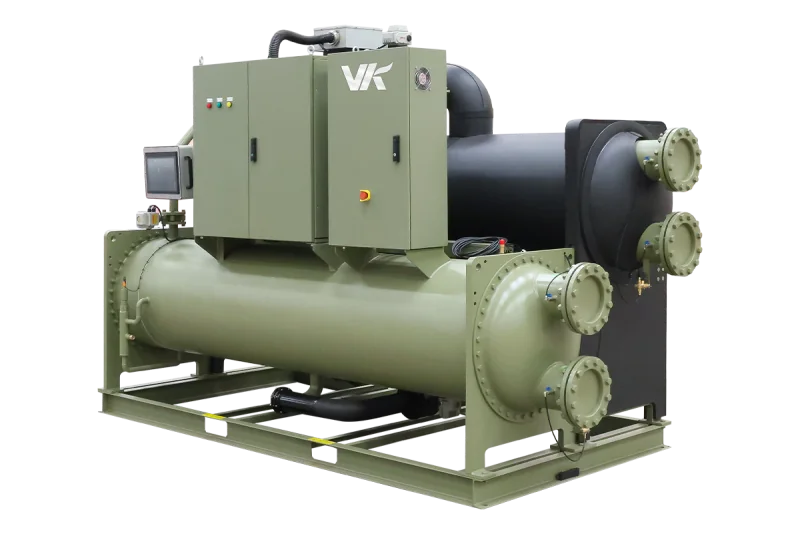
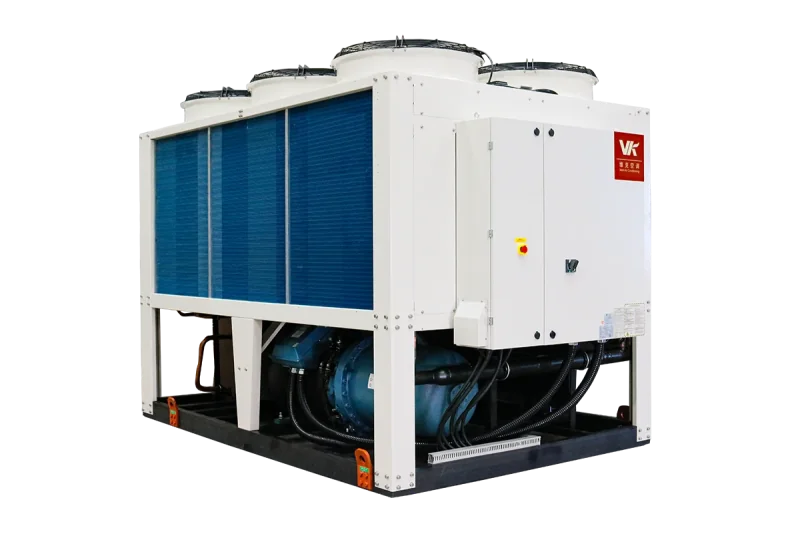
The condenser rejects the cooling load and compressor heat. Air-cooled chillers use finned coils and fans, while water-cooled machines transfer heat to condenser water and then to a cooling tower or dry cooler.
Air-cooled or water-cooled
An air-cooled chiller is simpler and requires no cooling tower, but performance depends more strongly on outdoor temperature and fan noise must be considered. A water-cooled refrigeration machine is compact and stable at high capacity but requires cooling towers, pumps and water treatment.
Chiller and fan coil systems
A chiller for air conditioning commonly supplies cassette, ducted, wall-mounted or floor-mounted fan coils. Air passes across the chilled-water coil and enters the room at a lower temperature.
The system can serve many independent zones and use different terminal types to suit the interior. Outdoor ventilation air is normally supplied by a separate air-handling unit. In a four-pipe system, some areas can cool while others heat.
Hydronic circuit
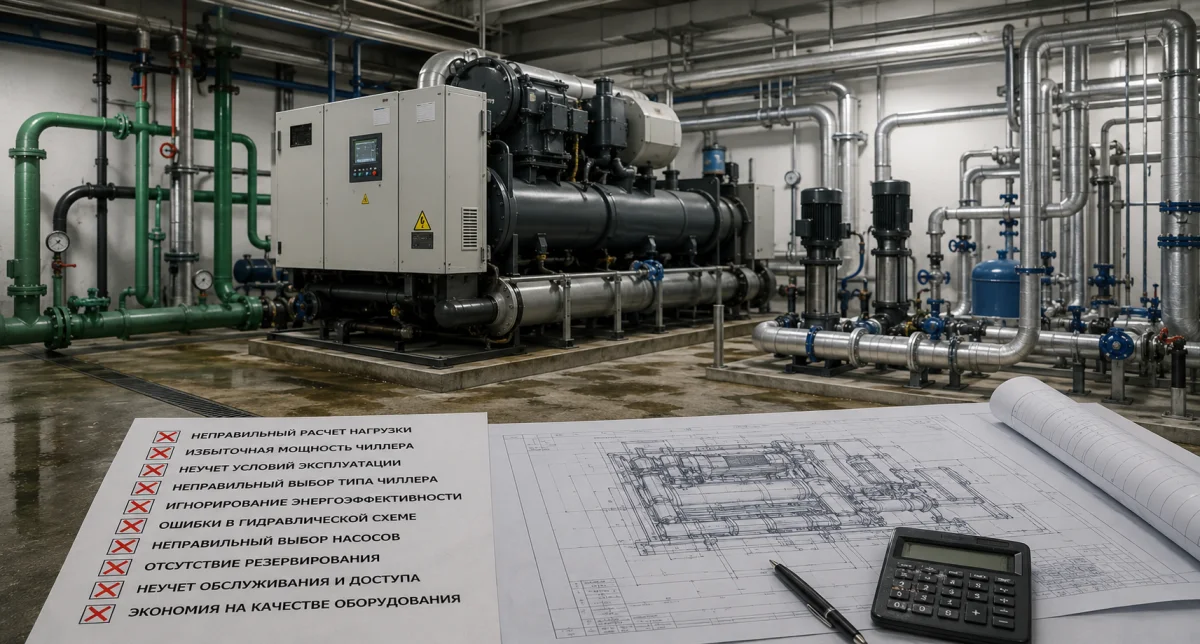
The system includes pumps, expansion vessels, strainers, valves, air vents, drainage and insulated piping. A buffer tank reduces compressor cycling. Hydraulic calculations determine pipe sizes, pressure loss and pump head before the circuit is flushed and balanced.
Industrial chillers
An industrial chiller cools machine tools, molding machines, lasers, food lines, reactors, medical systems and server equipment. These applications often require stable temperature, 24-hour operation, standby pumps, independent circuits and remote monitoring.
Capacity selection
Capacity is based on people, lighting, equipment, solar gains, outdoor air or actual process heat output. Diversity, chilled-water temperature, outdoor conditions, redundancy and future expansion are included. Oversizing causes cycling and higher cost, while undersizing prevents stable temperature at peak load.
Controls and protection
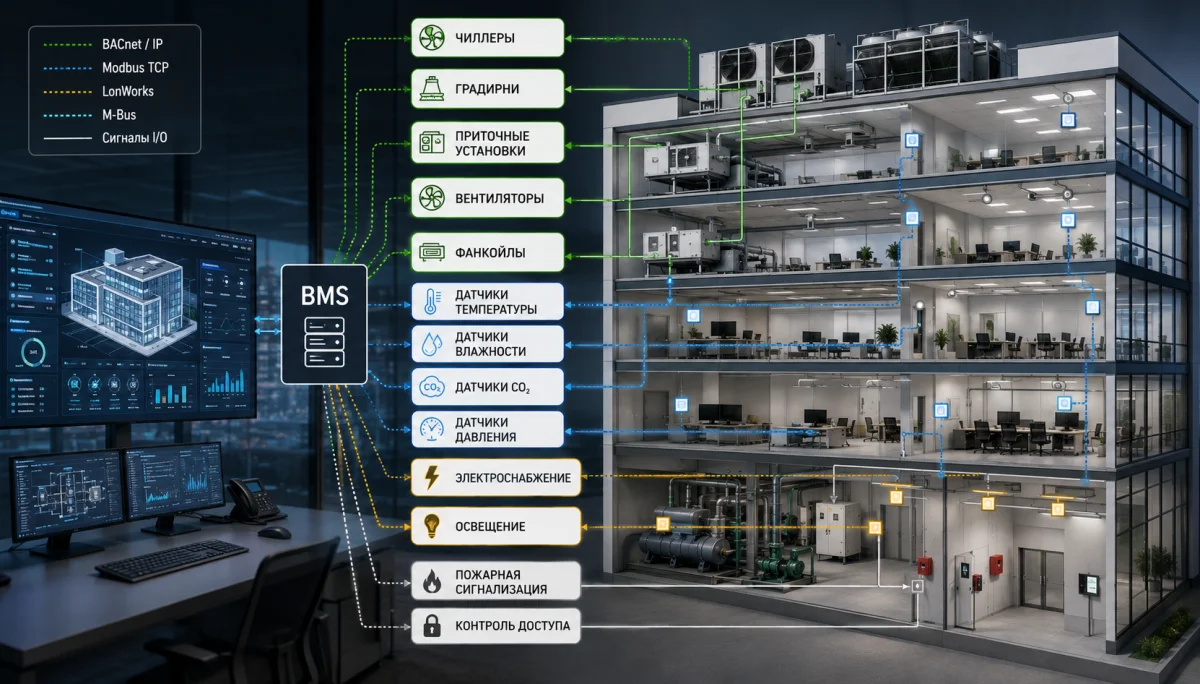
The controller maintains water temperature and monitors refrigerant pressure, flow and compressor current. Safety functions stop the machine during freezing risk, high pressure or loss of circulation. BMS integration provides alarms and sequences duty and standby chillers and pumps.
Advantages and limitations
A chiller system is well suited to large buildings and projects with many zones. Water circulates through the building, so distribution distances are less restricted than long refrigerant circuits. The plant can be expanded in stages, provided with standby capacity and connected to ventilation, process cooling and heating systems.
The limitations are the need for pumps, hydronic controls, insulation, balancing and dedicated plant space. Poor design can cause low flow, condensation on pipes, noise and excessive energy use. Chiller selection must therefore include the complete system rather than only the nominal refrigeration capacity.
Installation and commissioning
Installation includes positioning the machine, connecting water and refrigerant-side components, filling and flushing the hydronic circuit and checking electrical power and controls. Air-cooled equipment needs clear intake and discharge space, while water-cooled equipment requires coordination with cooling towers and condenser-water pumps.
Commissioning verifies flow, pressure, water temperatures, compressor staging, fan operation, safety interlocks and BMS communication. Recorded baseline values are useful for future maintenance because technicians can compare later performance with the condition of the new system.
Typical applications
- office buildings, shopping centers and hotels;
- hospitals, laboratories and medical facilities;
- data centers and server rooms;
- factories and process production lines;
- food, pharmaceutical and chemical plants;
- sports centers and public buildings;
- large properties with many climate zones.
Conclusion
The answer to what is a chiller is straightforward: it is a central refrigeration machine that cools water or another heat-transfer fluid. An effective system also includes pumps, piping, cooling terminals, controls and heat-rejection equipment. NIKLAND engineers calculate, select and design chiller systems for comfort cooling and industrial processes, taking account of Kazakhstan climate, operating hours and redundancy requirements.