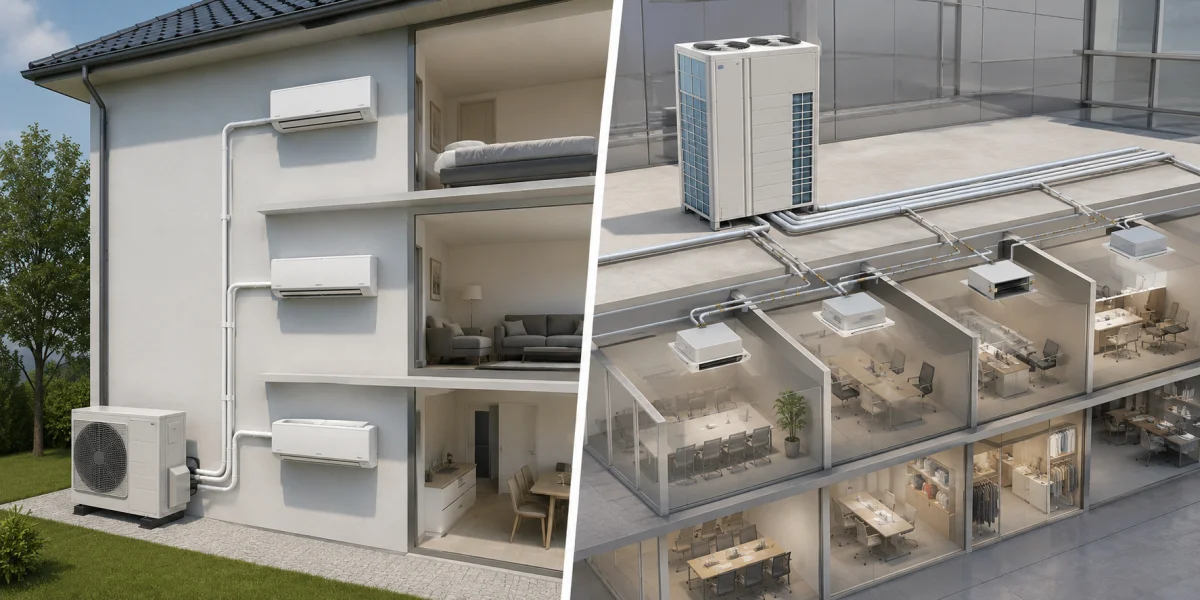
When several rooms require air conditioning, the choice often comes down to a VRF or multi-split system. Both solutions connect several indoor units to one outdoor unit, but they differ in scale, pipe lengths, controls and operating modes. Multi-split normally suits an apartment, house or small office. VRF is a complete multi-zone air conditioning system for offices, hotels, retail premises and other commercial buildings.
How a multi-split system works
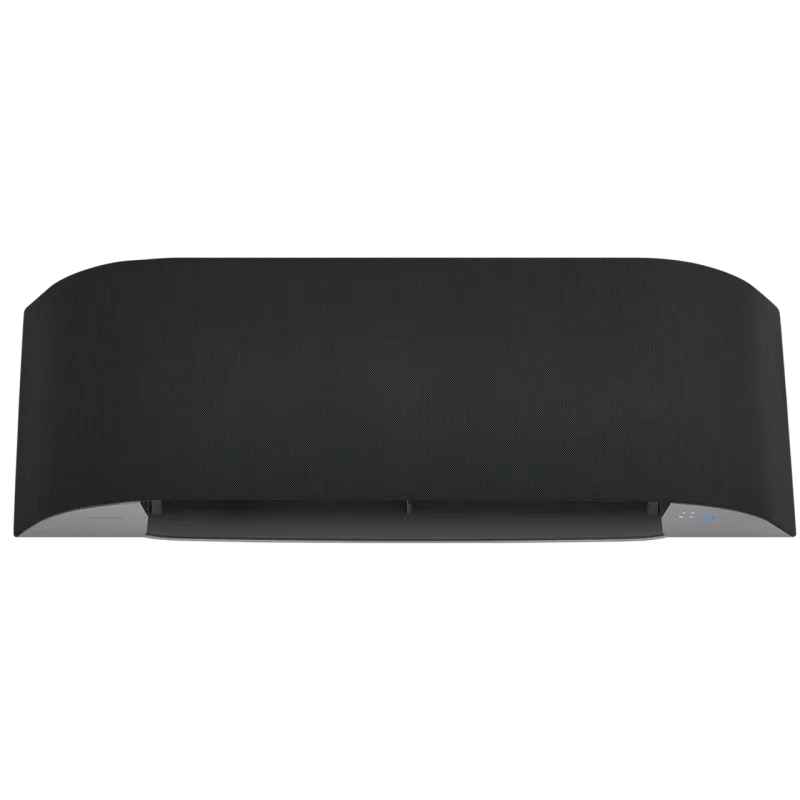
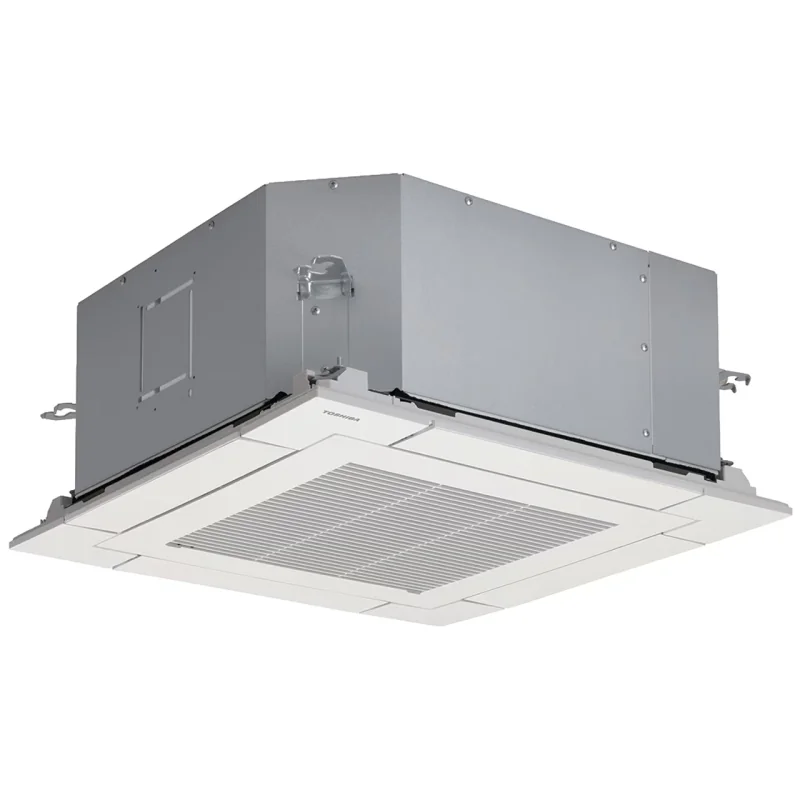
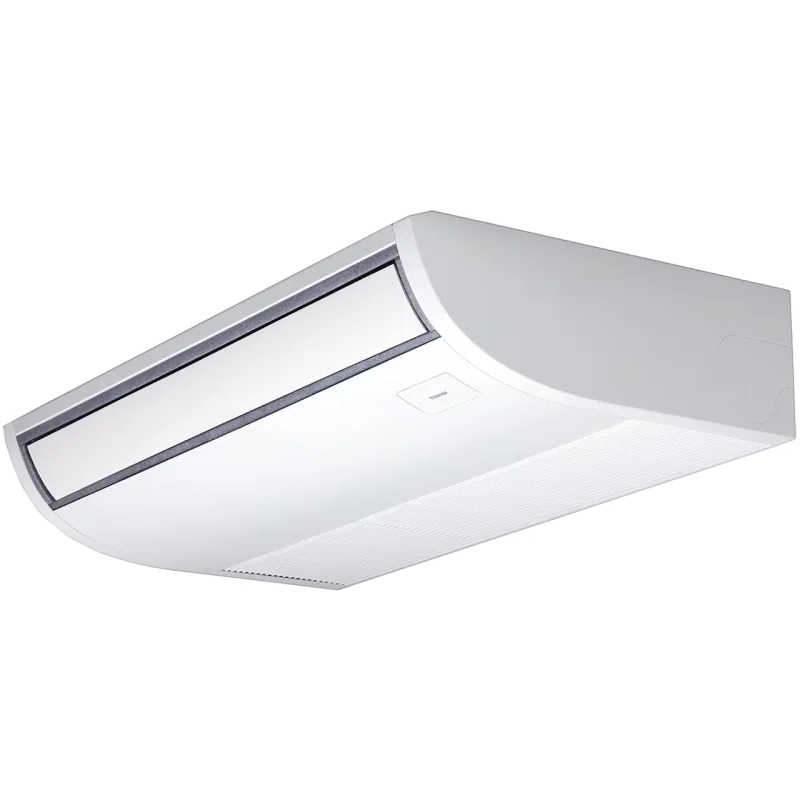
A multi-split system consists of one outdoor unit and several indoor units, commonly two to five. Wall-mounted, cassette or ducted units of different capacities may be used. Each room has its own temperature setting, but the total cooling capacity is limited by the outdoor unit.
The main advantage is the reduced amount of equipment on the façade. This is useful where a separate outdoor unit cannot be installed for every room. The disadvantage is a shared point of failure: if the outdoor unit stops, every connected room loses heating or cooling.
What is a VRF system?
VRF means Variable Refrigerant Flow. The system adjusts refrigerant supply according to the current demand of each zone. One outdoor unit or modular combination can serve substantially more indoor units than a residential multi-split system.
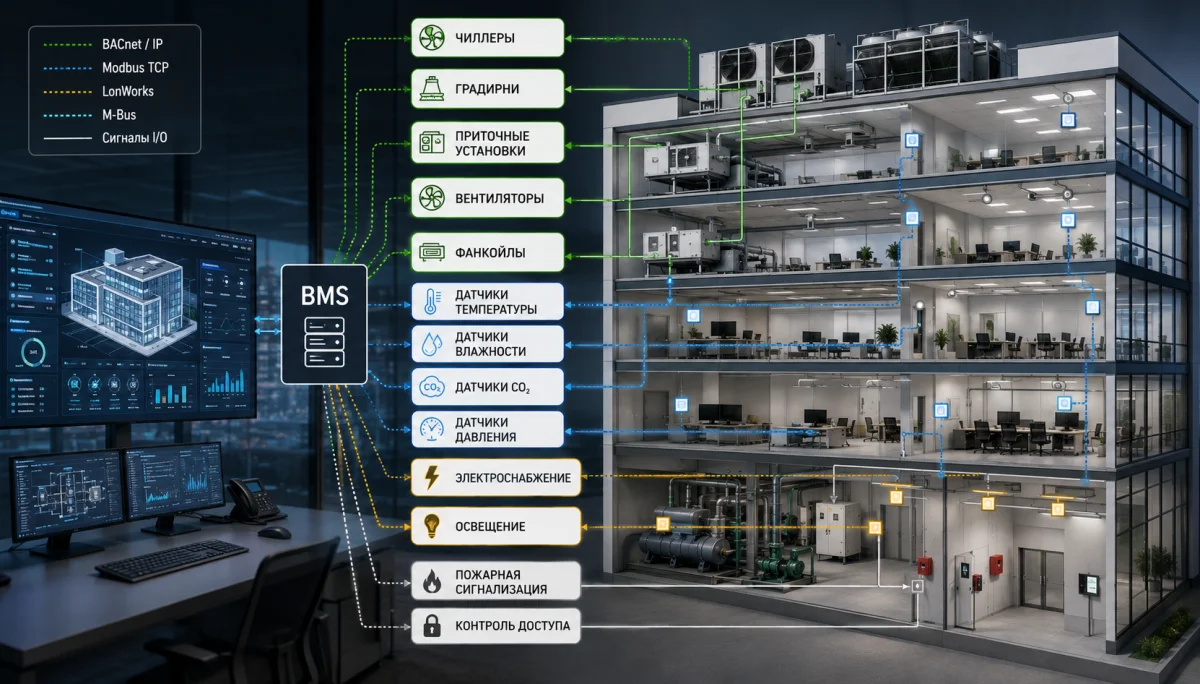
VRF for an office can combine private rooms, meeting spaces, corridors and common areas. Users control room temperatures independently, while a central controller manages schedules, restrictions and operating modes. The system can also connect to a BMS and report faults to the building operator.
The main difference between VRF and multi-split
The principal difference between VRF and multi-split is not only the number of units. VRF is designed for higher capacity, a long branched refrigerant network and centralized control. Multi-split remains a compact solution for a few nearby rooms.
| Criterion | Multi-split | VRF |
|---|---|---|
| Typical property | Apartment, house or small office | Office, hotel or retail building |
| Number of zones | A few rooms | Dozens of indoor units |
| Pipe network | Relatively short | Long and branched |
| Controls | Mainly local controllers | Central control and BMS |
| Design | Simpler | Requires engineering calculations |
Simultaneous heating and cooling
Most multi-split systems operate in one common mode. All indoor units either cool or heat. Setpoints may differ, but cooling one room while heating another is generally unavailable.
A two-pipe VRF system has the same limitation. A heat-recovery VRF configuration, however, can cool some zones and heat others simultaneously. Part of the heat is transferred within the building, which is useful for hotels and offices with different loads across floors and orientations.
Pipe lengths and elevation differences
A multi-split for a building may seem like an easy way to reduce outdoor-unit quantity, but larger projects quickly encounter limits for total pipe length, individual branches and elevation differences. Separate pipe pairs may also have to run from the outdoor unit to every room.
VRF uses a main refrigerant line with branch joints or distribution boxes. It permits a much larger network, but pipe diameters, equivalent lengths, refrigerant charge and elevation differences must be calculated accurately. Every value is checked against the manufacturer’s design software and technical rules.
Controls and building management
Individual controllers are usually sufficient for a small multi-split installation. Central schedules, user restrictions and remote monitoring may be unavailable or require optional interfaces.
VRF is designed to control many zones. A facility manager can apply schedules, limit temperature ranges, stop conditioning outside working hours and view system faults. Hotels and multi-tenant offices may also allocate operating data between rooms when this function is supported by the selected controls.
Cost and installation complexity
For two to four rooms, multi-split is usually less expensive and requires less design work. VRF costs more because it needs engineering design, pressure testing, evacuation, addressing and professional commissioning. Compare not only unit prices but also pipework, controls, service and total operating cost.
When to choose multi-split
- several rooms in an apartment or house require conditioning;
- the rooms are close and pipe lengths remain within limits;
- one common heating or cooling mode is acceptable;
- advanced monitoring and BMS integration are unnecessary;
- moderate initial cost is the main priority.
When to choose VRF
- the building contains many rooms with different schedules and loads;
- long, branched refrigerant pipework is required;
- central control and BMS integration are needed;
- floors or functional zones will be commissioned in stages;
- simultaneous heating and cooling are required through heat recovery.
How to choose a system for multiple rooms
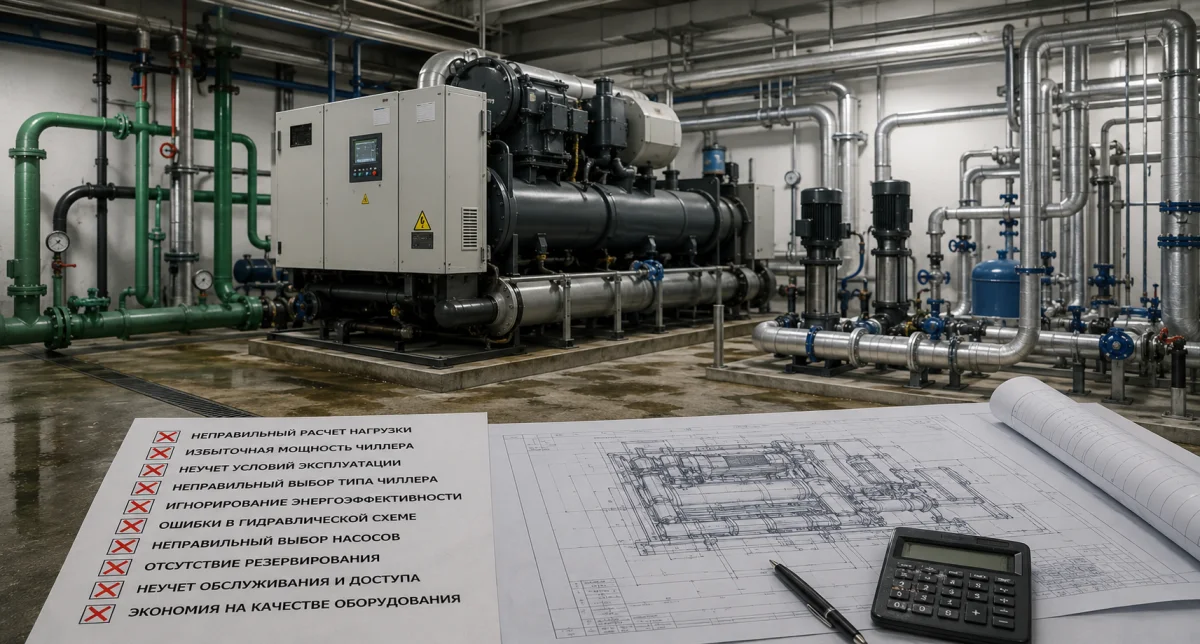
Choosing air conditioning for multiple rooms starts with a heat-gain calculation. The designer then defines indoor-unit quantity, type and capacity and checks load diversity, summer and winter modes, pipe lengths, outdoor-unit location, noise limits and maintenance access.
The owner must also decide whether all rooms may stop together, whether standby capacity is required, who will manage the system and whether competent local service is available. Multi-split is usually practical for a small property, while VRF is better suited to many zones and advanced controls.
Conclusion
Multi-split suits a few rooms and keeps outdoor equipment compact. VRF is intended for larger multi-zone buildings, long pipe networks and centralized control. The choice of VRF or multi-split should therefore be based on scale, operating modes, controls, reliability and budget. NIKLAND engineers calculate loads, select indoor and outdoor units and design systems for the building function and Kazakhstan climate conditions.