VRF or chiller fan coil is one of the main decisions in the design of a medium or large building. Both systems serve many rooms and provide zone temperature control, but they differ in distribution fluid, piping limits, cost, maintenance, redundancy and expansion potential.
VRF circulates refrigerant between outdoor and indoor units. A chiller–fan coil system circulates chilled water or glycol from a central refrigeration machine to fan coils. The correct choice therefore depends on building size, function, height, operating schedule and reliability requirements.
How VRF works
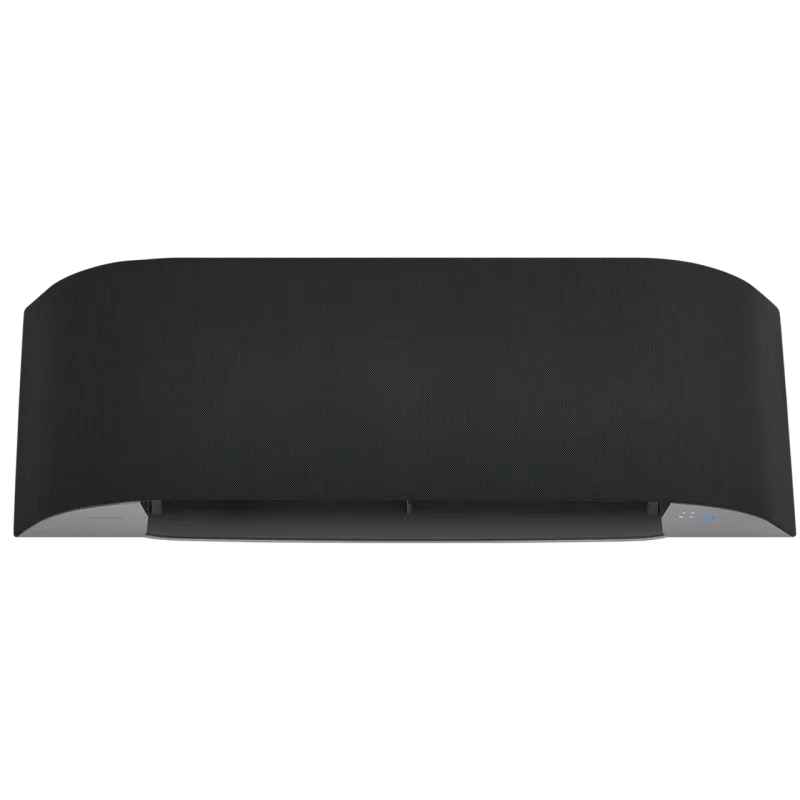
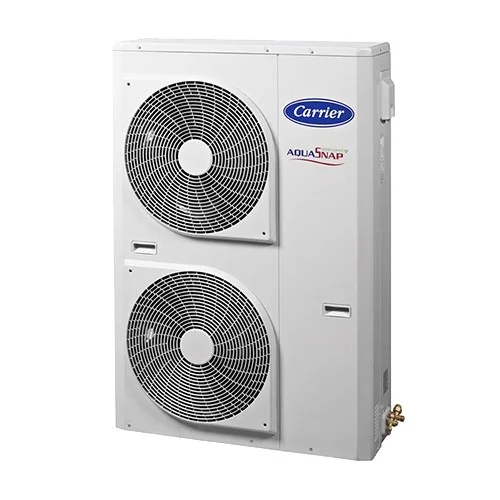
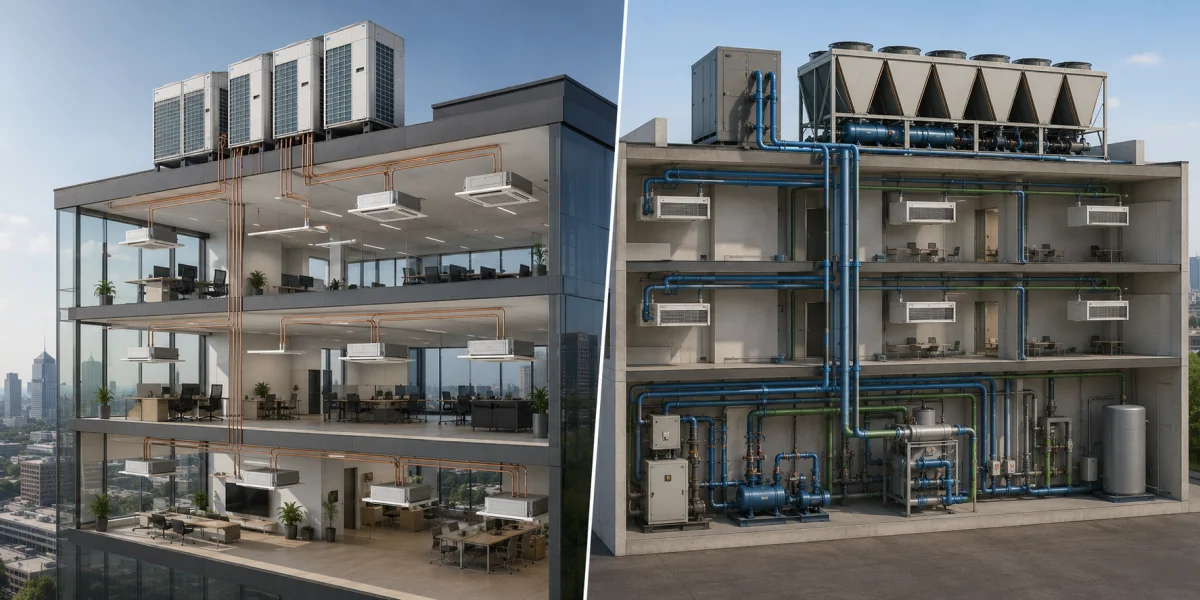
A VRF system includes one or more outdoor modules connected to many indoor units. Variable-speed compressors adjust refrigerant flow according to the combined demand. Indoor units may be cassette, ducted, wall-mounted or floor-ceiling types.
Two-pipe VRF operates in one common mode. Three-pipe heat-recovery VRF allows some zones to cool while others heat.
How chiller–fan coil works
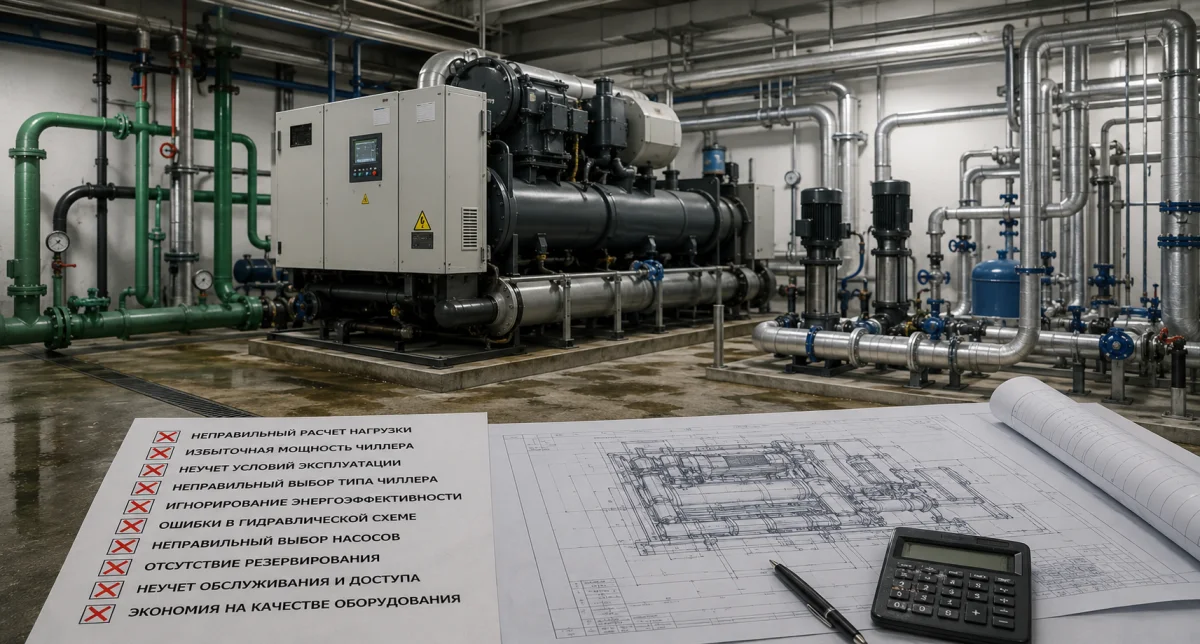
The chiller cools water, pumps circulate it to fan coils and the fan coils cool room air. Warmer water returns to the chiller. Heat is rejected through an air-cooled condenser, cooling tower or dry cooler.
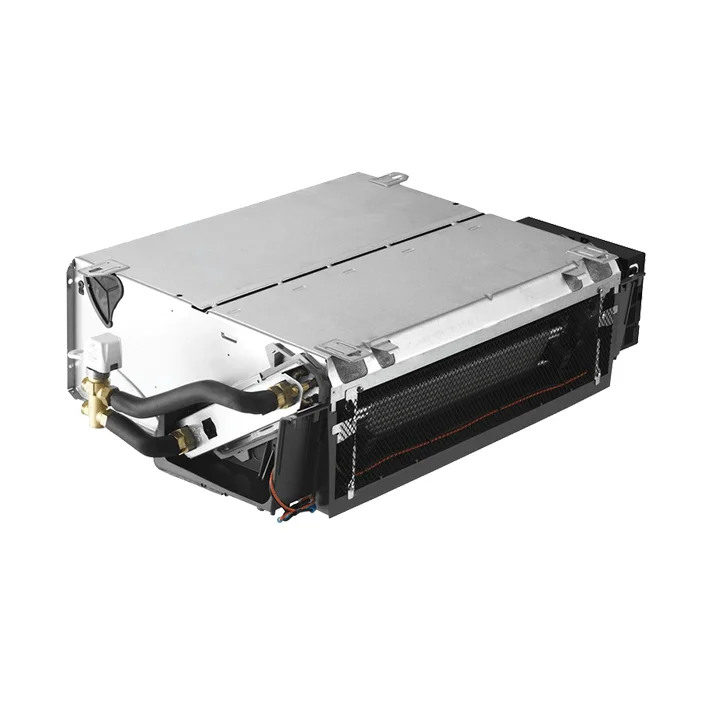
The hydronic system may be two-pipe or four-pipe. A four-pipe arrangement supports simultaneous heating and cooling. Outdoor ventilation air is normally treated by a separate air-handling unit.
VRF and chiller–fan coil comparison
| Parameter | VRF | Chiller–fan coil |
|---|---|---|
| Distribution fluid | Refrigerant | Water or glycol |
| Expansion | Manufacturer limits | Highly flexible |
| Installation | Less hydronic equipment | More piping and valves |
| Redundancy | Outdoor modules | Chillers and pumps |
| Maintenance | Refrigerant circuit | Refrigerant and hydronic circuits |
| Large buildings | Possible limitations | Usually easier to scale |
Initial cost
VRF is often less expensive initially for a small office, shop or hotel because it does not require a pump station or extensive hydronic equipment. At high capacity, however, multiple outdoor units, electrical feeders and structural platforms increase cost.
Chiller–fan coil needs more central infrastructure, but cost per unit of cooling can become favorable on a large project. The comparison should include equipment, installation, controls, power, ventilation and maintenance.
Energy efficiency
VRF performs well at part load because inverter compressors adjust output to zone demand. Actual efficiency depends on outdoor temperature, pipe length, loading and heat-exchanger condition.
Chiller plants can achieve strong seasonal efficiency with water-cooled machines, variable-speed pumps, free cooling and optimized water temperatures. Poor hydraulic control or excessive flow can remove this advantage.
Piping length and building size
VRF has manufacturer limits for total refrigerant piping, farthest-unit distance, elevation and connection ratio. Tall or extended buildings may require several independent systems and multiple outdoor-unit locations.
A hydronic network is easier to adapt to long distances, several buildings and remote terminals. Pump head and pipe size are calculated from actual resistance, making the system easier to expand.
Maintenance
VRF service requires compressor, electronic valve and sensor diagnostics and leak detection along long refrigerant networks. A small leak can be difficult to locate.
Chiller–fan coil service covers chillers, pumps, strainers, valves, water quality and fan coils. Individual hydronic branches are often easier to isolate without stopping the entire building.
Redundancy
VRF redundancy is usually provided through several outdoor modules or independent systems. A fault in one common circuit can affect all connected rooms.
Chiller plants can use N+1 chillers, standby pumps, separate loops and backup controls. This is useful for hospitals, data centers, large offices and continuous industrial processes.
Business-center air conditioning
A business-center air-conditioning system must account for tenants, different floor schedules, server rooms, meeting rooms and façade orientation. VRF is often convenient in a medium-sized property because zones are easy to control and separate.
For a large business center with high capacity, redundancy and future expansion, chiller–fan coil is frequently considered. Central ventilation remains essential in both cases.
Air conditioning a large building
Air conditioning a large building requires more than peak-capacity comparison. Plant rooms, electrical loads, equipment logistics, service access and repair without total shutdown must be reviewed.
Hydronic distribution is often more flexible for several buildings, high-rise towers and long routes. VRF may be simpler for a compact building divided into many small rooms.
When VRF is a good choice
- small or medium building;
- many independently controlled rooms;
- limited space for pumps and hydronic equipment;
- quick installation or phased opening is important;
- piping remains within manufacturer limits;
- complex central redundancy is not required.
When chiller–fan coil is preferable
- high total cooling capacity;
- several buildings or long distribution routes;
- chiller and pump redundancy is required;
- future expansion is expected;
- integration with central air-handling units is needed;
- refrigerant quantity in occupied rooms should be minimized.
How to make the decision
Climate system selection follows load calculation and comparison of several concepts. Each option is evaluated for capital cost, annual energy use, maintenance, service life, redundancy, noise, equipment space and future modification.
Choosing only by initial price often produces the wrong result. The system should match the building’s full operating life rather than only the construction budget.
Conclusion
VRF or chiller fan coil should be selected according to project scale, load profile, route length, redundancy and operating requirements. VRF is convenient for compact multi-zone buildings, while chiller–fan coil often suits large and technically complex properties. NIKLAND engineers compare concepts, calculate capacity and design air-conditioning systems for buildings throughout Kazakhstan.