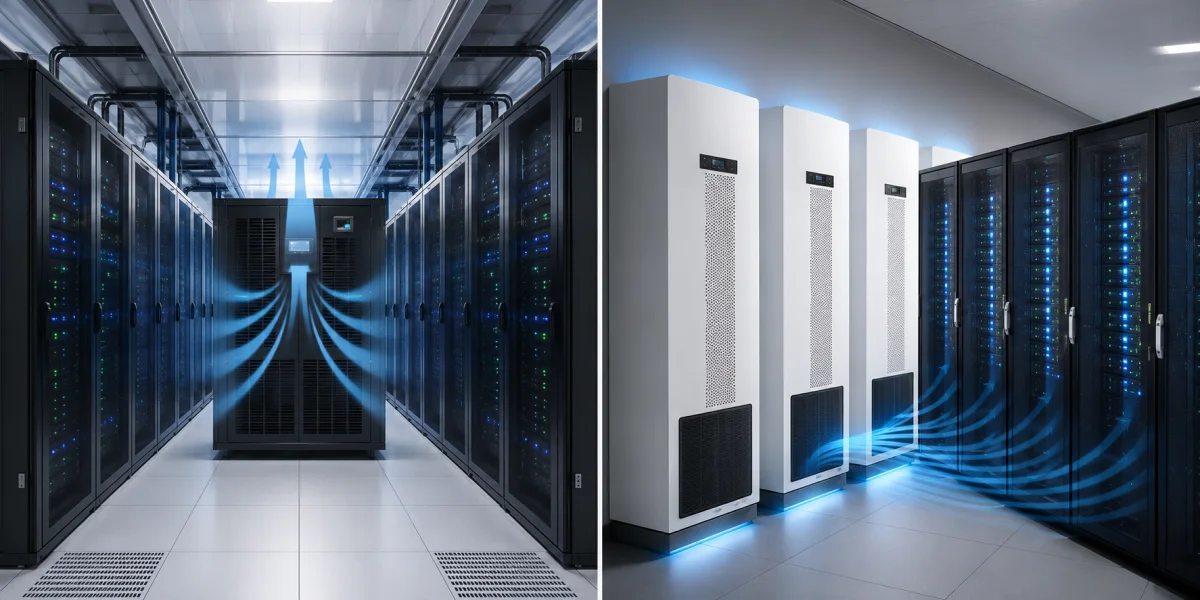
In-row cooling for data centers and perimeter precision air conditioners remove heat from IT equipment through different airflow arrangements. Perimeter units are installed around the computer room and serve the full space or several rows. An In-Row air conditioner is placed between racks and captures hot air close to the heat source.
The choice affects airflow distribution, allowable rack density, fan energy, redundancy and future expansion. Sufficient total cooling capacity does not prevent local server overheating when the airflow is poorly organized.
How perimeter cooling works
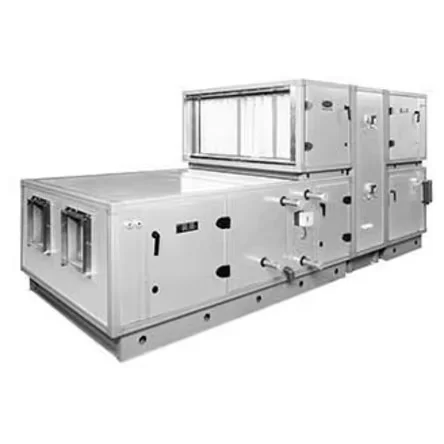
A perimeter air conditioner is a cabinet-type precision unit installed near a wall or in a service zone. It draws warm air from the room or hot aisle, cools it and returns it through a raised floor, overhead supply, ductwork or the open room volume.
This arrangement suits server rooms with moderate and relatively uniform loads. One unit can serve a large area, so fewer indoor units may be required. Performance depends on raised-floor pressure, perforated-tile placement, cable-opening sealing and hot- or cold-aisle containment.
How an In-Row air conditioner works
An In-Row air conditioner is installed in the same line as server cabinets. It captures air from the server exhaust side, cools it and supplies it toward the rack fronts. The short airflow path reduces mixing and provides more accurate control of a specific row.
This form of localized server cooling is useful for uneven loads and staged expansion. Several modules can operate as a group and adjust EC-fan speed according to temperature or differential-pressure sensors.
The main difference
Perimeter cooling conditions the room volume and moves air over a longer distance. In-row cooling creates a short loop close to the equipment. As rack heat density rises, reducing the distance between the heat source and the cooling unit becomes more important.
In-Row is not always the better option. It occupies rack-line space, increases utility connections and requires close coordination with cabinet placement. For moderate loads, a correctly designed perimeter system may be simpler and less expensive.
Cooling high-density racks
High-density rack cooling becomes difficult when individual cabinets release far more heat than neighboring racks. Average room temperature does not show the inlet condition of upper servers, where insufficient airflow and exhaust recirculation often cause hot spots.
In-row units can be placed next to the high-density zone and deliver cooling where it is required. This allows one part of an operating data hall to be upgraded without replacing the complete existing system.
Precision air conditioner for a data center
A data center precision air conditioner is designed for 24/7 operation, a high sensible cooling ratio and accurate temperature control. It can integrate with BMS or DCIM systems and serves the constant heat output of servers, UPS systems, network equipment and storage platforms.
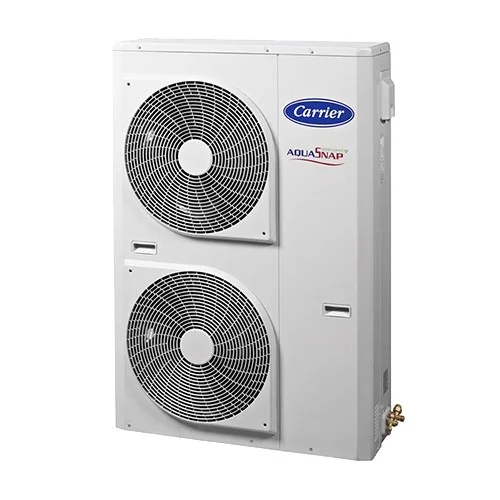
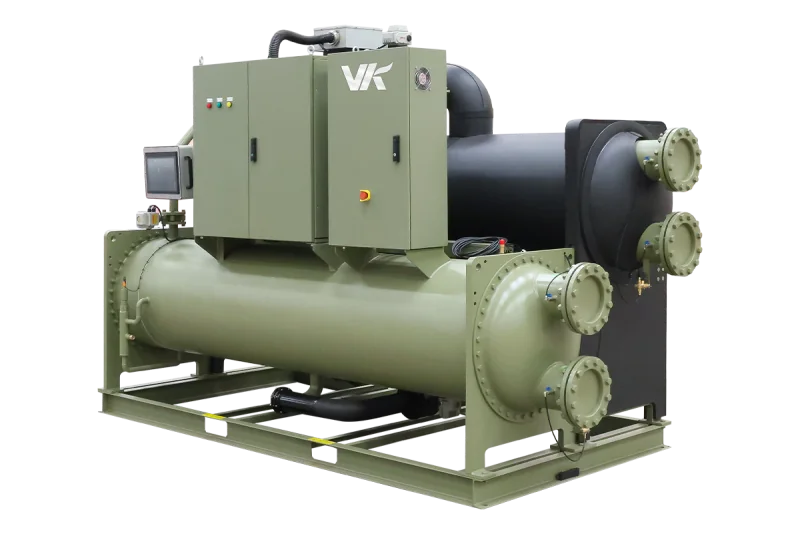
Units may use direct expansion or chilled water. Chilled-water systems suit large facilities and free cooling, but chillers, pumps and power supplies require redundancy.
Air distribution
With perimeter cooling, chilled air is often supplied below a raised floor and enters cold aisles through perforated tiles. Cable openings and unnecessary grilles create leakage, reducing available airflow to remote racks.
An In-Row unit supplies air horizontally over a short distance. Empty rack units and side gaps must be sealed, and hot exhaust air must be prevented from returning to the server fronts.
Cold and hot aisles
Both systems require correct rack orientation: server fronts form a cold aisle and rears form a hot aisle. Containing one aisle reduces mixing and allows the cooling equipment to operate with a higher return-air temperature.
Server fan direction is especially important for in-row cooling. The conditioner must capture air from the exhaust side and supply it to the inlets. Incorrect orientation creates opposing air streams and local overheating.
How to calculate capacity
The calculation begins with actual IT electrical demand because nearly all consumed energy becomes heat. UPS losses, lighting, people, ventilation and building transmission are added where relevant.
Loads should be determined by row, not only for the complete room. Dividing total heat by the number of racks is inaccurate when several cabinets are lightly loaded and one row contains high-density computing equipment.
- Collect equipment power by rack.
- Include current load and future growth.
- Check server airflow requirements.
- Calculate capacity at operating temperatures.
- Include one-unit failure and service mode.
- Check stable partial-load operation.
Why airflow is critical
Adequate refrigeration capacity does not guarantee acceptable server-inlet temperature. The unit must deliver the required airflow and overcome the resistance of coils, filters, raised floors, grilles and contained aisles.
Excessive airflow is also undesirable because it increases fan energy, creates unnecessary pressure and disturbs distribution. EC fans can vary output according to temperature or pressure sensors.
Cooling redundancy
Critical data centers commonly use N+1, N+2 or 2N arrangements. Redundancy must include indoor units, chillers or condensing units, pumps, electrical supplies, controls and communications.
If one In-Row unit fails, adjacent modules must absorb its load without overheating the row. In a perimeter system, the remaining units must maintain both capacity and airflow pressure throughout the room.
When perimeter cooling is appropriate
- loads are moderate and evenly distributed;
- a prepared raised floor or duct system is available;
- the room should use a smaller number of large units;
- rack-line space is limited;
- the layout changes infrequently.
When in-row cooling is appropriate
- the facility has high-density racks;
- loads are unevenly distributed;
- the raised floor cannot deliver enough air;
- one zone requires a local upgrade;
- modular expansion is planned.
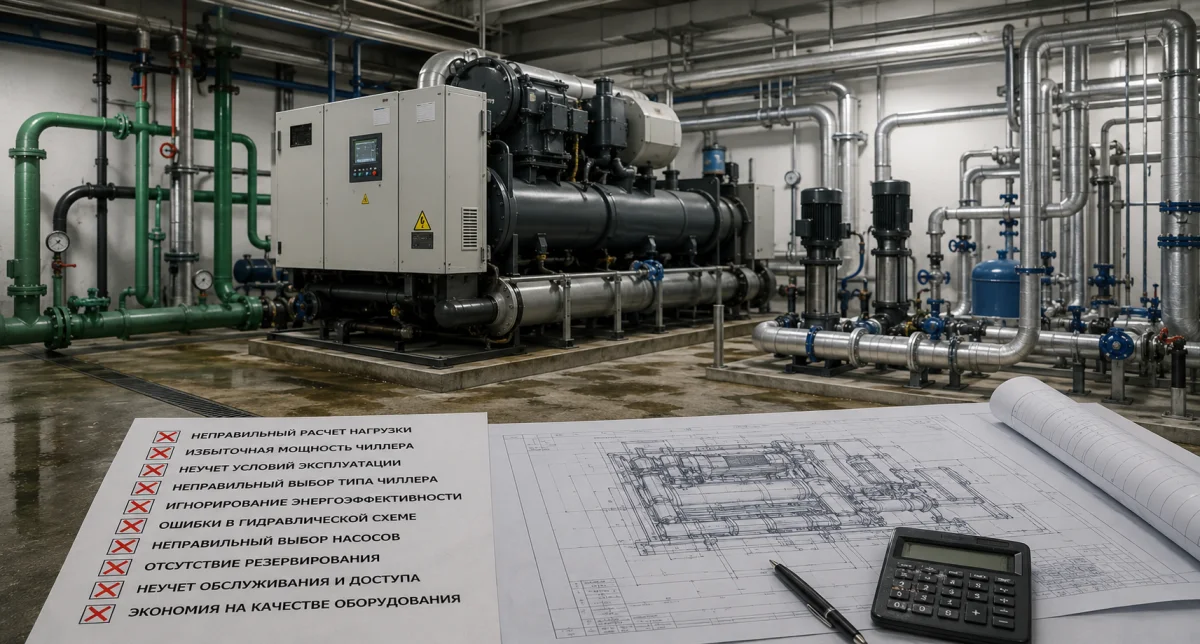
Common design mistakes
- selecting units from total capacity alone;
- ignoring row-level load distribution;
- leaving empty rack units without blanking panels;
- allowing cold and hot air to mix;
- incorrect In-Row airflow direction;
- insufficient raised-floor airflow;
- redundant indoor units without a redundant cooling source;
- no rack-inlet temperature sensors;
- no allowance for future IT growth.
Conclusion
In-row cooling for data centers is effective for high-density racks, uneven loads and modular expansion. Perimeter precision cooling remains practical for rooms with moderate and well-distributed heat loads. The decision should be based on a rack-level heat map, airflow requirements, layout, redundancy and operating cost. NIKLAND engineers design server-room and data-center cooling and select precision air conditioners, In-Row units, chillers and controls for the actual IT load.