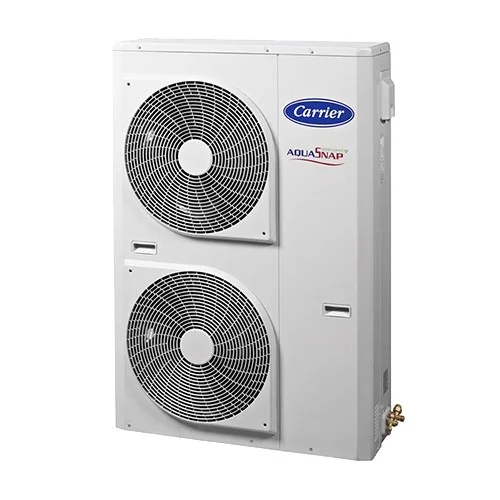
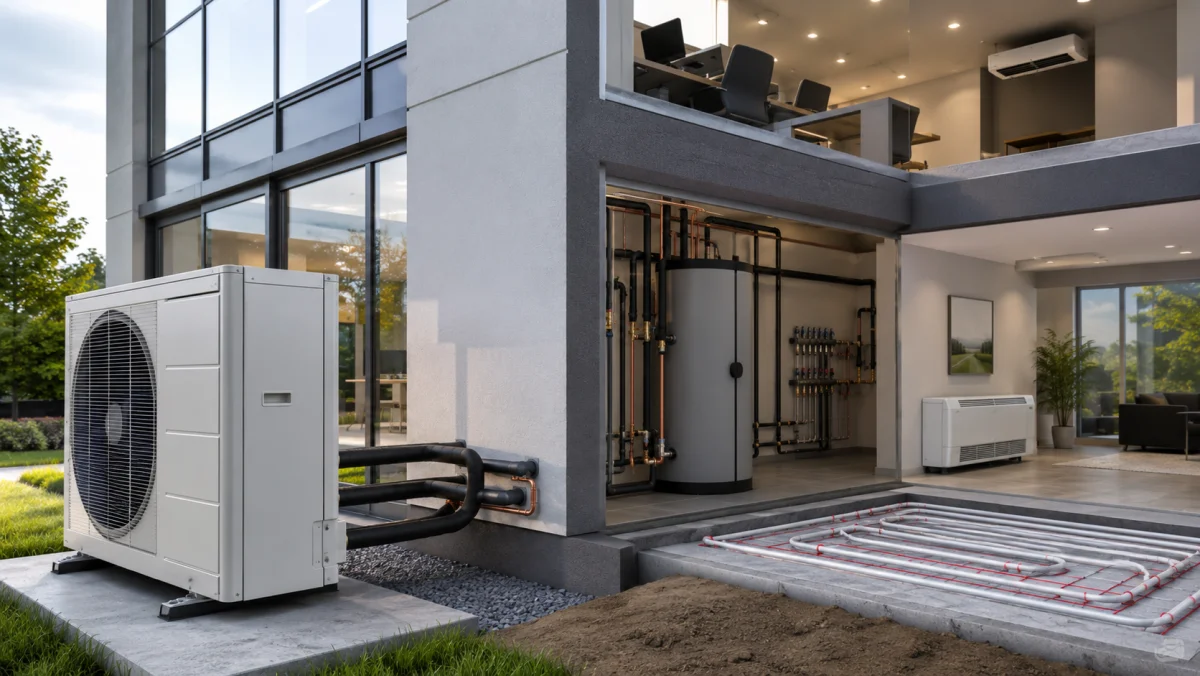
An air-to-water heat pump extracts heat from outdoor air and transfers it to water in a building heating system. In reversible operation, the same unit produces chilled water for fan coils or air-handling units. One system can therefore provide winter heating and summer air conditioning.
For a commercial building, this arrangement can reduce gas consumption, use one hydronic distribution system and eliminate a separate chiller on suitable projects. Actual efficiency depends on outdoor temperature, required water temperature, building heat loss, hydraulic design and the correct backup source.
How an air-to-water heat pump works
The outdoor unit moves air through a heat exchanger. Refrigerant boils at a low temperature and absorbs heat even from cold air. The compressor raises refrigerant pressure and temperature, after which the heat is transferred to water. Refrigerant pressure then falls and the cycle repeats.
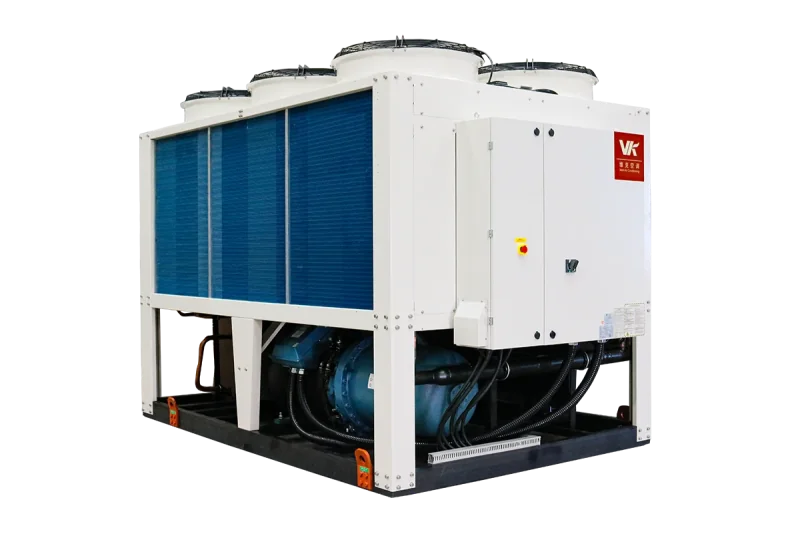
In cooling mode, the cycle is reversed: heat is removed from the internal water circuit and rejected outdoors. A reversible air-source heat pump operates similarly to an air-cooled chiller with heating capability, but it is selected for year-round heat supply.
Heating with a heat pump
Heating with a heat pump is most efficient in a low-temperature system. The lower the supply-water temperature, the smaller the temperature lift and the higher the efficiency. Underfloor heating, fan coils and oversized radiators designed for approximately 30–50 °C water are suitable terminals.
If an existing system requires 70–80 °C water, heating output and efficiency decrease. The project may require larger emitters, improved insulation, several units in cascade or a bivalent system with a boiler for severe frost and peak demand.
Cooling with a heat pump
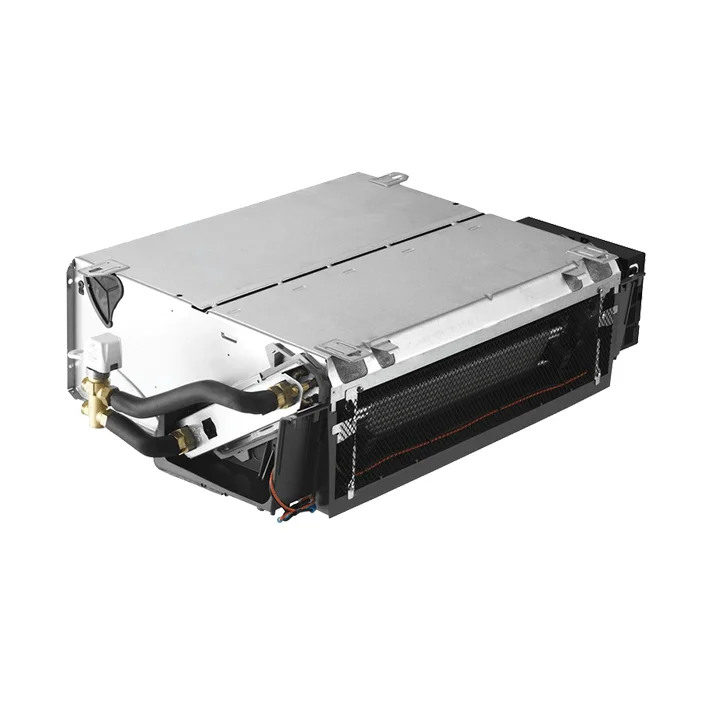
Cooling with a heat pump is provided by supplying chilled water to fan coils or cooling coils in air-handling units. Cassette, ducted, wall-mounted and floor-standing fan coils are selected according to capacity, sound level and installation conditions.
Chilled-water pipes, valves and fittings must be insulated with a vapor-tight material. Fan coils and air-handling units require condensate drainage. Without these measures, moisture can form on pipes, damage finishes and cause corrosion.
Heat pump for a commercial building
An air-to-water heat pump for a commercial building can serve offices, hotels, retail facilities, healthcare buildings, restaurants, warehouses and manufacturing premises. It is especially attractive where the building needs many heating hours during shoulder seasons and full summer cooling.
Larger projects often use several modular units in cascade. Controls stage units according to demand, equalize operating hours and keep part of the capacity as standby. This improves part-load efficiency and allows one module to be serviced without stopping the complete system.
How to calculate capacity
Capacity must not be selected from floor area alone. Heating calculations include losses through walls, roof, windows, doors and floor, together with the energy required to heat outdoor ventilation air. Cooling calculations include solar, internal and ventilation heat gains.
The key value is unit capacity at the design outdoor temperature and selected leaving-water temperature. Catalogue nominal capacity is often stated at milder conditions. During frost, available heating output can fall while the building heat demand rises.
- Calculate the building heating and cooling loads.
- Determine the annual operating profile.
- Select supply and return water temperatures.
- Check performance at winter design conditions.
- Include defrost operation and auxiliary power.
- Determine the bivalent point and backup capacity.
COP, SCOP and real efficiency
COP is the ratio of delivered heat to electrical input at one operating point. A COP of 3 means that approximately 3 kW of heat is supplied for every 1 kW of electricity consumed. Seasonal evaluation should use SCOP because it includes changing temperature, load, defrost operation, pumps and partial-load performance.
Energy-efficient heating depends on more than catalogue COP. Building insulation, low water temperature, weather-compensated control, a clean outdoor coil and accurate capacity selection often have a greater effect than one headline efficiency value.
Winter operation and defrosting
As outdoor temperature decreases, an air-source heat pump normally provides less heating output while compressor power increases. Cold humid air causes frost on the outdoor heat exchanger. The controller periodically starts defrost operation, during which useful heating output temporarily decreases.
For Almaty, Astana and other cities in Kazakhstan, equipment should be checked against manufacturer performance tables at actual local design temperatures. In severe climates, a bivalent arrangement is practical: the heat pump covers most annual hours, while a boiler or electric heater supports the coldest periods.
Bivalent point and backup
The bivalent point is the outdoor temperature below which the heat pump no longer covers the complete load or becomes less economical. The backup source may operate in parallel or replace the heat pump.
The decision depends on tariffs, available electrical capacity, gas availability and acceptable downtime. Critical premises also require redundancy for compressor, circulation-pump or control-system failure.
Hydraulics and freeze protection
A heat pump requires stable water flow and a minimum system volume. If room thermostats close several zones, flow can fall below the unit's operating limit. A buffer tank, hydraulic separator or primary-secondary arrangement may be used to separate circuits and reduce compressor cycling.
If water pipes run outdoors or power failures are possible, the system may require glycol, emergency drainage or backup power. Glycol concentration should follow the minimum design temperature because excessive concentration increases viscosity and pump energy.
Placement and maintenance
The outdoor heat exchanger needs unrestricted air intake and discharge. A unit should not be placed in a confined recess or positioned so that one unit's discharge air enters another. Snow, wind, sound, service access and distance from windows must be considered.
Defrost operation produces water that can freeze quickly in winter. The base and drain should prevent ice accumulation. Routine service includes cleaning the coil and checking fans, refrigerant circuit, pumps, strainers, heat-transfer fluid and controls.
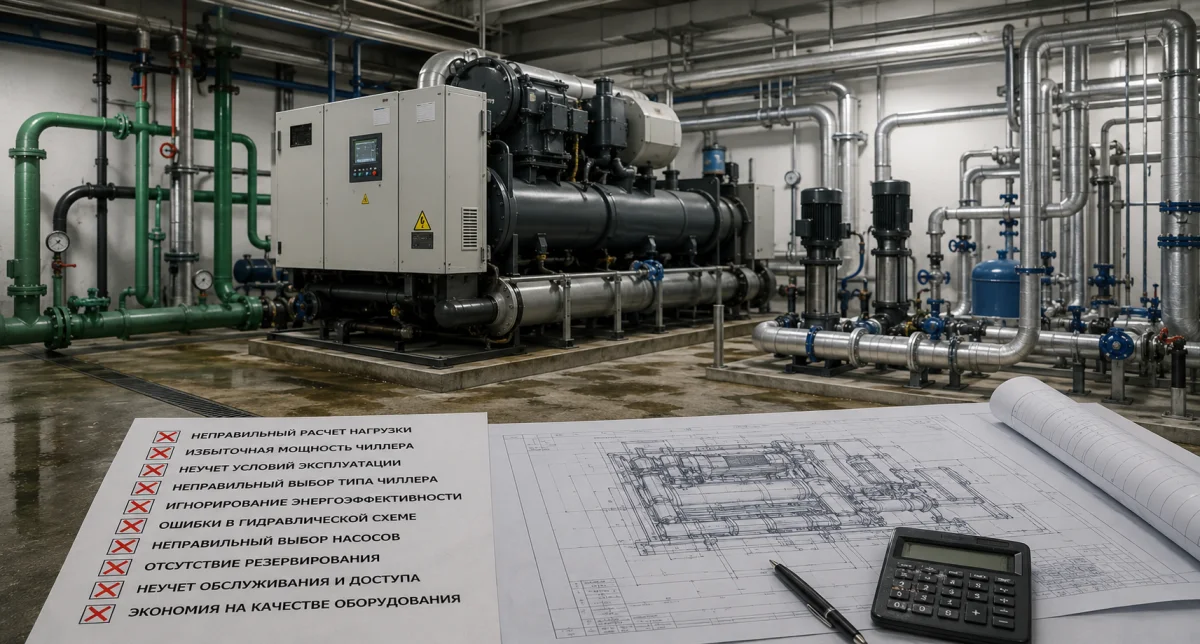
Common mistakes
- selecting capacity by floor area without a heat-loss calculation;
- using output at +7 °C for winter design;
- keeping high-temperature radiators without checking performance;
- omitting backup capacity for severe frost;
- ignoring outdoor-coil defrost operation;
- insufficient water volume and frequent compressor starts;
- incorrect glycol concentration;
- no condensate drainage in cooling mode;
- restricted airflow around the outdoor unit.
Conclusion
An air-to-water heat pump can provide one heating and cooling source for a commercial or residential building. The highest efficiency is achieved with low-temperature emitters, correctly designed hydraulics and weather-compensated controls. In Kazakhstan, special attention must be paid to low-ambient capacity, freeze protection, defrost-water management and a properly sized backup source. NIKLAND engineers calculate loads and select air-source heat pumps, fan coils, hydraulic equipment and controls for the actual operating profile of each facility.