HVAC maintenance is a planned set of tasks that preserves design capacity, reduces energy use and identifies defects before an emergency shutdown. A proper schedule includes more than filter cleaning. It covers heat exchangers, fans, pumps, controls, refrigeration circuits, drainage and electrical connections.
The scope depends on equipment type, operating hours and building function. A split system, industrial chiller, central air-handling unit and precision air conditioner require different procedures and service intervals. On critical sites, maintenance must be organized without interrupting server rooms, production lines or medical areas.
Why planned maintenance is necessary
Filters and heat exchangers become dirty, belts stretch, bearings wear and control settings drift. Airflow and cooling capacity fall while energy use rises. Planned preventive maintenance records operating values, compares them with previous visits and allows defects to be corrected before failure.
Typical maintenance scope
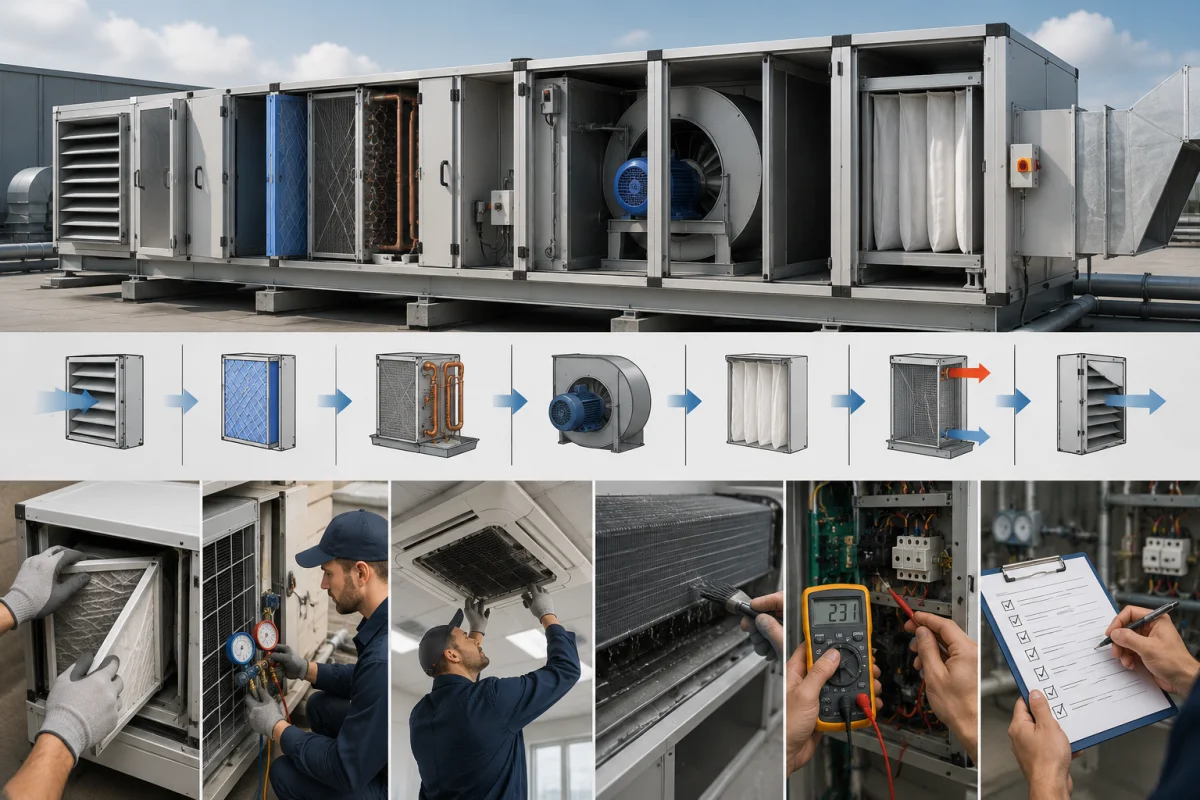
- visual inspection of equipment, supports and piping;
- cleaning or replacement of air filters;
- cleaning of coils, drain pans and condensate lines;
- inspection of fans, motors, belts and bearings;
- measurement of temperatures, pressures, current and vibration;
- testing of controls, sensors, actuators and safety functions;
- inspection of electrical connections and power components;
- leak checks on refrigerant and water circuits;
- preparation of a service report and recommendations.
Air-conditioning service
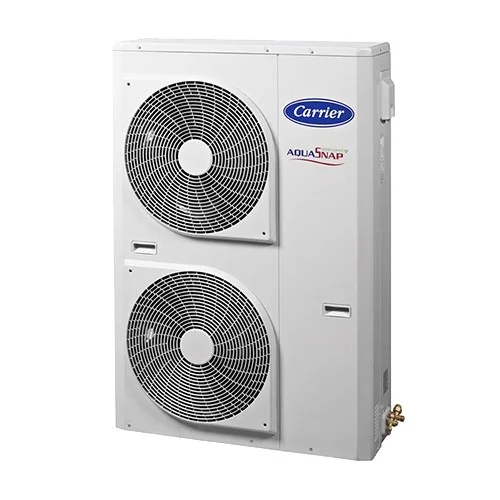
Air-conditioning service includes testing cooling and heating, measuring air temperature and cleaning filters, evaporator coils, fans and the outdoor condenser. Refrigerant pressures and temperatures, insulation, drainage and oil traces at joints are checked. Refrigerant is added only after the source of loss is identified.
Chiller maintenance
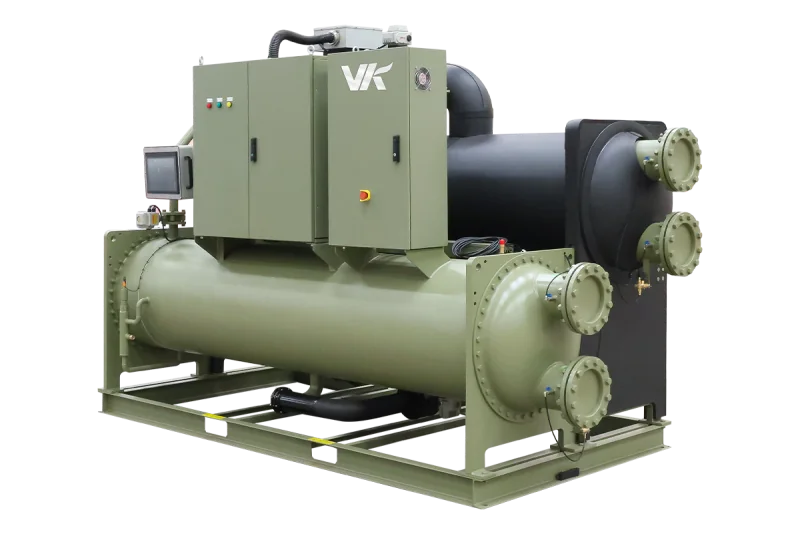
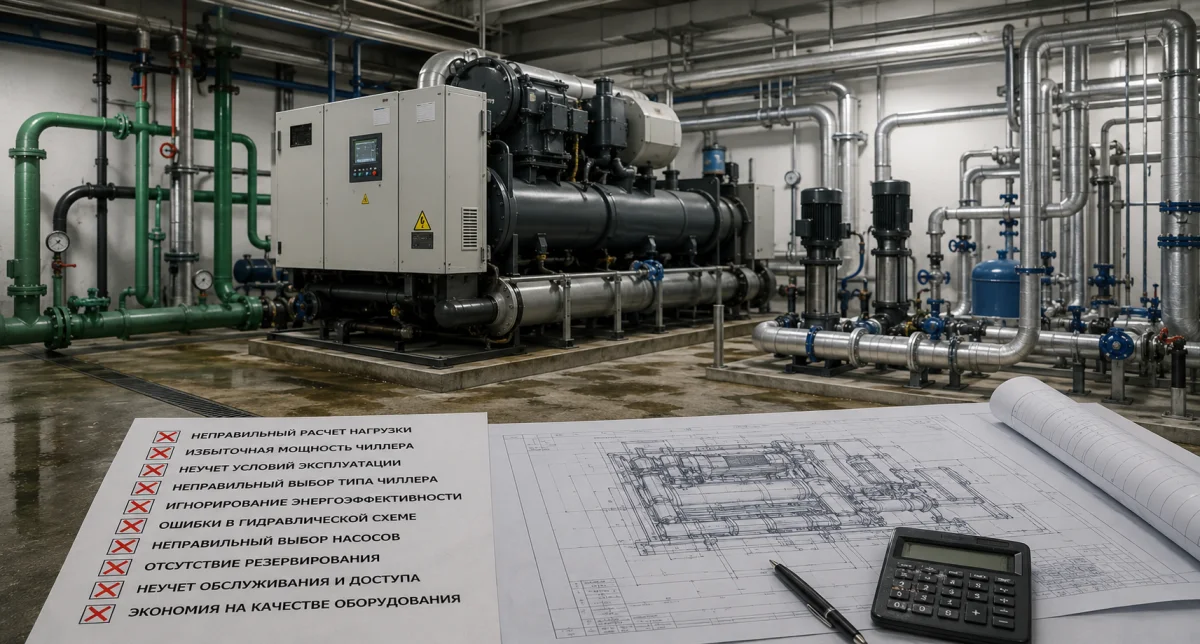
Chiller maintenance covers compressors, evaporators, condensers, pumps, sensors and safety controls. Air coils are cleaned or the condenser-water circuit is checked. Technicians record pressures, temperatures, superheat, subcooling, compressor current and water temperature difference to identify low flow, fouling or refrigerant loss.
Hydronic system service
Pumps, strainers, expansion vessels, valves, pressure, flow, trapped air, insulation and leakage are checked. A blocked strainer or closed valve may trip the chiller. Glycol concentration must match the minimum design temperature: too little creates a freeze risk, while too much increases viscosity and reduces heat transfer.
Ventilation maintenance
Ventilation maintenance includes filter replacement, coil and drain cleaning and inspection of fans, belts, vibration isolators, dampers and heat recovery. Heating and cooling coils, humidifiers and frost protection are tested. Airflow is measured after service and the system is balanced when required.
Controls and BMS
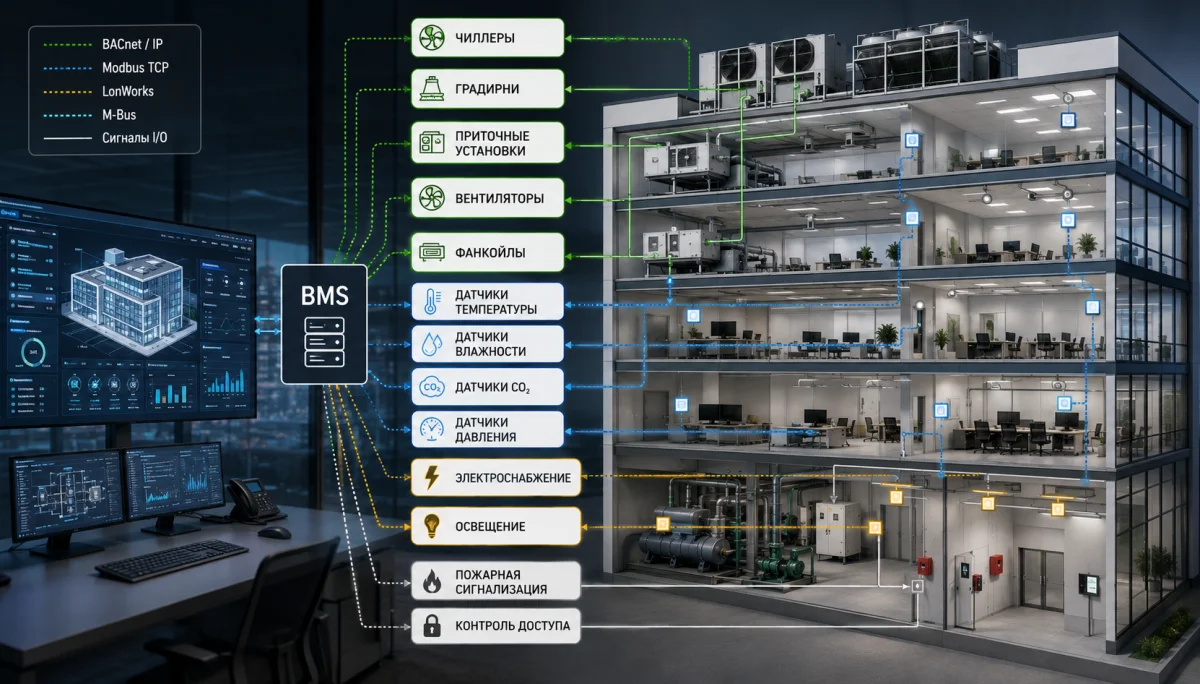
Temperature, pressure, humidity and air-quality sensors, valve actuators, variable-frequency drives, relays and alarms are tested. Where a BMS is installed, communication of values, commands and schedules and the sequence involving chillers, pumps, cooling towers, ventilation and standby equipment are verified.
Maintenance frequency
Frequency depends on operating hours, air contamination and manufacturer requirements. Residential and office air conditioners are commonly serviced before the cooling season and more often when heavily used. Commercial ventilation systems may require monthly or quarterly checks and filter replacement based on pressure drop.
Chillers, precision units and continuous-process equipment need closer supervision. Their schedule may include daily remote monitoring, monthly inspections, seasonal preparation and an expanded annual service.
Seasonal preparation
Before summer, refrigeration circuits, condenser coils, pumps, drainage and controls are tested. Before winter, heaters, frost protection, glycol concentration, heat tracing and low-temperature startup sequences are checked.
Seasonally inactive equipment may require preservation, including draining exposed water circuits, cleaning coils and protecting outdoor components. The procedure should follow the manufacturer’s documentation.
HVAC service contract
An HVAC service contract defines the equipment list, visit frequency, included tasks, emergency response time and responsibilities. It should state whether filters, refrigerant, spare parts, consumables, 24-hour support and emergency attendance are included.
For a large facility, the contract should also define reporting format, required measurements and repair-approval procedures. The owner remains responsible for equipment access, safe working conditions and timely action on recommendations.
Spare parts and maintenance planning
A service program should identify critical spare parts before a failure occurs. Belts, filters, sensors, contactors, actuators and selected control components can often be stored on site. For chillers and precision equipment, the recommended stock depends on lead time, redundancy and the operational cost of downtime.
Planned work should also be coordinated with production schedules and equipment redundancy. Before isolating a unit, technicians confirm that standby cooling, ventilation or pumping capacity is available. This prevents routine maintenance from creating a new operational risk.
Common mistakes
- servicing equipment only after a failure;
- cleaning without recording operating parameters;
- adding refrigerant without locating the leak;
- ignoring controls and water circuits;
- keeping no measurement history or service records;
- using unsuitable filters and consumables;
- performing maintenance without standby capacity on critical sites.
Conclusion
HVAC maintenance should cover the mechanical, refrigeration, hydronic, electrical and control parts of the system. A strong service schedule combines inspections, measurements, seasonal preparation and clear documentation. NIKLAND maintains air conditioners, chillers, ventilation systems and other HVAC equipment according to building function, operating conditions and uptime requirements.