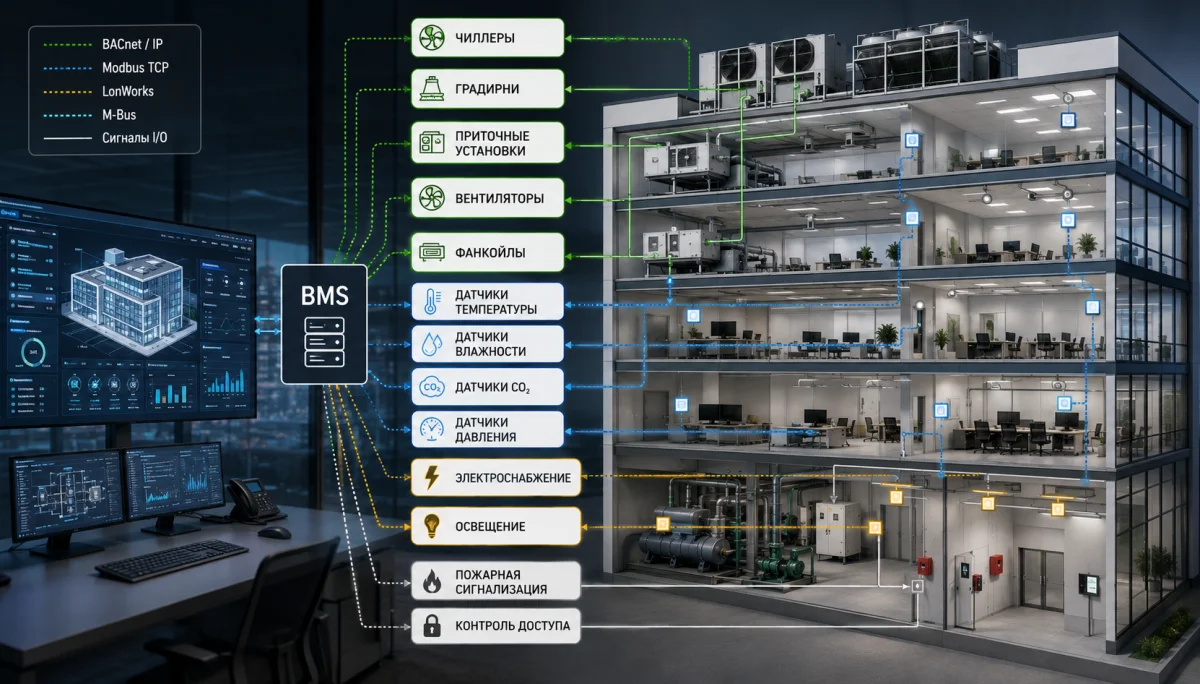
The operating cost of HVAC equipment is determined by much more than purchase and installation price. Over the years, a building owner pays for electricity, maintenance, consumables, water, repairs, component replacement and the consequences of unplanned downtime. Chillers, VRF systems, air-handling units and fan coils should therefore be compared by total cost of ownership over the selected analysis period.
Low-cost equipment can become expensive if it performs poorly at partial load, needs rare spare parts or is difficult to maintain. A more expensive system may recover the difference through lower energy use, accessible service and a longer operating life.
What total cost of ownership includes
Total cost of ownership, or TCO, combines expenditure from system design to final replacement:
TCO = capital cost + energy + maintenance + consumables + water + repairs + downtime + upgrades − residual value
Options must be compared over the same period and under the same climate, operating schedule, load profile, tariffs, redundancy requirements and maintenance standard.
Purchase price and capital expenditure
The main-unit price is only one part of capital expenditure. The budget can include design, delivery, installation, refrigerant or water piping, pumps, cooling towers, controls, electrical infrastructure, commissioning and plant-room preparation.
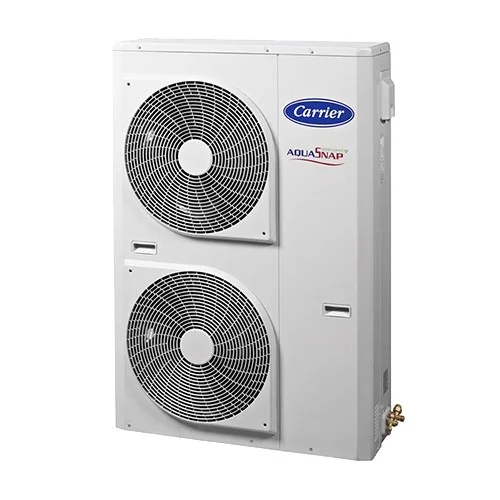
A water-cooled chiller may be more efficient but needs a condenser-water circuit, pumps, a cooling tower and water treatment. An air-cooled chiller requires less supporting infrastructure, while its consumption depends more strongly on outdoor temperature. Comparing factory prices alone is misleading.
Air-conditioning energy consumption
Air-conditioning energy consumption is often the largest life-cycle expense. A nominal efficiency value at one rating point is not enough because equipment operates at partial load and under varying temperatures for most of the season.
The calculation includes compressors, fans, pumps, cooling towers, electric heaters, humidification and controls. For air-handling systems, filter and duct pressure losses, heat-recovery performance and fan power must also be included.
- annual outdoor-temperature profile;
- building load and occupancy schedule;
- water and air temperature setpoints;
- minimum modulation level;
- auxiliary-system consumption;
- efficiency loss caused by dirty heat exchangers.
Partial-load performance
Peak cooling load occurs for a limited number of hours. During the rest of the year, the system must reduce output efficiently. Variable-speed compressors, pumps and fans, staged operation of several units and correct control setpoints reduce power consumption.
An oversized unit may cycle frequently, operate outside its efficient range and experience unnecessary wear. Capacity margin should therefore be justified by calculation.
Chiller total cost of ownership
Chiller total cost of ownership depends on condenser type, compressor technology, water temperatures, water quality and load profile. For an air-cooled chiller, the estimate includes condenser cleaning, fan condition, high-ambient operation and low-temperature accessories.
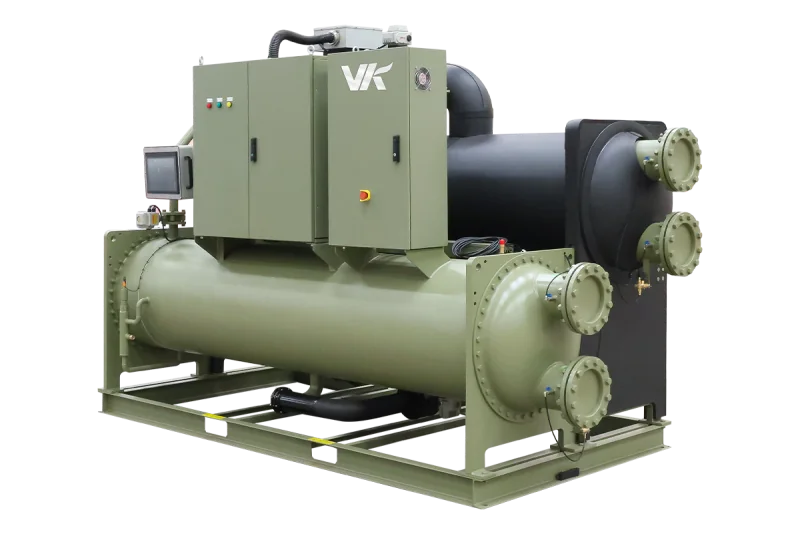
For a water-cooled system, it also includes pump and cooling-tower power, makeup water, blowdown, chemicals, filtration and heat-exchanger cleaning. High catalogue efficiency will not provide the expected savings if pumps operate without control or the water circuit is fouled.
Maintenance and consumable costs
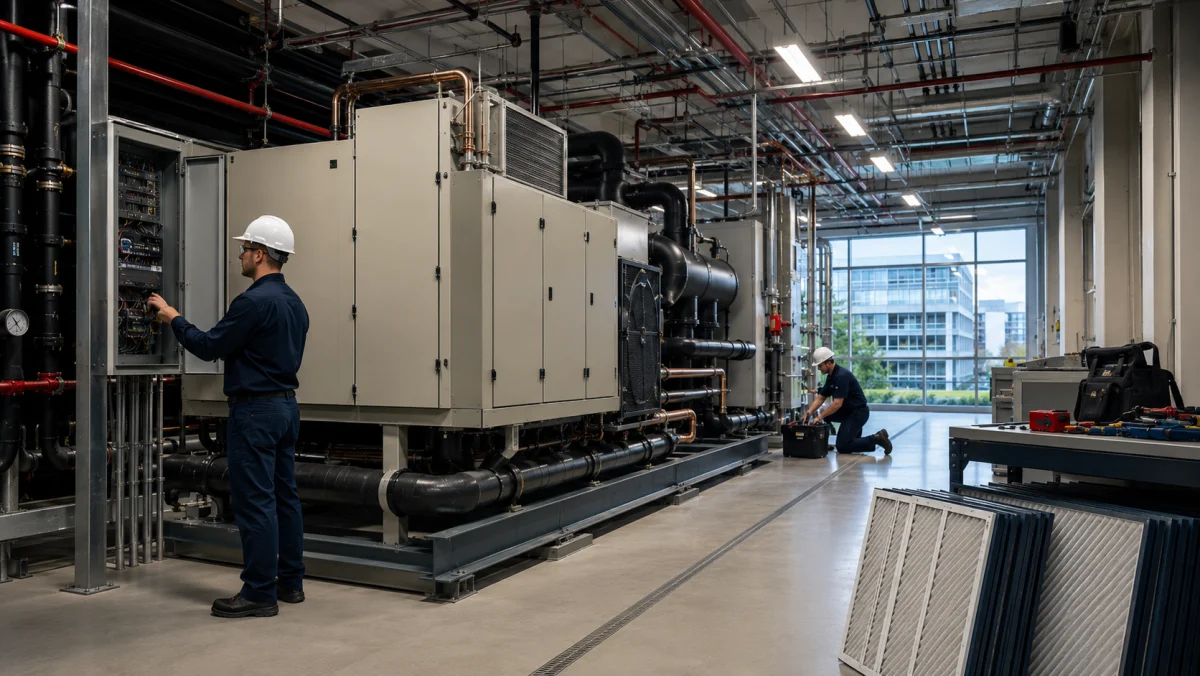
HVAC maintenance cost includes scheduled inspections, diagnostics, heat-exchanger cleaning, filter replacement and checks of refrigerant, oil, belts, bearings, sensors and controls. Preventive service requires a budget, but it usually costs less than emergency repair and operation with dirty equipment.
The estimate should also include ventilation filters, cooling-tower water and chemicals, humidifier consumables and possible refrigerant replacement after leak repair. Local service availability, spare-part prices, warranty terms and delivery times should be checked before purchase.
Repairs and spare-part availability
HVAC operating expenses depend not only on failure frequency but also on maintainability. Modular construction, safe access and standard components shorten repair time. Proprietary controls, unusual boards and long compressor lead times increase risk.
Critical facilities should define which sensors, drives, controllers, pumps or fan modules must be stored on site for rapid recovery.
Downtime cost and redundancy
Loss of cooling causes discomfort in offices, but in manufacturing, data centers or healthcare facilities it can create direct financial loss. Downtime cost should therefore be included together with the cost of redundancy.
An N+1 arrangement, several chillers, standby pumps or independent circuits increase initial investment but reduce the probability of a complete shutdown. Where downtime is expensive, redundancy is often economically justified.
Service life and upgrade potential
Service life depends on equipment quality, operating conditions, installation and maintenance. The owner should determine whether compressors, fans, controllers or indoor units can be replaced without rebuilding the entire system.
Modular architecture, spare electrical capacity, space for an additional unit and open building-management protocols simplify future expansion. A system that cannot be upgraded may require premature replacement when loads increase.
How to calculate chiller payback
A preliminary chiller payback period or payback for another efficient solution can be calculated as follows:
Payback period = additional investment / annual savings
If the efficient option costs more initially but saves electricity, water and service expense, the difference is recovered over time. A complete investment analysis should also consider tariff changes, financing cost, seasonality and major repairs.
Data required for the calculation
- Seasonal cooling and heating loads.
- Annual operating hours and occupancy schedule.
- Electricity, water and wastewater tariffs.
- Power consumption at full and partial load.
- Maintenance scope and annual service price.
- Cost of filters, chemicals and other consumables.
- Expected repairs and spare-part lead times.
- Redundancy requirements and acceptable downtime.
- Analysis period and residual value.
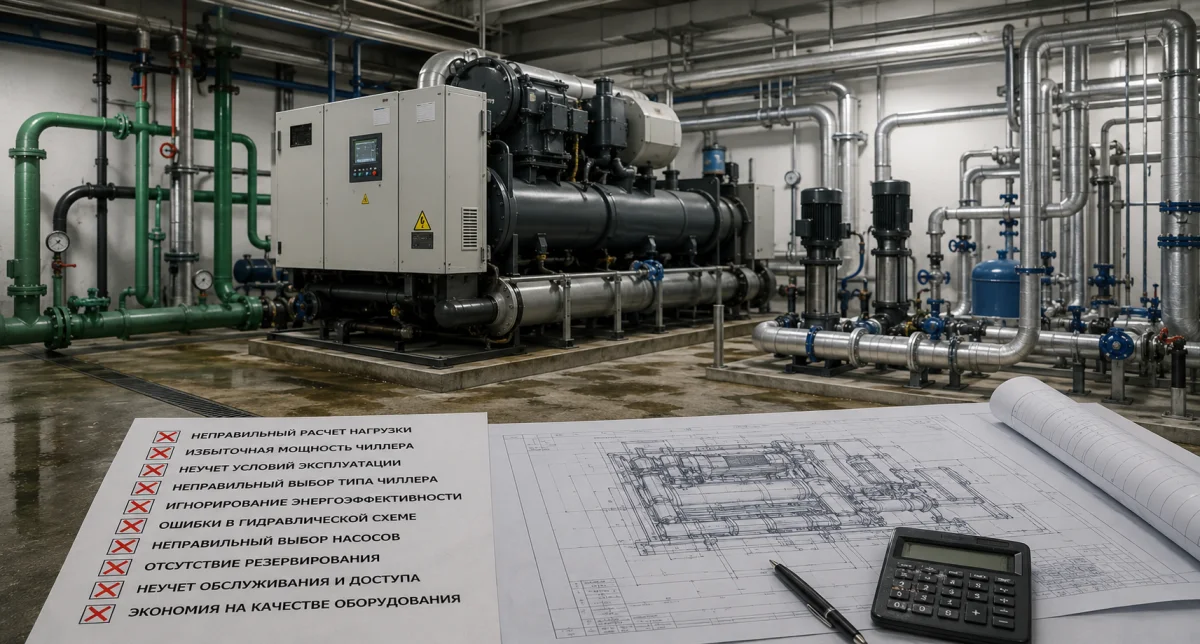
Common mistakes
- comparing equipment price only;
- ignoring pumps, fans and cooling towers;
- using nominal instead of seasonal efficiency;
- adding excessive capacity margin;
- not checking filter and spare-part costs;
- ignoring water quality and heat-exchanger fouling;
- excluding emergency downtime;
- selecting equipment without local service support.
How to reduce HVAC operating expenses
Operating costs are reduced through accurate sizing, variable-speed control, correct setpoints, balancing, heat recovery, clean heat exchangers and timely filter replacement. After commissioning, actual consumption should be compared with the design estimate while temperatures, pressures, compressor run hours and alarms are monitored.
Conclusion
The operating cost of HVAC equipment includes energy, maintenance, consumables, water, repairs, downtime and upgrades. Initial price matters, but it does not show what the system will cost over its complete service life. NIKLAND engineers compare concepts by total cost of ownership, estimate energy consumption and select chillers, VRF systems, air-handling units and controls for Kazakhstan's climate and each facility's actual operating profile.