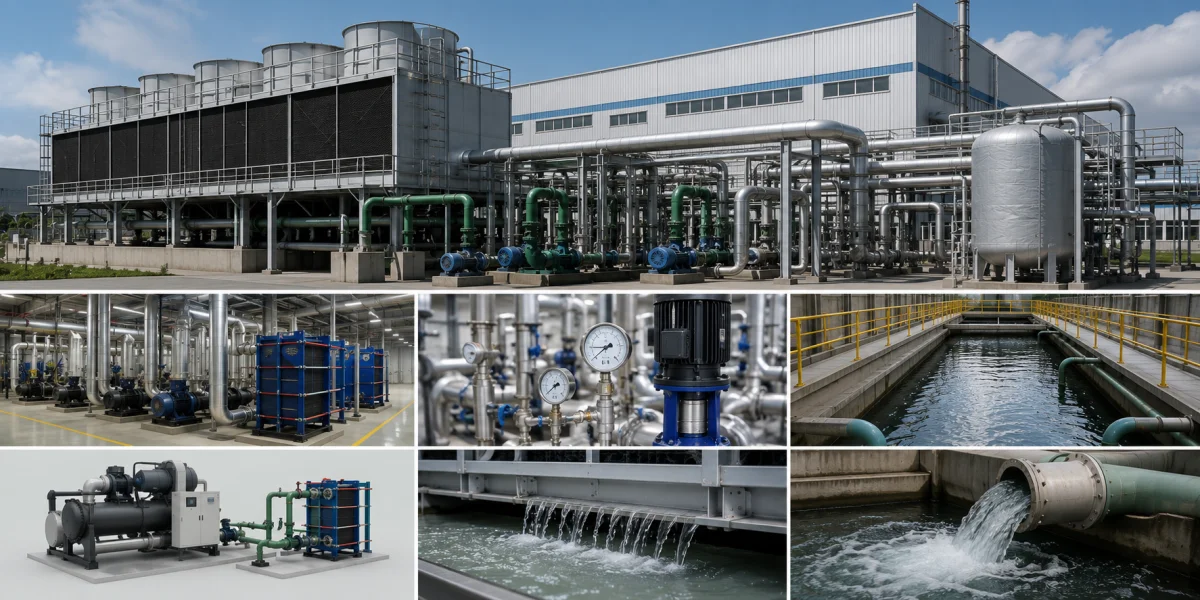
Process water cooling is required where machines, compressors, furnaces, extruders, injection-molding equipment, lasers, hydraulic systems and other industrial equipment release heat. The cooling system must maintain stable water temperature and flow because overheating affects equipment life, process accuracy and product quality.
Industrial cooling cannot be selected from peak capacity alone. The production schedule, minimum load, water quality, redundancy, winter operation and operating cost must also be considered. These inputs determine whether the plant should use a chiller, cooling tower, dry cooler or combined arrangement.
Design inputs
Design data includes the heat release of each consumer, required supply-water temperature, allowable temperature rise, flow, pressure and operating hours. The load may be constant, staged or change rapidly when a production line starts.
Heat load is obtained from equipment documentation, measurements or a process heat balance. When flow and temperature difference are known, capacity is calculated from the heat capacity of water. A smaller allowable temperature difference requires higher flow and can increase pipe size and pump power.
Industrial process chiller
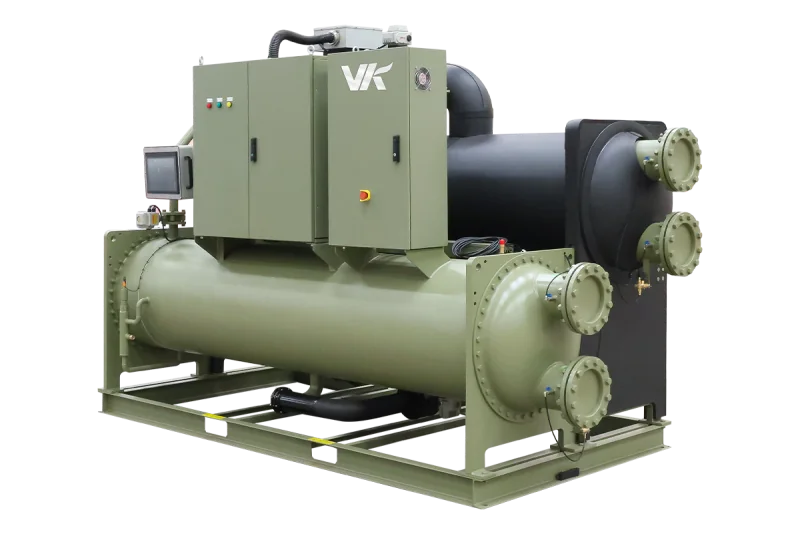
An industrial process chiller is used when stable water temperature is required regardless of summer heat or when the process needs water colder than outdoor air can provide. Typical applications include plastics processing, metalworking, lasers, food lines and equipment with precise temperature limits.
An air-cooled chiller has a simpler external circuit and does not require a cooling tower. A water-cooled chiller can be more efficient at large steady loads but needs condenser-water pumps, a cooling tower and water treatment. Selection should check part-load performance, minimum water temperature, compressor circuits and standby capacity.
Cooling tower for industry
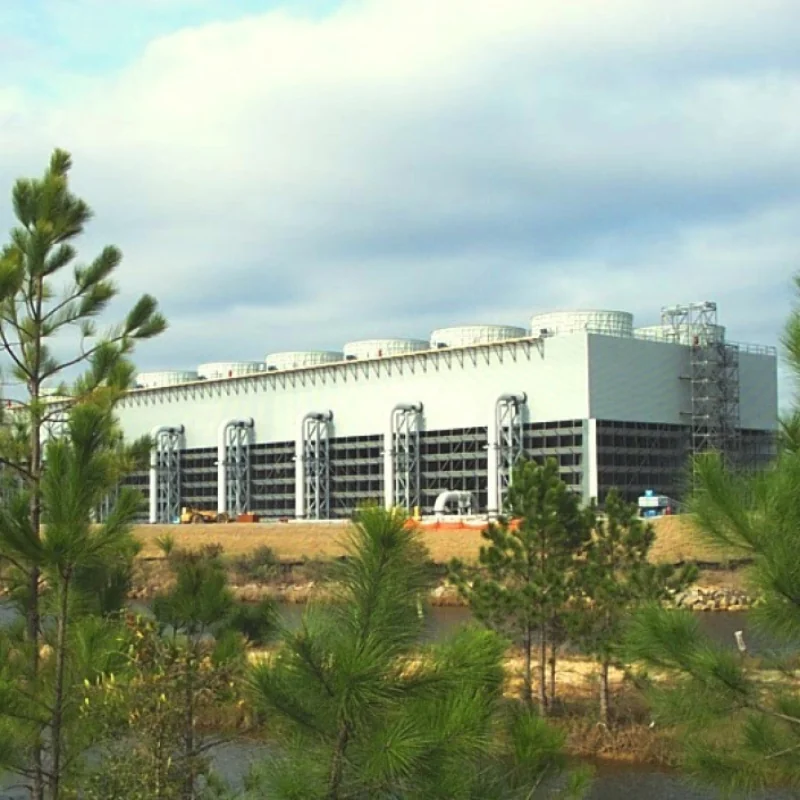
A cooling tower for industry rejects heat through contact between water and air with partial evaporation. It is suitable when the process does not require very cold water and the acceptable supply temperature can follow outdoor wet-bulb conditions.
An open tower is efficient, but water contacts the atmosphere, concentrates dissolved solids and collects contaminants. A closed-circuit tower separates process fluid from outdoor air and better protects sensitive heat exchangers. Both arrangements require makeup, blowdown, filtration, chemical treatment and freeze protection.
Dry cooler and free cooling
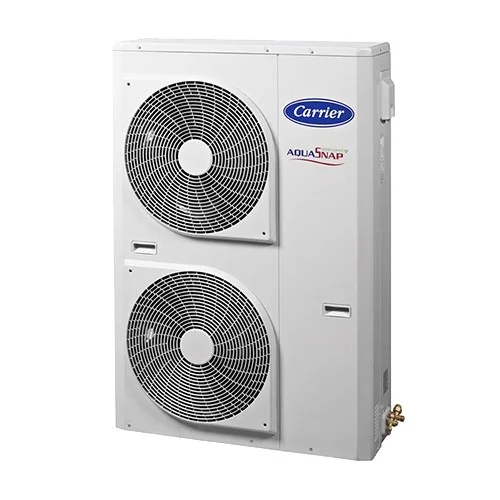
A dry cooler transfers heat to outdoor air through a closed heat exchanger without evaporating water. It uses almost no water and keeps the circuit clean, but cannot cool fluid below outdoor dry-bulb temperature after allowing for the required approach.
During winter and shoulder seasons, a dry cooler can replace part or all compressor operation. This free-cooling mode can significantly reduce annual energy use in Kazakhstan, especially at factories requiring cooling throughout the year.
Recirculating water system
A recirculating water system returns heated water from production equipment to the cooling plant and then supplies it to the process again. Compared with once-through cooling, this reduces fresh-water demand and wastewater discharge.
Sensitive equipment is usually connected to a clean closed loop, while heat is transferred to an external circuit through a plate heat exchanger. This protects narrow passages, molds, laser sources and machine heat exchangers from contamination and corrosion.
Water quality and treatment
Hardness forms scale, dissolved oxygen and salts accelerate corrosion, particles block passages, and biological growth creates deposits. Even a thin scale layer reduces heat transfer, raises equipment temperature and increases system energy use.
Closed loops use treated water, inhibitors, filtration and pH control. Open recirculating loops also require makeup control, automatic blowdown, chemical dosing and microbiological treatment. The program must be selected from water analysis and equipment materials.
Pumps, piping and buffer tank
Pumps must provide design flow through piping, filters, valves, heat exchangers and production equipment. Insufficient flow causes overheating, while excess head increases electricity use, noise and wear.
Variable-speed drives and differential-pressure sensors improve part-load operation. A buffer tank increases water volume, stabilizes temperature and reduces compressor starts. Its volume is selected from minimum chiller run time and the behavior of the process load.
Redundancy and reliability
Production equipment cooling is often a critical utility. Loss of cooling can cause product waste, machine trips or a complete production shutdown. Plants therefore use standby pumps, multiple compressor circuits, modular chillers or a separate backup cooling source.
With an N+1 arrangement, the remaining equipment continues to cover the design load after one unit fails. Bypass lines and isolation valves allow individual components to be serviced without draining the full circuit or stopping every consumer.
Controls and monitoring
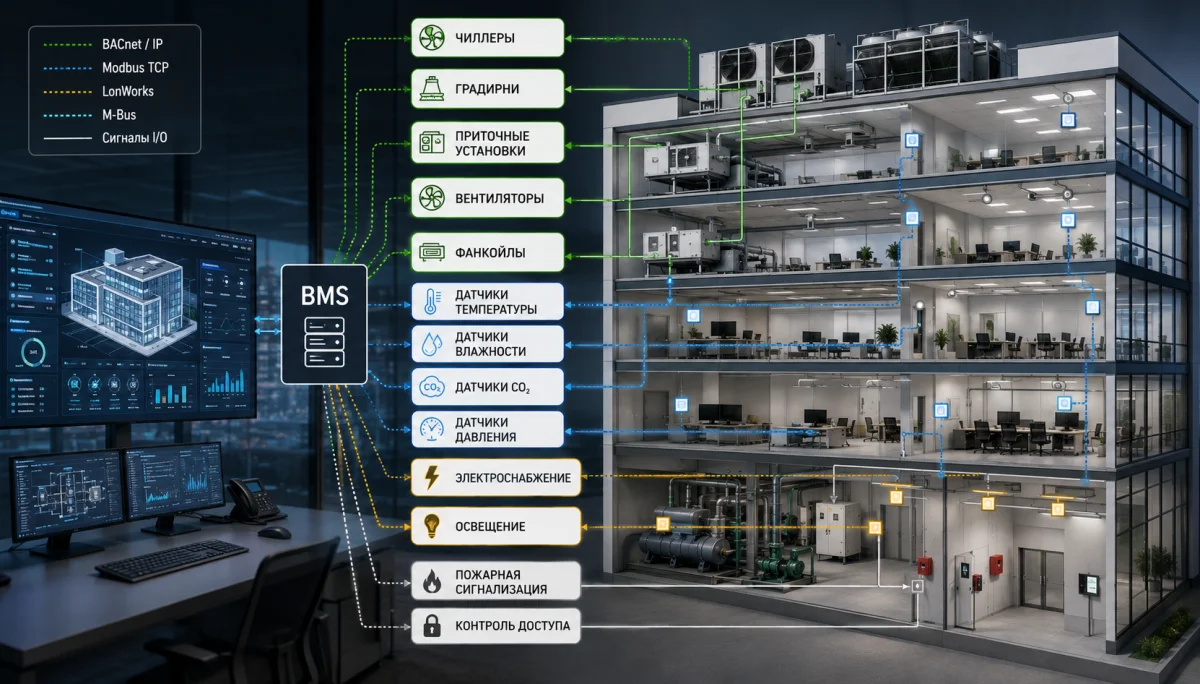
Controls maintain temperature and pressure, regulate pumps and fans, switch between the chiller, cooling tower and free cooling, and monitor flow, levels and alarms. Setpoints should match the requirements of individual machines rather than only a common header temperature.
Monitoring records supply and return temperatures, flow, pressure, electrical power and equipment status. Historical data helps identify heat-exchanger fouling, reduced flow or rising energy use before a serious fault occurs.
Winter operation
Outdoor piping, heat exchangers and tower basins require freeze protection. Solutions include glycol, heat tracing, continuous circulation, drainable sections and dedicated startup sequences. Glycol concentration is selected from design temperature while accounting for higher viscosity and pressure loss.
Cooling towers need fan control, bypass operation, basin heating and operation of a limited number of cells. Idle sections should be fully drained or reliably protected from freezing.
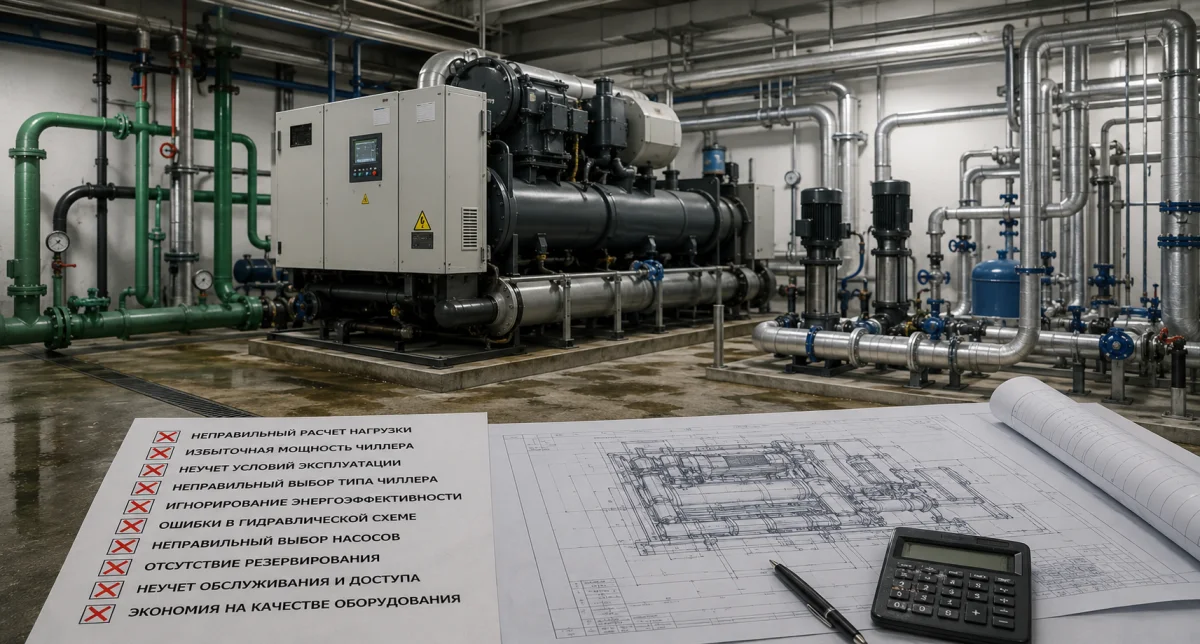
Common mistakes
- selecting equipment only from peak capacity;
- ignoring minimum load;
- failing to separate clean and dirty circuits;
- omitting pressure losses through filters and equipment;
- providing no water treatment;
- selecting an unsuitable process-water temperature;
- providing no standby capacity for continuous production;
- insufficient freeze protection;
- poor access for cleaning and repair;
- no energy metering.
Conclusion
Process water cooling should be designed as one integrated system consisting of the cooling source, recirculating loop, pumps, heat exchangers, water treatment, controls and redundancy. A chiller provides accurate low water temperature, a cooling tower rejects large loads efficiently, and a dry cooler reduces water use and enables free cooling. NIKLAND engineers calculate industrial cooling systems and select equipment for the actual requirements of each production facility.