Choosing a precision or conventional air conditioner for a server room affects more than comfort: it directly influences IT reliability. Servers, storage systems, network switches and uninterruptible power supplies continuously release heat. Even when outdoor temperature is low, the room can overheat rapidly, so cooling must operate throughout the year without long interruptions.
A conventional split system costs less and is easier to install, but it was designed mainly for homes and offices. Precision equipment is intended for continuous technical loads, accurate temperature control, managed airflow and integration with monitoring systems. The correct choice depends on equipment power, room size, redundancy requirements and the acceptable risk of downtime.
Why a server room needs dedicated cooling
In an office, people, solar radiation and outdoor air create much of the heat load, which normally decreases at night. In a server room, almost all electrical power consumed by IT equipment becomes heat. The load remains high around the clock and can increase quickly when new racks are added.
Server room cooling must remove sensible heat, maintain acceptable inlet temperature and prevent local hot spots. Measuring temperature only near the door is insufficient because the top of racks and areas with hot-air recirculation may be considerably warmer.
What is precision air conditioning?
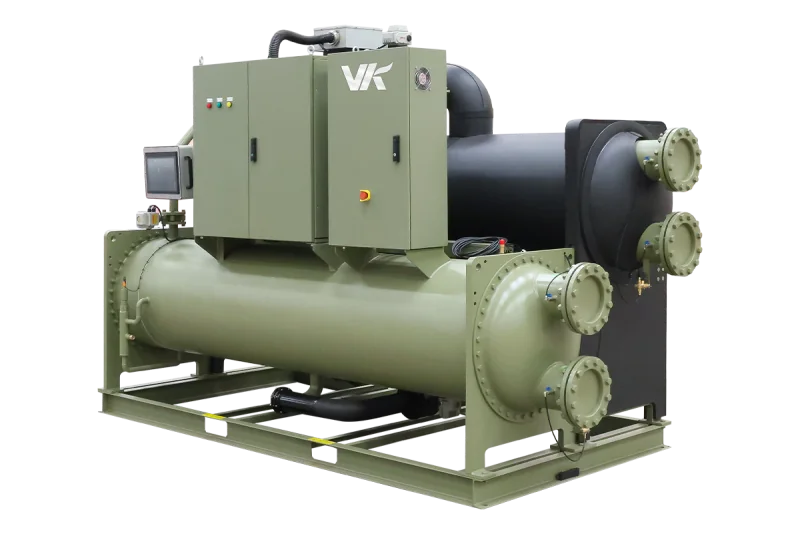
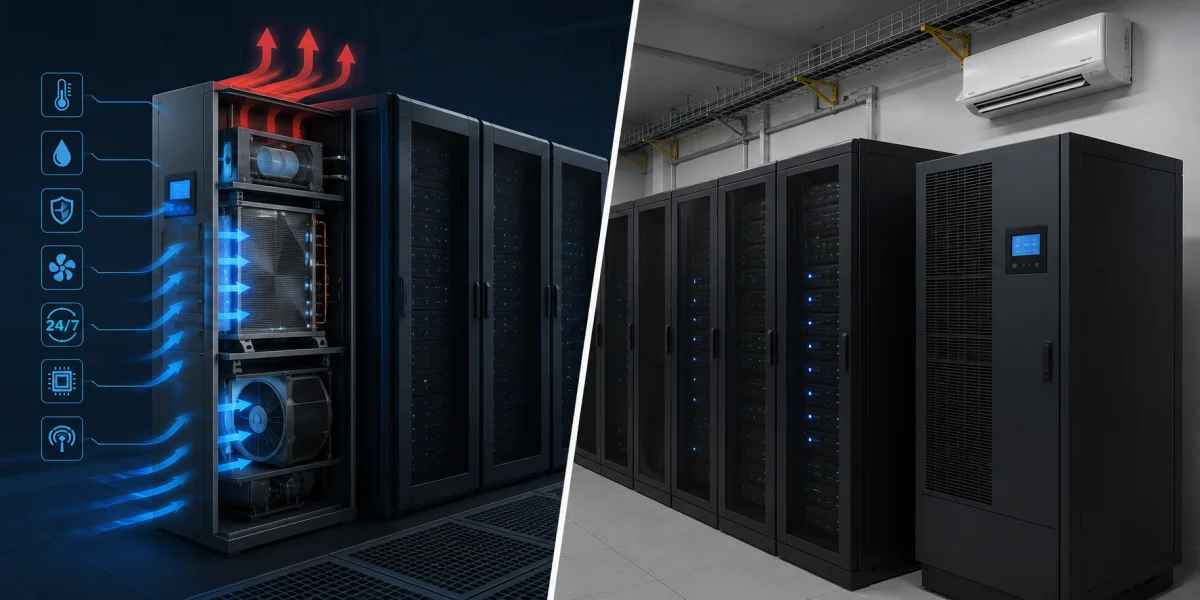
Precision air conditioning maintains controlled conditions in rooms containing technical equipment. These units are designed for continuous operation, a high sensible heat ratio and large airflow. They may supply air upward, downward, through a raised floor or into a cold aisle, use direct expansion or chilled water and coordinate duty and standby units.
How a conventional split system works
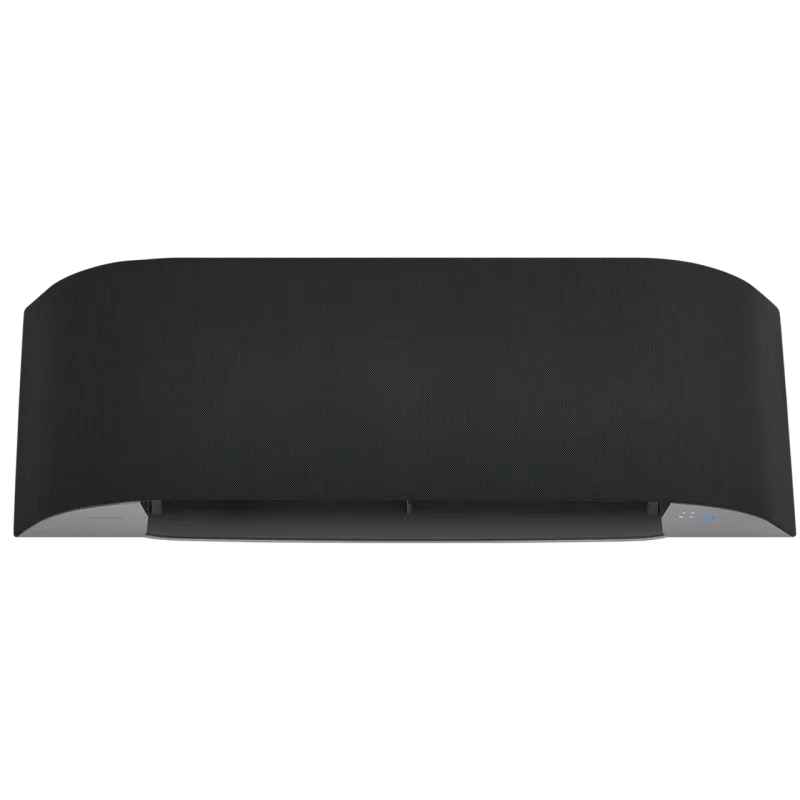
A split system for a server room draws air through the indoor unit, cools it and returns it to the room. It may suit a small server room when approved for year-round cooling and low outdoor temperatures. Comfort systems usually have more limited controls and operating ranges and may dehumidify excessively or cycle frequently when incorrectly sized.
Main differences
| Criterion | Conventional air conditioner | Precision air conditioner |
|---|---|---|
| Purpose | Comfort cooling | Technical cooling for IT equipment |
| Operation | Intermittent or extended | Continuous, 24/7 |
| Control accuracy | Standard room control | Accurate environmental control |
| Air distribution | General room circulation | Directed delivery to racks and hot zones |
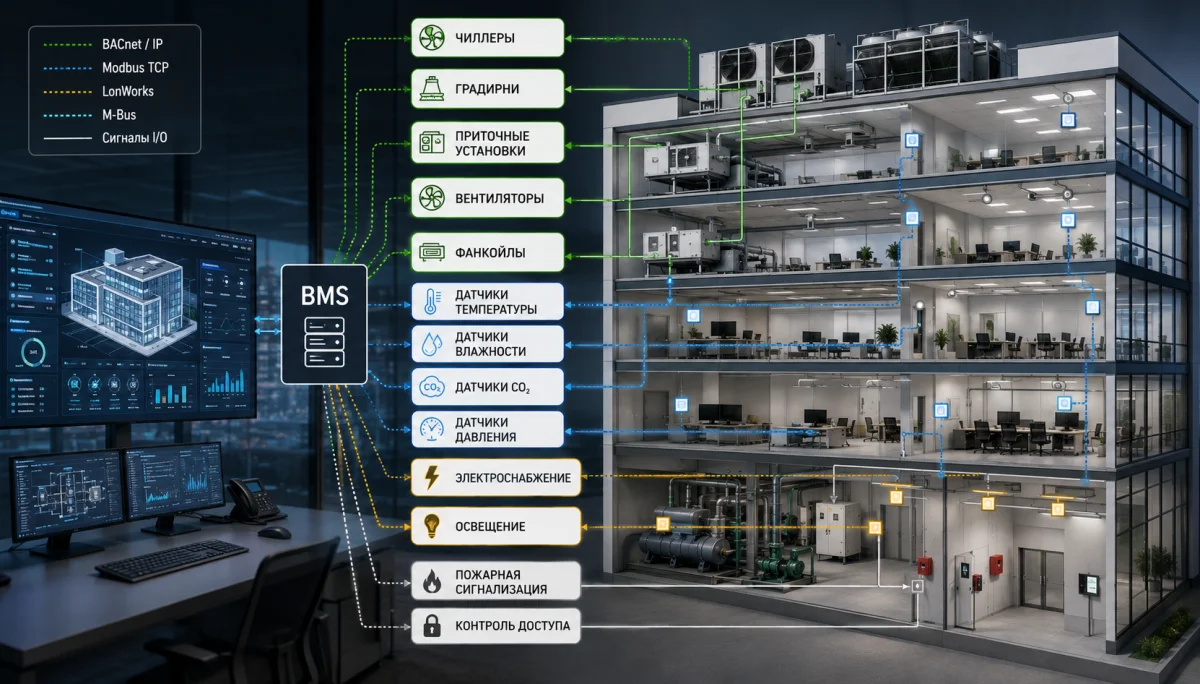
| Monitoring | Limited | Alarms, rotation, BMS and remote control |
| Cost | Lower | Higher but better suited to critical loads |
Continuous operation
A 24-hour air conditioner must maintain capacity in summer, winter and transitional weather. For a conventional split system, the minimum outdoor temperature in cooling mode must be checked. A standard residential model may fail or operate incorrectly during severe cold without a factory low-ambient option or suitable winter controls.
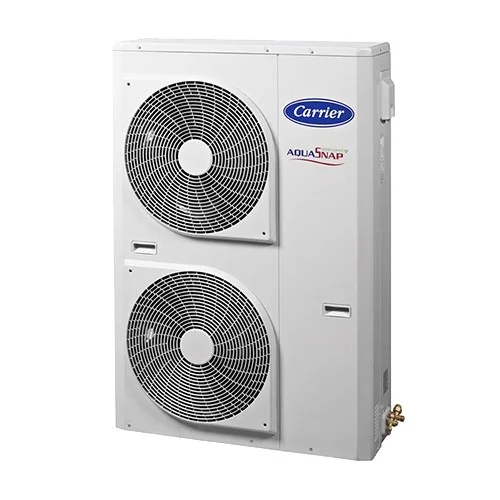
Precision units are developed for continuous operation and have more advanced protection logic. They still require correct selection of the outdoor condenser, chilled-water source or dry cooler for Kazakhstan design temperatures.
Airflow organization
Even a powerful unit will not solve overheating if cold and hot air mix. Server racks draw air through the front and discharge heated air at the rear. Good design separates cold and hot aisles, installs blanking panels in unused rack spaces, seals cable openings and directs supply air toward equipment inlets.
A wall-mounted split system often cools the upper room volume but cannot guarantee equal inlet temperature at every rack. Precision systems can provide downflow through a raised floor, upflow distribution or ducted delivery. The arrangement is selected according to rack density and room layout.
Redundancy and N+1 design
One air conditioner is insufficient for a critical server room regardless of type. A fault, maintenance operation or blocked filter would leave the room without cooling. In an N+1 arrangement, one additional unit is installed beyond the number required to cover the design load.
The controls should rotate duty and standby units, equalize operating hours and start reserve capacity after a fault or high-temperature alarm. Two conventional split systems can also be coordinated by an external rotation controller, but automatic restart after power recovery and alarm transmission must be verified.
Calculating required capacity
The heat load is based on server, UPS, network and lighting power, with additional gains through walls and ventilation and an allowance for expansion. Floor area alone is not a valid sizing method because a small room may have a high heat density. In a redundant arrangement, the remaining units must cover the permissible load after one failure, while excessive oversizing should be avoided because it causes cycling and wear.
When a conventional split system may be acceptable
- the server room is small and the heat load is stable and moderate;
- the operational risk is limited and a standby unit is installed;
- the model supports cooling at the minimum outdoor temperature;
- automatic restart, rotation and alarm signaling are provided;
- airflow is arranged without persistent hot spots.
When precision cooling is required
- IT downtime would cause significant financial or operational loss;
- the heat load is high and distributed across several racks;
- accurate temperature or humidity control is required;
- 24/7 operation, monitoring and automatic redundancy are necessary;
- the design uses a raised floor, contained aisles or directed airflow;
- future server capacity is expected to increase.
Conclusion
A conventional split system may serve a small server room when it is correctly sized, approved for winter cooling, monitored and backed up by a second unit. For high loads and critical infrastructure, a precision air conditioner for a server room is more appropriate because it maintains conditions accurately, manages airflow and is designed for permanent operation. NIKLAND engineers calculate heat loads, select duty and standby equipment and design 24/7 server room cooling for Kazakhstan climate conditions.