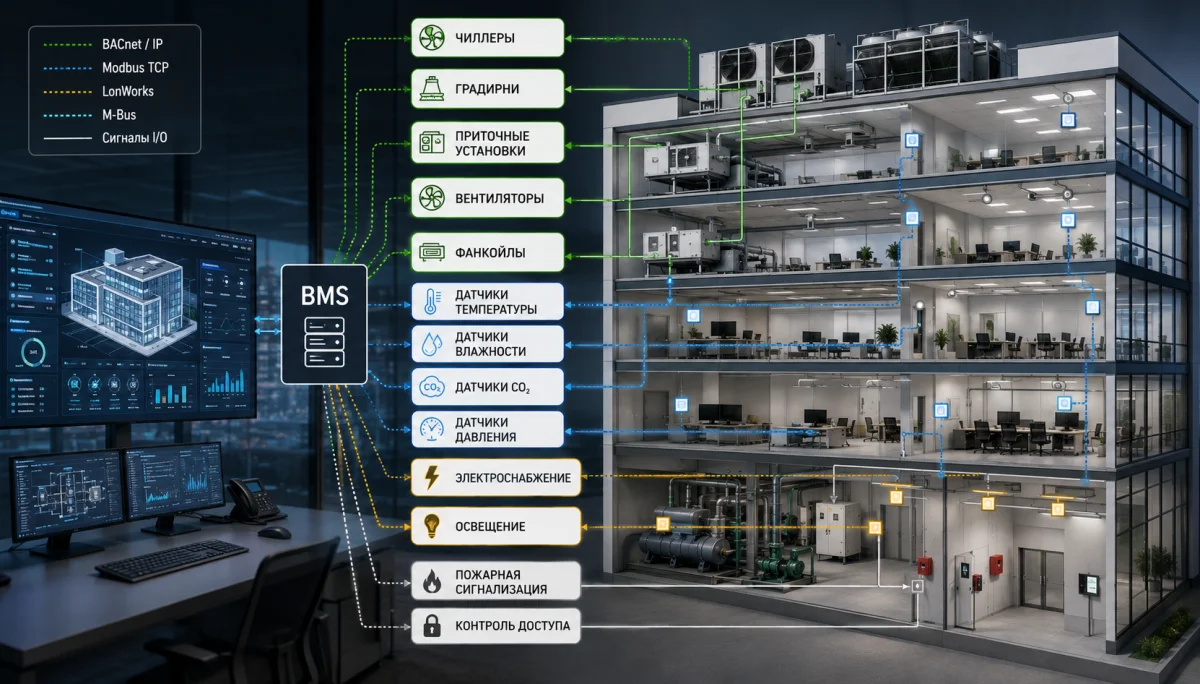
A chiller for building heating can be used when the unit supports reversible operation or is designed as a heat pump. In summer, the machine produces chilled water for fan coils and air-handling units. In winter, it reverses the refrigeration cycle and heats the water circuit. One system can therefore provide both air conditioning and hydronic heating.
A standard cooling-only chiller cannot heat water by itself. Winter operation requires a suitable unit type, verified low-ambient performance, sufficient heating capacity, an appropriate water-temperature schedule, reliable defrost operation and a backup heat source.
What is a reversible chiller?
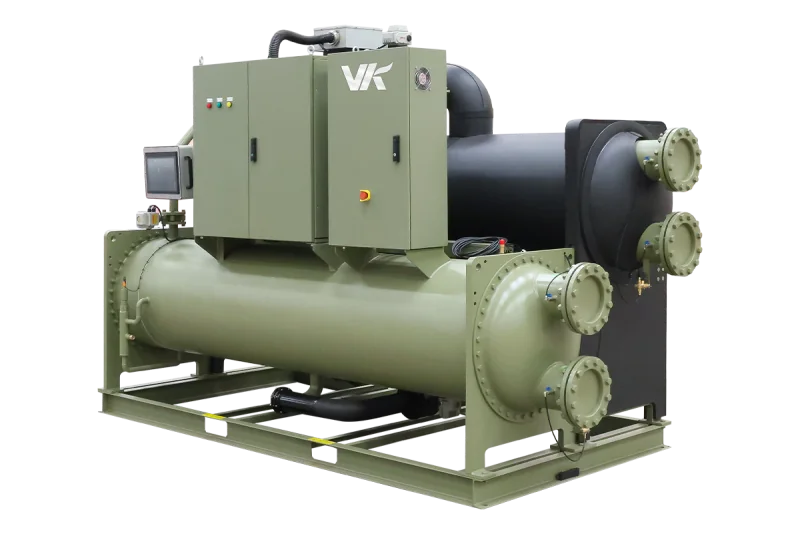
A reversible chiller can change the direction of refrigerant flow. In cooling mode, it removes heat from the building water circuit and rejects it to outdoor air or condenser water. In heating mode, the process is reversed: heat is extracted from the external source and transferred to the heating-water loop.
This is why such a unit is called a chiller heat pump. The compressor does not create all heat through direct electric resistance. It moves energy, allowing the system to deliver several kilowatts of heat for each kilowatt of electricity under suitable conditions.
Which chillers can provide heating?
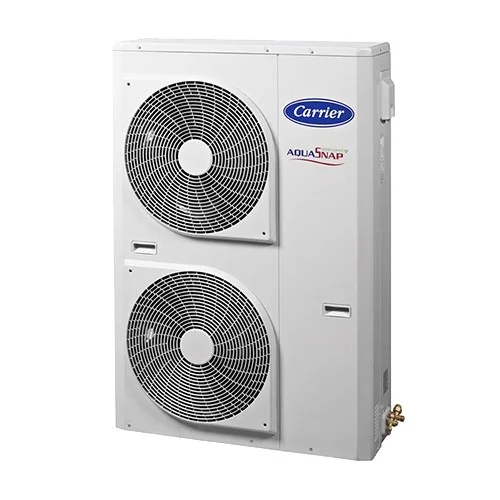
The most common option is an air-cooled chiller with a reversible cycle. During winter, its outdoor heat exchanger extracts heat from the air, while the internal heat exchanger warms the building water. These units are used for offices, hotels, shopping facilities, warehouses and other commercial buildings.
How heating mode works
In heating mode, refrigerant absorbs energy in the external heat exchanger. The compressor increases refrigerant pressure and temperature, and the condenser transfers the heat to water. Warm water then flows to fan coils, air-handling-unit coils, underfloor heating or low-temperature radiators.
A chiller in heating mode works more efficiently with moderate leaving-water temperature. As required water temperature rises and outdoor air becomes colder, compressor lift and electrical demand increase. Equipment must therefore be selected from winter ratings, not only nominal catalogue data.
Heating with fan coils
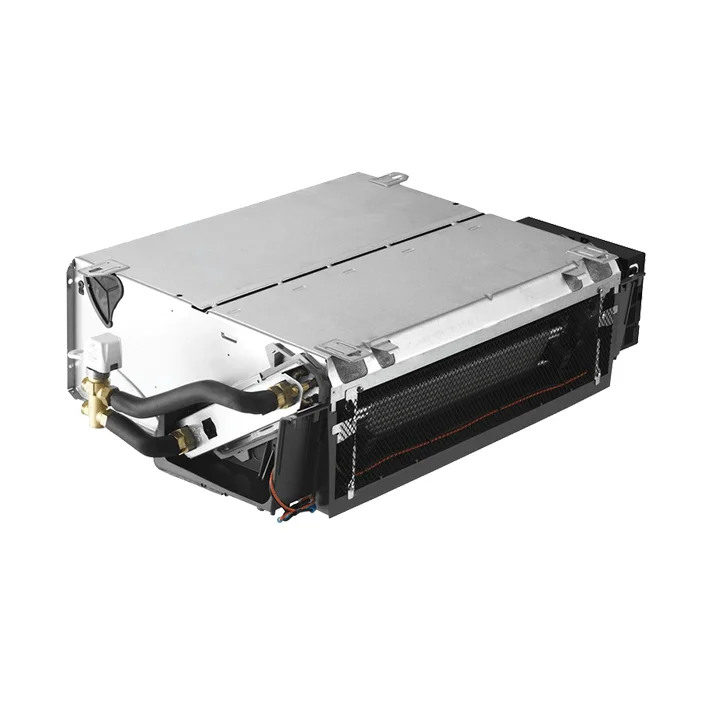
Heating with fan coils is a natural extension of a summer chilled-water system. During winter, warm water enters the fan-coil heat exchanger. The fan moves room air across the coil and supplies heated air to the occupied space. A thermostat controls room temperature and fan speed.
Fan coils respond quickly to changing loads, provide individual room control and suit offices, hotels and retail areas. Properly selected units can provide the required output with lower water temperature than traditional radiators, improving heat-pump efficiency.
Heating-water temperature
Reversible chillers are normally most efficient with a low-temperature heating schedule. Exact limits depend on the model, but the designer should use the lowest water temperature that still satisfies room loads. Fan coils, underfloor heating and oversized radiators can provide the required capacity without excessive water temperature.
If an existing system is designed for 80–90 °C water, a conventional chiller heat pump may not be suitable. Higher leaving-water temperature reduces heating output, increases electricity consumption and raises compressor stress. A boiler may be retained for peak heating or a high-temperature unit may be required.
Winter operation in Kazakhstan
Winter suitability is determined by manufacturer performance tables. As outdoor temperature decreases, an air heat exchanger has less available energy while building heat loss increases. A unit that covers the load at 0 °C may be undersized during severe frost.
For Almaty, Astana, Karaganda and other cities in Kazakhstan, the unit should be checked at the local design temperature. Important values include minimum operating temperature, available heating capacity, electrical input, leaving-water temperature and capacity reduction during defrost.
Outdoor-coil defrosting
During cold and humid weather, frost forms on the outdoor heat exchanger. It restricts airflow and reduces heat transfer. The controller temporarily changes the refrigeration cycle to warm the coil and remove ice.
During defrost, useful heat supply can decrease or stop briefly. A buffer tank helps smooth this period. Defrost water must also be drained correctly. Without a heated base pan and suitable drainage, ice can accumulate around the unit or refreeze inside the equipment.
Bivalent operation with a boiler
Cold climates often use a heat pump together with a boiler. While outdoor temperature is moderate, the reversible chiller covers the heating load. Below the bivalent point, controls start a gas, electric or other backup source.
The boiler may cover only the missing capacity or completely replace the chiller during the coldest hours. This avoids oversizing the chiller for a short annual peak and maintains heating during equipment failure or maintenance.
How to size the system
Selection begins with a building heat-loss calculation. The engineer includes walls, roof, windows, doors, floor, infiltration and the energy required to heat outdoor ventilation air. The calculated load is compared with actual chiller capacity at the winter design temperature and required water schedule.
Summer cooling capacity alone is not sufficient. The same machine has different ratings in cooling and heating modes. Minimum modulation, system water volume, part-load operation and available electrical capacity must also be checked.
- building design heating load;
- chiller capacity at minimum outdoor temperature;
- supply and return water temperatures;
- capacity reduction during defrost;
- fan-coil output in heating mode;
- backup capacity and bivalent point.
Hydraulics and freeze protection
A chiller–fan coil heating system includes circulation pumps, an expansion vessel, strainers, isolation valves and control valves. A buffer tank or hydraulic separator is often installed to maintain stable flow and reduce frequent compressor starting.
If water pipes connect directly to an outdoor unit, the circuit requires freeze protection. Options include glycol, emergency drainage, backup power for pumps or an intermediate heat exchanger. Glycol concentration must be calculated because excessive concentration reduces heat transfer and increases hydraulic resistance.
When is the solution suitable?
Using a chiller for heating is practical when the building already uses fan coils, requires both cooling and heating, has no convenient gas connection or needs to reduce fuel use. New energy-efficient buildings with low-temperature terminals normally provide the best conditions.
An older building with high heat loss, high-temperature radiators and limited electrical capacity may require renovation. Insulation, terminal-unit replacement, electrical upgrades and annual operating cost should be evaluated before equipment selection.
Common mistakes
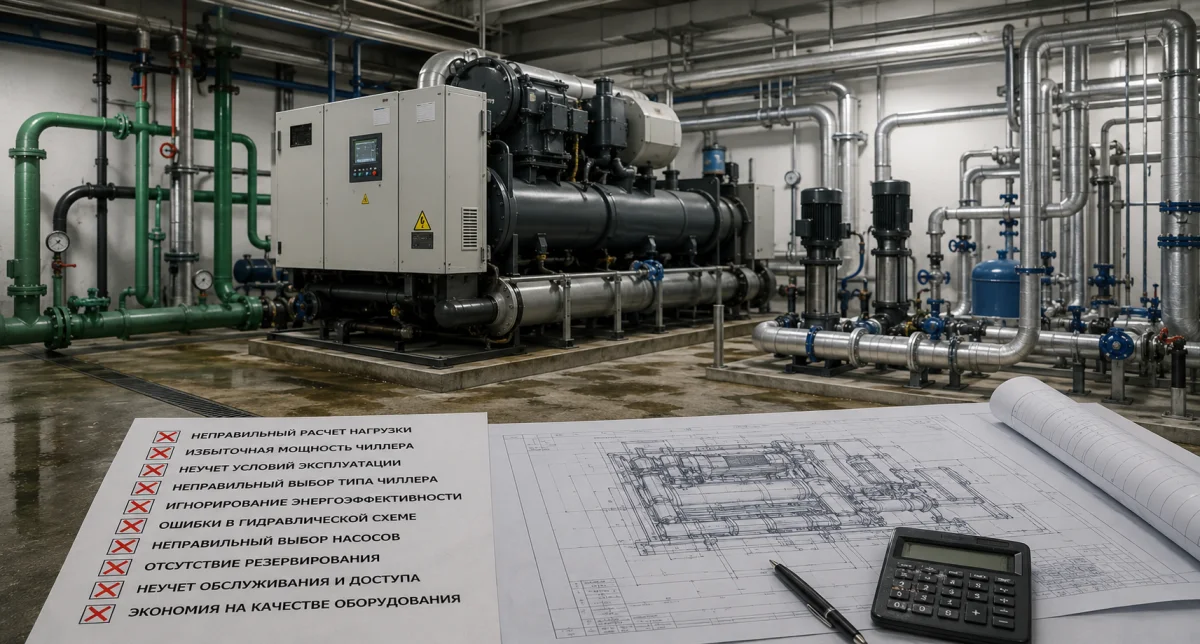
- trying to use a cooling-only chiller for heating;
- sizing from summer capacity without winter tables;
- ignoring minimum outdoor operating temperature;
- requiring excessively high heating-water temperature;
- omitting backup for frost and equipment failure;
- ignoring defrost cycles;
- insufficient system water volume and frequent starts;
- no freeze protection for outdoor water piping.
Conclusion
A chiller for building heating can be used during winter when it is a reversible model or a purpose-built chiller heat pump. The system combines cooling and fan-coil heating, but requires verified low-ambient capacity, a low-temperature water circuit, correct hydraulics, defrost management and a backup source. NIKLAND engineers calculate heating loads and select reversible chillers, fan coils, controls and bivalent arrangements for the climate and operating profile of each facility.