
How to choose a fan coil unit for an office, apartment, hotel, shop or industrial space? The visible difference may appear to be only the casing and mounting method, but the unit type affects air distribution, noise, maintenance access, ceiling construction and installation cost. A poor choice can cause drafts, insufficient cooling, difficult service and expensive changes to finished interiors.
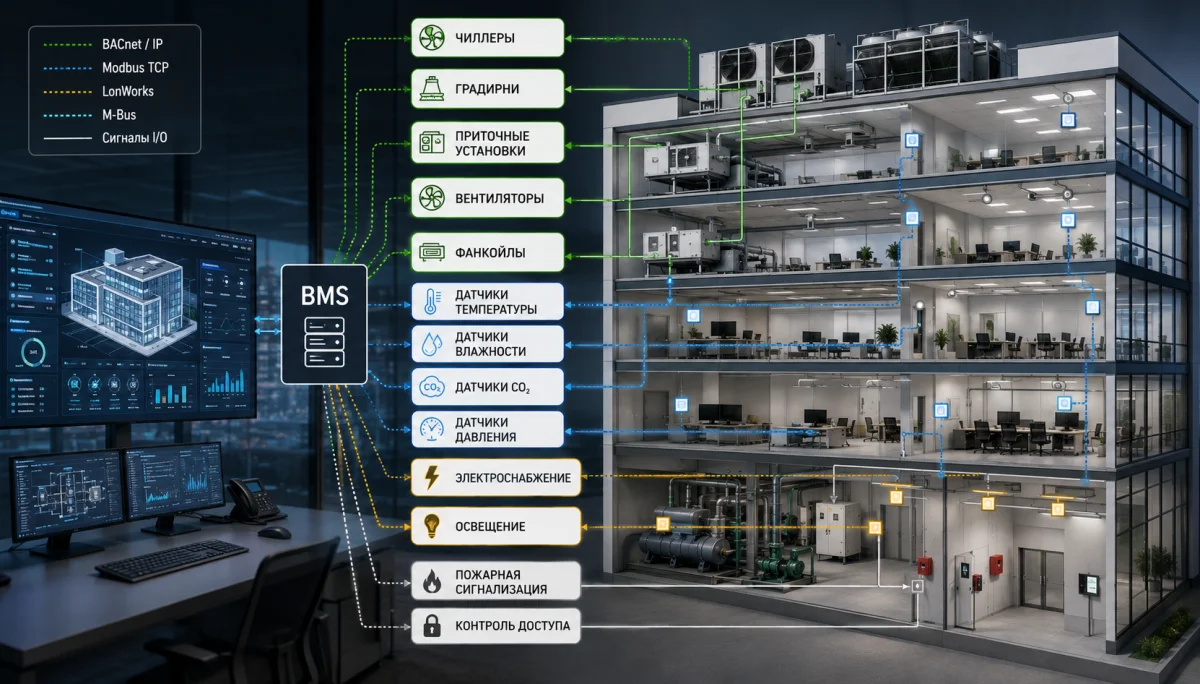
A fan coil is an indoor terminal connected to a water-based HVAC system. Chilled or hot water from a chiller, heat pump or boiler passes through the coil while a fan moves room air across it. Systems may be two-pipe or four-pipe and can include local thermostats, control valves and central BMS integration.
Main fan coil types
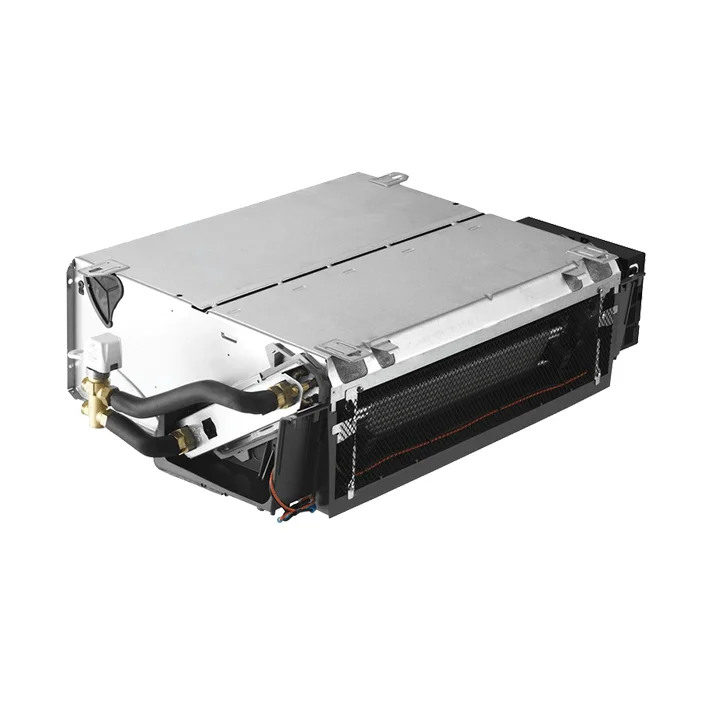
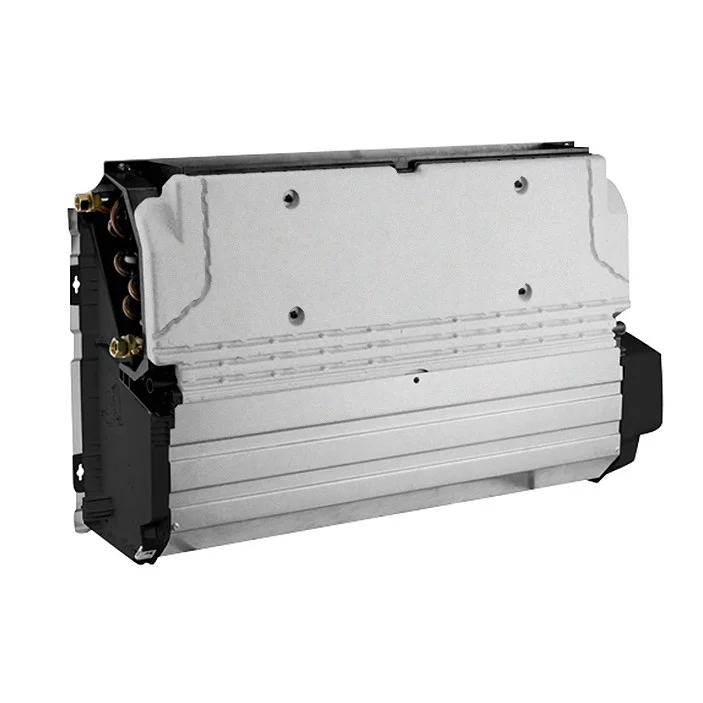
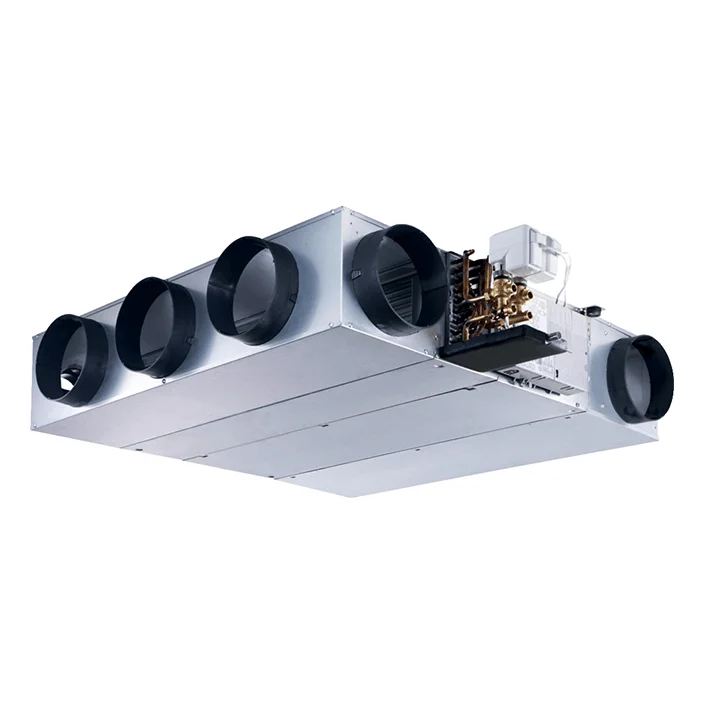
The principal fan coil types are cassette, ducted, wall-mounted and floor-mounted units. Universal floor-ceiling and concealed chassis models are also available. Cassette units distribute air from a suspended ceiling, ducted models work through air ducts, wall units suit rooms without ceiling space, and floor units are useful near glazing and external walls.
Before selecting the casing type, the designer must determine cooling capacity, airflow, available static pressure, noise level, ceiling depth and routes for water pipes and condensate drainage.
Cassette fan coil
A cassette fan coil is installed above a suspended ceiling with only the decorative panel visible. Four-way discharge provides even air distribution, making it suitable for offices, shops and restaurants. It keeps walls free but requires adequate ceiling depth and service access to the filter, coil, fan and drainage system.
Ducted fan coil
A ducted fan coil is concealed above a ceiling or in a technical area and supplies air through grilles and diffusers. It suits complex spaces and multiple supply points. External static pressure is critical: if duct and grille resistance exceeds fan capability, actual airflow and capacity will fall.
Wall-mounted fan coil
A wall-mounted fan coil resembles a split-system indoor unit and requires no suspended ceiling. It suits offices, hotel rooms, apartments and refurbishment projects. Installation is simple, but the unit remains visible and one-point air discharge may create drafts. Water pipes, drainage and vapor-tight insulation must be routed carefully.
Floor-mounted fan coil
A floor-mounted fan coil is installed near a wall, window or glazed façade. It suits spaces without suspended ceilings and handles façade loads effectively. Service access is convenient, but the unit uses wall space. Selection should check casing height, airflow direction, noise and output at the actual hot-water temperature.
Fan coil capacity selection
Fan coil selection begins with a room heat-load calculation. Glazing area and orientation, occupants, lighting, equipment, outdoor air and operating schedule are considered. Floor area alone is not sufficient because two rooms of equal size may have very different loads.
Catalog capacity depends on entering water and air temperatures. If chilled-water temperature is higher than the standard rating condition, actual cooling capacity falls. Heating output also depends on hot-water temperature and flow. Manufacturer performance tables must be used for the real design conditions.
Airflow and noise
The unit must provide sufficient air movement without discomfort. High fan speed increases capacity but also increases noise. In bedrooms, hotel rooms, offices and meeting rooms, the unit should normally cover most of the load at low or medium speed.
Ducted units must be assessed together with ducts, attenuators and grilles. Cassette and wall units should be compared using consistent sound-power or sound-pressure data because catalog methods may differ between manufacturers.
System arrangement and controls
A two-pipe fan coil provides either cooling or heating, while a four-pipe unit can change mode independently. Temperature is regulated by fan speed and water flow. Two-way or three-way valves must match the hydronic design, and large projects may integrate fan coils with a BMS.
Drainage and condensation protection
Cooling produces condensate on the coil. Water collects in a drain pan and leaves by gravity or a condensate pump. The drain needs slope, a trap and cleaning access. Poor drainage causes leaks, odors and ceiling damage.
Chilled-water pipes, valves and fittings require continuous vapor-tight insulation. Even a small exposed section may sweat. Access to the drain pan and pump is especially important for cassette and ducted units.
Maintenance access and lifecycle cost
The cheapest unit is not always the least expensive over its lifetime. Filters, valves, drain pans, fan motors and condensate pumps must remain accessible after the ceiling and interior finishes are complete. Poor access increases service time and may require removal of ceiling panels or furniture.
Selection should therefore include installation cost, control valves, drainage, access hatches, ductwork and future maintenance. A slightly more expensive fan coil with suitable pressure, lower noise and better access may reduce operating problems and total ownership cost.
Which fan coil should be selected?
A cassette unit suits open spaces with suspended ceilings. A ducted unit is best where concealed equipment and several supply points are required. A wall-mounted unit is practical for refurbishment or rooms without ceiling space. A floor-mounted unit is effective near glazing and external walls.
The final decision should follow load calculations and checks of water temperature, airflow, noise, hydronics and maintenance access. A single building may use several fan coil types for different zones.
Conclusion
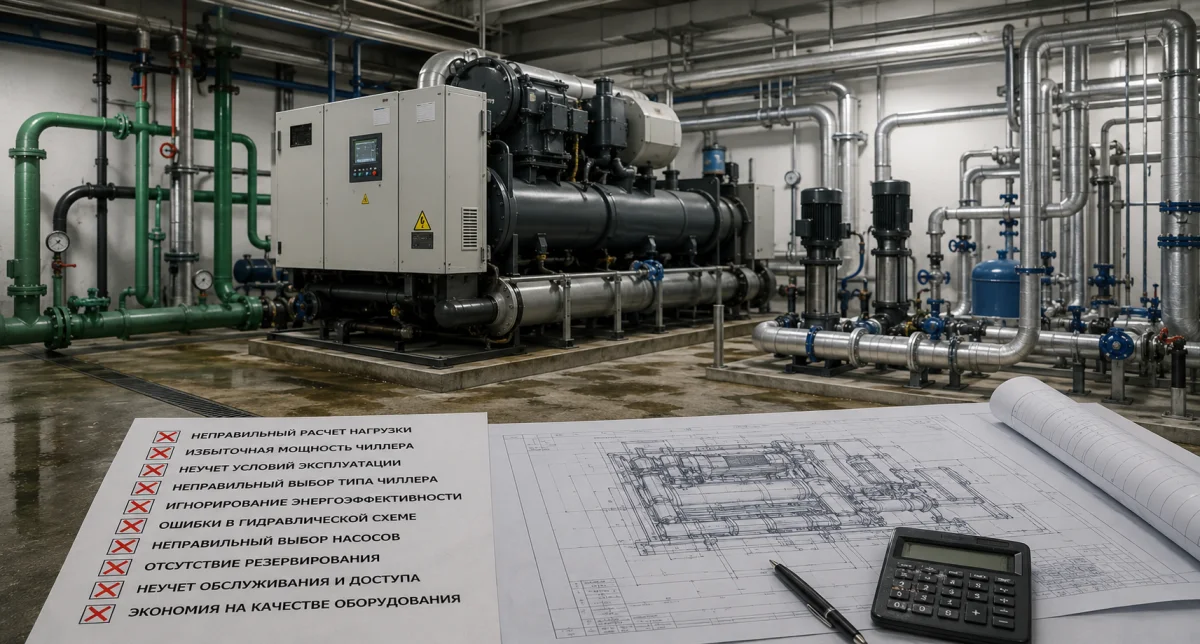
To understand how to choose a fan coil unit, consider more than appearance. Real capacity, air distribution, noise, maintenance access, drainage and controls are equally important. Cassette, ducted, wall-mounted and floor-mounted units suit different architectural conditions. NIKLAND engineers perform fan coil selection, hydronic calculations and complete chiller–fan coil system design for the building function and Kazakhstan climate.