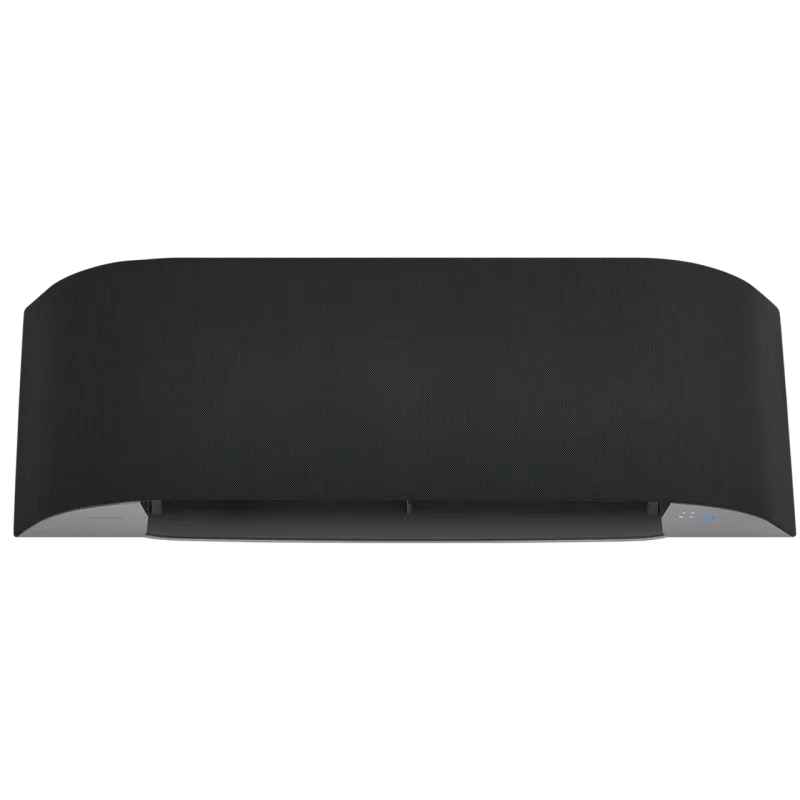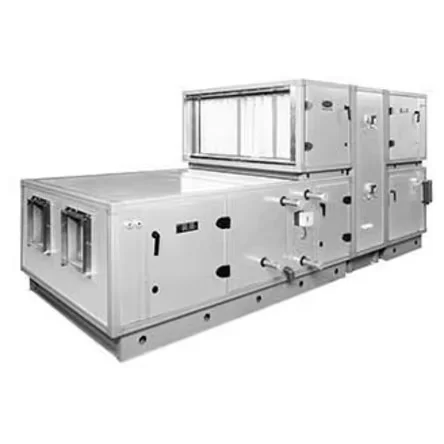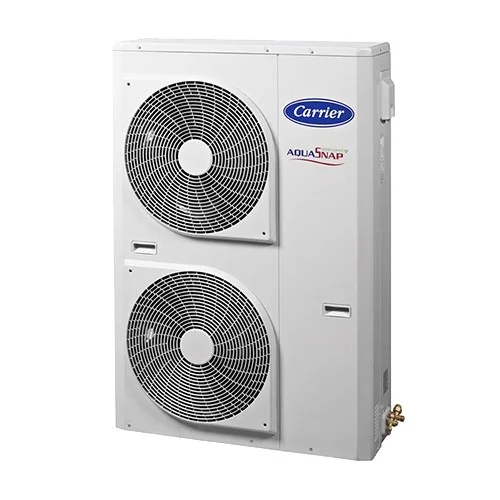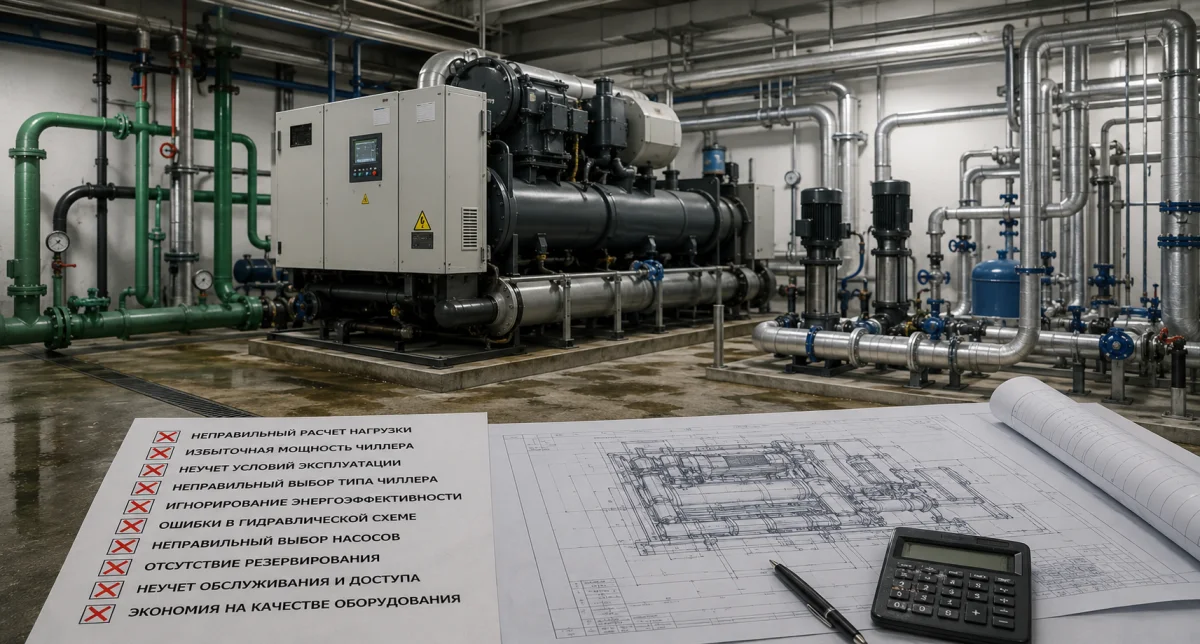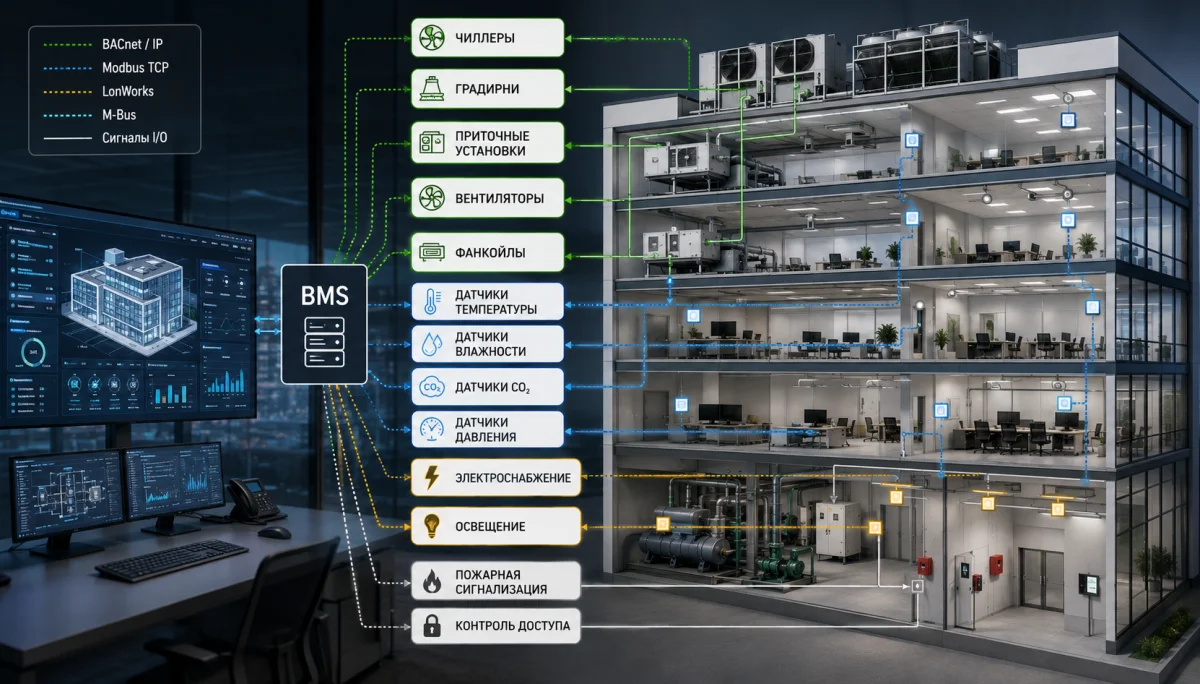
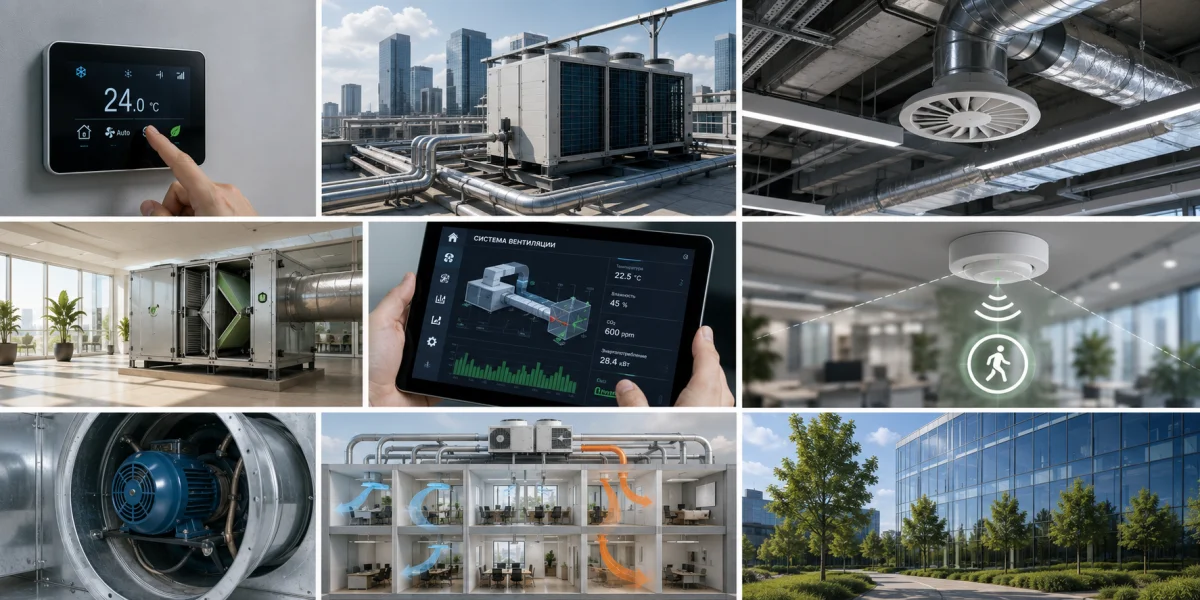
Energy efficiency of air-conditioning systems depends on more than equipment ratings. Actual consumption is affected by building load, water and air temperatures, heat-exchanger condition, filters, pumps, fans and controls.
Energy reduction begins with measurement. Compressor, fan, pump and heater use is identified, and improvements are ranked by cost, savings and impact on reliability.
Carry out an HVAC energy audit
An HVAC energy audit collects electricity use, temperatures, flow, pressures, loading and schedules across different days and seasons. Continuous low-load chiller operation, fixed-speed pumps and full ventilation at night indicate clear optimization potential.
Correct operating schedules
Air-handling units, fan coils, chillers and pumps should follow real occupancy. Unoccupied mode can use wider temperature limits and reduced ventilation. Server rooms and continuous processes should be separated so the complete building does not operate for one small critical zone.
Ventilation optimization by actual demand
Ventilation optimization uses schedules, occupancy or CO₂ instead of permanent maximum airflow. This reduces fan power and outdoor-air conditioning energy while preserving minimum hygiene airflow and supply-extract balance.
Variable-speed fan control
Variable-frequency drives replace wasteful damper throttling and regulate speed from duct pressure, damper position or zone demand. Minimum speed must preserve air distribution and stable coil operation.
Variable-speed pump control
Variable-speed pump control maintains differential pressure and reduces speed as two-way valves close. Retrofit design must check minimum chiller flow, sensor position, bypass requirements and part-load stability.
Reducing chiller energy consumption
Reducing chiller energy consumption starts with a correct water setpoint. Unnecessarily cold water increases compressor work. Reset schedules follow outdoor conditions and load, while sequencing prevents several chillers from operating inefficiently at very low capacity.
Keep heat exchangers clean
Dirty condensers raise pressure and chiller consumption, while fouled evaporators reduce heat transfer. Cleaning should follow measured condition. Water-cooled plants also require water treatment, tube cleaning, cooling-tower maintenance and control of scale and biological growth.
Use heat recovery
Heat recovery reduces winter heating and summer cooling by transferring energy from exhaust to supply air. Evaluation includes efficiency, operating hours, pressure loss and fan power. Automatic bypass and frost protection are essential.
Prevent simultaneous heating and cooling
Conflicting setpoints, leaking valves or incorrect sequences can make one system cool while another heats the same space. A dead band, setpoint limits and BMS trend analysis remove this waste.
Optimize controls and BMS
Controls manage setpoints, pumps, fans, chiller sequencing, heat recovery and schedules. Trends for temperature, pressure, valve position, drive frequency and electricity reveal excessive pressure, short cycling and problem zones.
Optimize temperatures and setpoints
Unnecessary cooling or heating increases load. Setpoints should match room function and season, while supply-air and water temperatures can reset from outdoor conditions, load and valve position.
Measuring HVAC electricity savings
HVAC electricity savings are verified before and after work with weather, occupancy and operating hours normalized. Low-cost measures include schedules, sensors, cleaning and control tuning. Drives, heat recovery, chiller replacement and BMS upgrades are evaluated by payback and lifecycle cost.
Commissioning and continuous monitoring
Energy performance should be confirmed during commissioning rather than assumed from equipment ratings. Airflow, water flow, temperatures, pressure, valve position and drive frequency are measured at full and part load. The results become a reference for future maintenance and help identify whether control sequences operate as intended.
After handover, regular review of BMS trends can reveal gradual efficiency loss. Rising condenser pressure, increasing filter pressure drop, longer compressor runtime or pumps operating at higher speed than before often indicate fouling, hydraulic imbalance or sensor drift.
Maintenance as an energy-saving measure
Planned maintenance directly affects energy use. Dirty filters increase fan resistance, loose belts reduce fan efficiency, incorrect refrigerant charge affects compressor performance and failed valves create uncontrolled heating or cooling. These faults may remain unnoticed because rooms still reach temperature while equipment runs longer.
Maintenance reports should include measured operating values rather than only a list of completed tasks. Comparing pressure, temperature difference, current and drive frequency over time makes it possible to detect deterioration before it becomes a breakdown or a major energy penalty.
Prioritizing improvements
The first stage should normally correct faults, schedules and control settings because these measures are inexpensive and can produce immediate results. The next stage may include variable-speed drives, additional sensors, hydraulic balancing and heat recovery. Equipment replacement is justified only after the existing system has been measured and optimized.
Each project should define a baseline, expected saving, implementation cost, payback and method of verification. This prevents investment in attractive but ineffective upgrades and focuses the budget on measures that suit the actual load profile of the building.
Common mistakes
- replacing equipment without measuring actual load;
- running ventilation and pumps continuously at full output;
- using unnecessarily low water or air temperatures;
- leaving sensors disabled and equipment in manual mode;
- operating with dirty filters and heat exchangers;
- heating and cooling the same zone simultaneously;
- estimating savings only from catalog data.
Recommended optimization sequence
- collect energy and operating data;
- repair faults and clean equipment;
- correct schedules and setpoints;
- enable demand-based control;
- optimize pumps, fans and chiller sequencing;
- evaluate capital measures by lifecycle cost;
- verify results with meters and BMS trends.
Conclusion
Energy efficiency of air-conditioning systems improves through coordinated operation rather than one equipment replacement. The greatest results often come from energy audits, schedules, variable-speed pumps and fans, ventilation optimization, clean heat exchangers and correctly commissioned controls. NIKLAND analyzes HVAC operation and develops energy-reduction measures for Kazakhstan buildings and industrial facilities.