Chiller repair rarely begins with an unexpected shutdown. Earlier signs include water not reaching setpoint, longer compressor operation, rising pressure, repeated alarms or unusual noise. Early diagnostics can prevent major damage and long downtime.
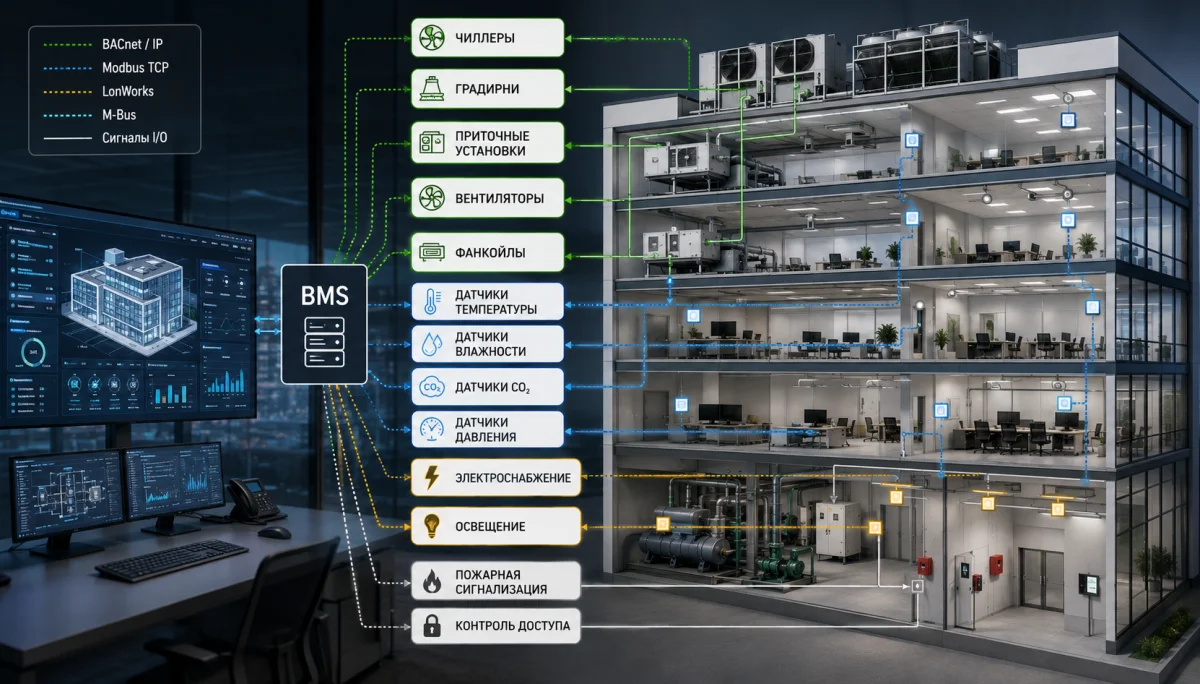
A chiller combines compressors, heat exchangers, pumps, controls, electrical components and hydronics. A symptom in one area may be caused elsewhere, so troubleshooting begins with measurements rather than immediate part replacement.
Main warning signs
- leaving-water temperature does not reach setpoint;
- compressors run almost continuously;
- the machine starts and stops too frequently;
- high- or low-pressure alarms repeat;
- energy use rises at the same load;
- new vibration, knocking or grinding appears;
- water, oil or refrigerant leakage is visible;
- one refrigeration circuit behaves differently;
- an alarm returns after reset.
Chiller does not cool
When a chiller does not cool to setpoint, possible causes include low water flow, a dirty evaporator, a closed valve, blocked strainer, incorrect controls or excessive load. Technicians check water temperatures, pressure difference, pumps, valves, refrigerant pressures, superheat, subcooling and compressor current.
High chiller pressure
High chiller pressure normally indicates poor heat rejection. Air-cooled machines require checks of coils, fans, rotation and hot-air recirculation. Water-cooled chillers require checks of condenser-water flow, temperature, cooling towers and fouling. Overcharge and non-condensable gases are also possible.
Low pressure and refrigerant loss
Low-pressure alarms may result from leakage, low water flow, fouling, icing or an expansion-valve fault. Adding refrigerant without finding the cause is temporary. The circuit is leak-tested, repaired, evacuated and then recharged.
Frequent starting and stopping
Short cycling increases compressor wear. Causes include oversized capacity, low water volume, no buffer tank, incorrect temperature differential, unstable sensors or low flow. Controls, system volume, pumps and flow distribution must all be checked.
Increased energy consumption
Higher electricity use at the same load may indicate condenser fouling, poor heat transfer, high condensing temperature, compressor wear or incorrect fan and pump operation. Current, pressures and temperatures should be compared with earlier service records.
Noise and vibration
New humming, knocking or vibration requires inspection of supports, fans, bearings, compressors and piping. Strong compressor vibration can indicate wear, liquid return, incorrect pressure or electrical problems. Operation should be limited until the cause is known.
Refrigeration machine errors
Refrigeration machine errors may result from sensors, wiring, real limits or connected equipment. The code, time, operating mode and values should be recorded before reset. Repeated alarms require event-log analysis rather than constant resetting.
Chiller diagnostics
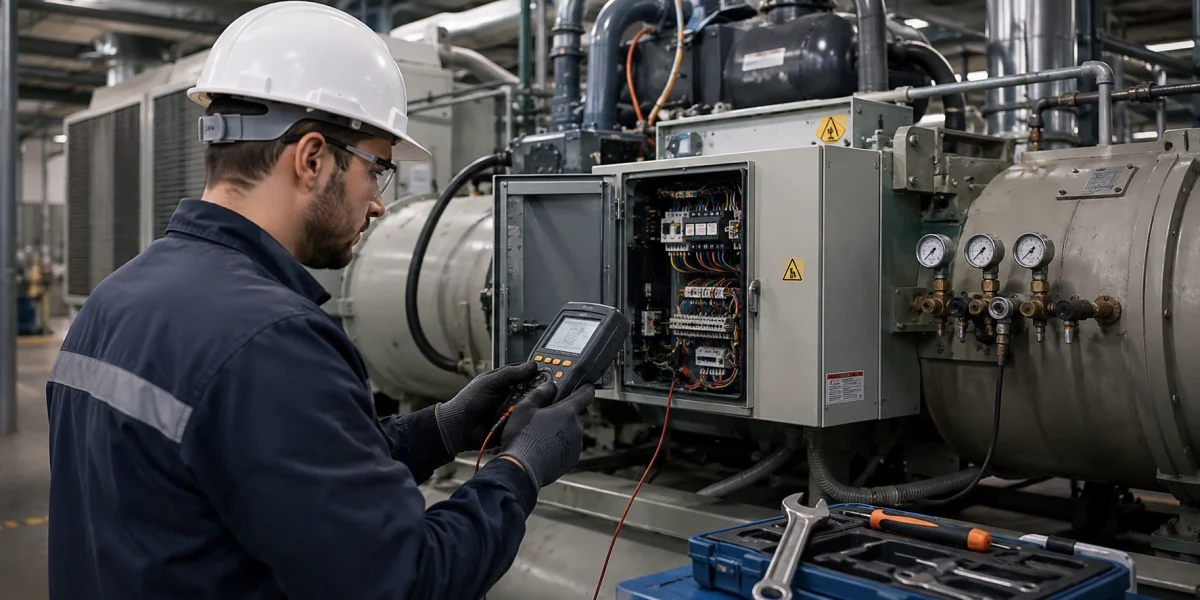
Chiller diagnostics begin with alarm history and visual inspection, followed by checks of hydronic, refrigeration, electrical and control systems.
- entering and leaving water temperatures;
- flow and pressure difference;
- suction and discharge pressures;
- superheat and subcooling;
- compressor current and voltage;
- fan and pump operation;
- sensor and safety readings;
- alarm and operating history.
When maintenance is enough
Dirty coils, blocked strainers, low flow, a failed sensor or incorrect settings may be corrected during service. If cleaning and adjustment do not restore normal values, deeper diagnostics are required.
When repair is required
Chiller repair is required after confirmed leakage, compressor or heat-exchanger damage and failures of boards, fans, pumps, valves or power components. The root cause must be corrected before replacement, otherwise the new component may fail again.
Risk of continued operation
Repeatedly resetting alarms risks compressor and evaporator damage. High pressure overloads the circuit, low flow may freeze the evaporator and overheated connections can damage power components. Recurring alarms require shutdown or transfer to standby equipment.
Checking the hydronic circuit
Many alarms are caused by the water circuit. Technicians check pumps, strainers, expansion vessels, valves, trapped air and water temperature difference. A blocked strainer or closed valve may reduce flow and freeze the evaporator.
Glycol concentration is also measured. Too little provides poor freeze protection, while too much reduces flow and heat transfer. The circuit may require flushing and rebalancing.
Electrical checks
Diagnostics include voltage, current, insulation resistance and inspection of terminals, contactors, breakers and drives. A loose connection can overheat and intermittently stop a compressor, fan or pump.
Phase sequence, voltage imbalance and protection history are also checked. A new control board will not solve poor power quality, damaged wiring or a defective contactor.
Emergency shutdown or planned repair
Immediate shutdown is appropriate when there is severe compressor vibration, a burning electrical smell, visible oil or refrigerant leakage, evaporator freeze risk or repeated high-pressure trips. In less critical cases, a technician may limit capacity, disable one circuit and keep part of the cooling plant available temporarily.
Planned repair should include spare-part availability, lifting requirements and temporary or standby cooling. Data centers, factories and healthcare facilities should define acceptable downtime and the procedure for transferring load before work begins.
What a proper repair report should include
The final report should identify the fault, measured values, root cause, completed work, replaced components and test results after startup. It should also state whether additional cleaning, water treatment, control changes or future monitoring are required.
Baseline readings after repair are important. Future technicians can compare pressures, temperatures, current and water differential with the restored condition and detect gradual deterioration earlier.
Conclusion
Warning signs include insufficient cooling, repeated errors, high pressure, unusual noise, vibration, leakage and increased energy use. Chiller faults require systematic testing because one symptom may have several causes. NIKLAND engineers diagnose and repair chillers by checking refrigeration, hydronic, electrical and control systems and defining the necessary work without unnecessary replacement of healthy components.