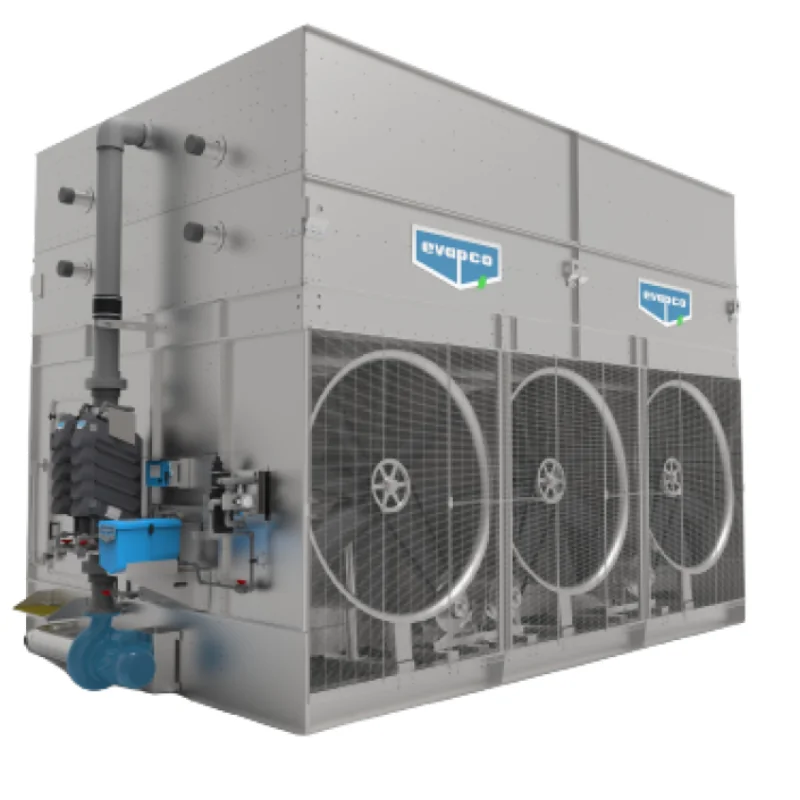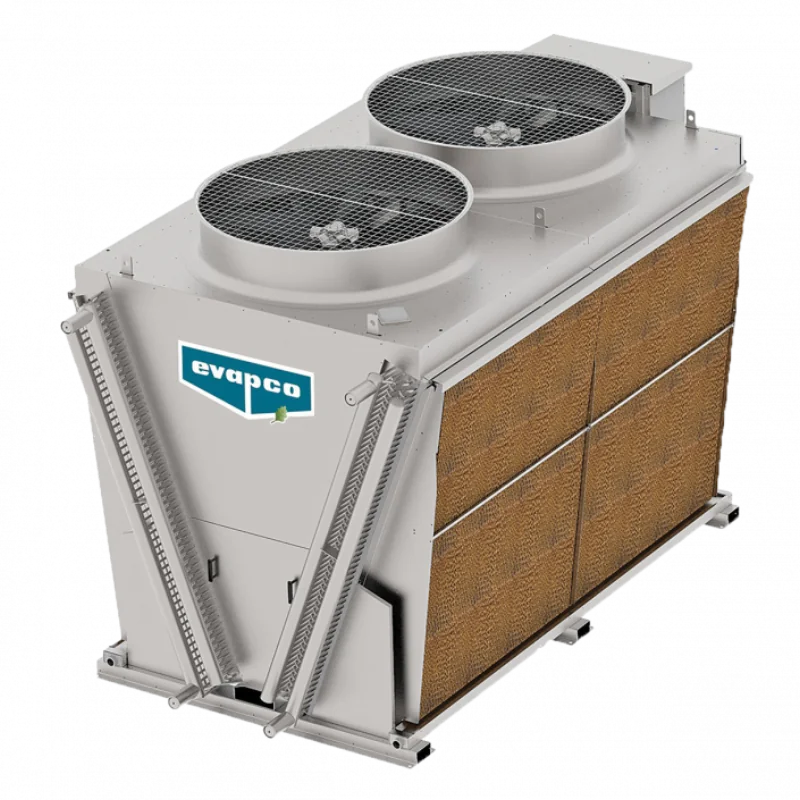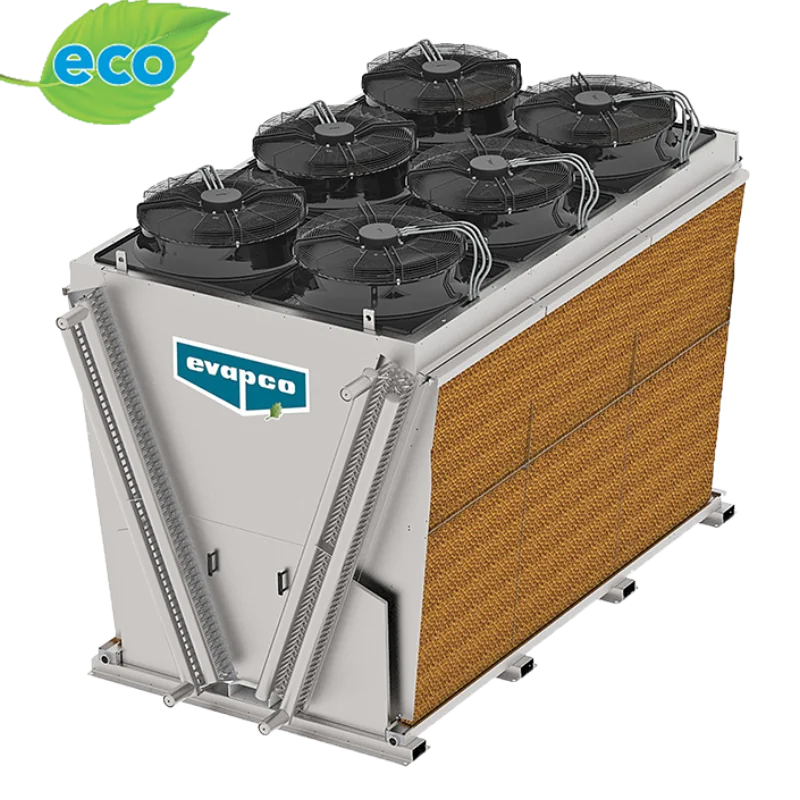
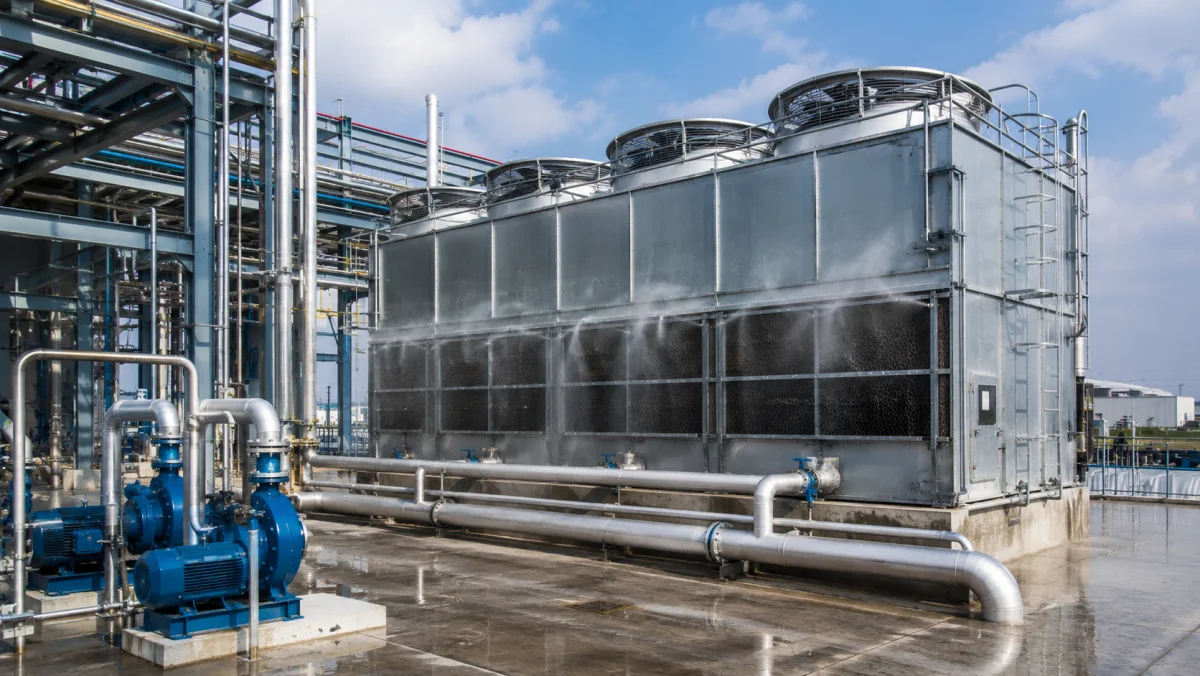
An evaporative condenser is heat-rejection equipment in which hot refrigerant is cooled and condensed inside a tube coil while air and evaporating water remove heat from the outside surface. The unit combines the functions of an air-cooled condenser and a cooling tower in one casing and can maintain a lower condensing temperature than conventional dry air cooling.
Evaporative condensers are used in industrial refrigeration, food processing, cold-storage logistics, ice arenas, chemical plants and other facilities with large and continuous refrigeration loads. Correct selection can reduce compressor power and occupy less space than a separate arrangement with a water-cooled condenser, pumps and cooling tower.
Evaporative condenser operating principle
The operating principle of an evaporative condenser is based on evaporative heat rejection. Superheated refrigerant vapor from the compressor enters the coil. Water is sprayed continuously over the outer tube surface while fans move outdoor air through the unit. A small portion of the water evaporates and absorbs latent heat, while the remaining water falls into the basin and is recirculated by a pump.
Inside the coil, the refrigerant is desuperheated, condensed and sometimes slightly subcooled. The resulting liquid flows to a receiver or expansion device. Performance depends on outdoor wet-bulb temperature, coil cleanliness and the available water and airflow.
How refrigerant is cooled
Refrigerant cooling occurs through heat transfer to the recirculating water and evaporation of part of that water into the air stream. The coil surface temperature can therefore approach outdoor wet-bulb temperature, which is normally lower than dry-bulb temperature.
Under the same outdoor conditions, an evaporative unit can operate at a lower condensing pressure than an air-cooled condenser. The compressor then works across a smaller pressure difference, potentially increasing refrigeration capacity and reducing electrical input. Actual savings depend on climate, load profile and control settings.
Difference from an air-cooled condenser
An air-cooled condenser rejects heat only through outdoor air, so condensing temperature and pressure rise during hot weather. Evaporative equipment is usually more efficient but requires water treatment and cleaning. Selection should consider climate, annual load, water availability and operating cost.
Typical applications
As part of industrial refrigeration equipment, evaporative condensers are used with ammonia, carbon dioxide and various fluorinated refrigerants when the coil design is approved for the relevant fluid and pressure. Typical applications include:
- cold and frozen storage warehouses;
- meat, dairy and food-processing facilities;
- breweries and beverage plants;
- ice arenas and sports complexes;
- chemical and pharmaceutical production;
- refrigerated logistics centers;
- industrial process-cooling systems.
Advantages of evaporative heat rejection
- lower condensing temperature and pressure;
- reduced compressor energy use;
- a compact industrial refrigeration arrangement;
- capacity control through fans and pumps;
- stable operation at high load.
Economic performance should be evaluated from annual energy use of the complete plant because much of the saving occurs at the compressors.
Water treatment
As water evaporates, dissolved minerals remain in the recirculating circuit and become more concentrated. Blowdown, chemical dosing, filtration and conductivity control are used to limit scale and corrosion. Make-up water must replace evaporation, blowdown and drift losses.
Incorrect water chemistry creates deposits on the coil. Even a thin scale layer reduces heat transfer and raises condensing pressure. Aggressive water can instead corrode the coil, basin and distribution system. The treatment program should be based on local water analysis and manufacturer recommendations.
Winter operation
During cold weather, condenser load decreases. Controls adjust fan speed, active cells and spray-pump operation. Condensing pressure must not fall below the minimum required by the refrigeration system, so the control sequence should follow compressor and condenser manufacturer requirements.
Freeze protection may include basin heaters, drain-down arrangements, pipe insulation and level monitoring. Some units can temporarily operate dry as air-cooled condensers when permitted by their design and performance calculation.
Evaporative condenser selection
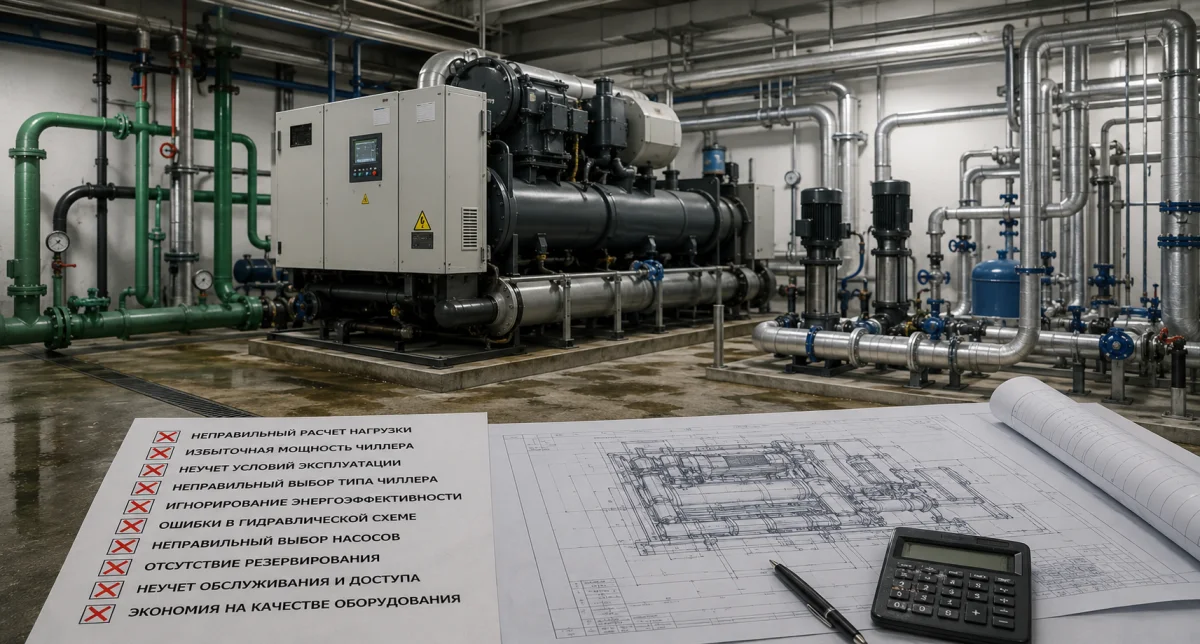
Selection is not based only on compressor refrigeration capacity. The condenser must reject the refrigeration load plus compressor input power. Engineers consider refrigerant type, condensing temperature and pressure, design wet-bulb temperature, elevation, fouling allowance and redundancy.
Noise limits, discharge direction, clearances, warm humid air recirculation and service access must also be checked. Closely spaced units or nearby walls can significantly reduce actual performance.
EVAPCO condenser
An EVAPCO condenser may be applied in industrial ammonia, fluorinated-refrigerant or other compatible systems. The specific product range is selected according to heat-rejection capacity, working pressure, coil material, fan arrangement, sound requirements and climate conditions.
Official performance data and the actual project conditions must always be used. A model name alone does not replace thermal calculations, refrigerant-piping checks, water treatment, control design and service-access planning.
Conclusion
An evaporative condenser rejects heat efficiently through the combined effect of air movement and water evaporation. It can maintain lower condensing pressure, reduce compressor energy use and serve large industrial refrigeration systems. Reliable operation requires correct sizing, water treatment, hygiene control, freeze protection and scheduled maintenance. NIKLAND engineers calculate and select refrigeration condensers for the refrigerant, Kazakhstan climate, plant load and operating requirements.