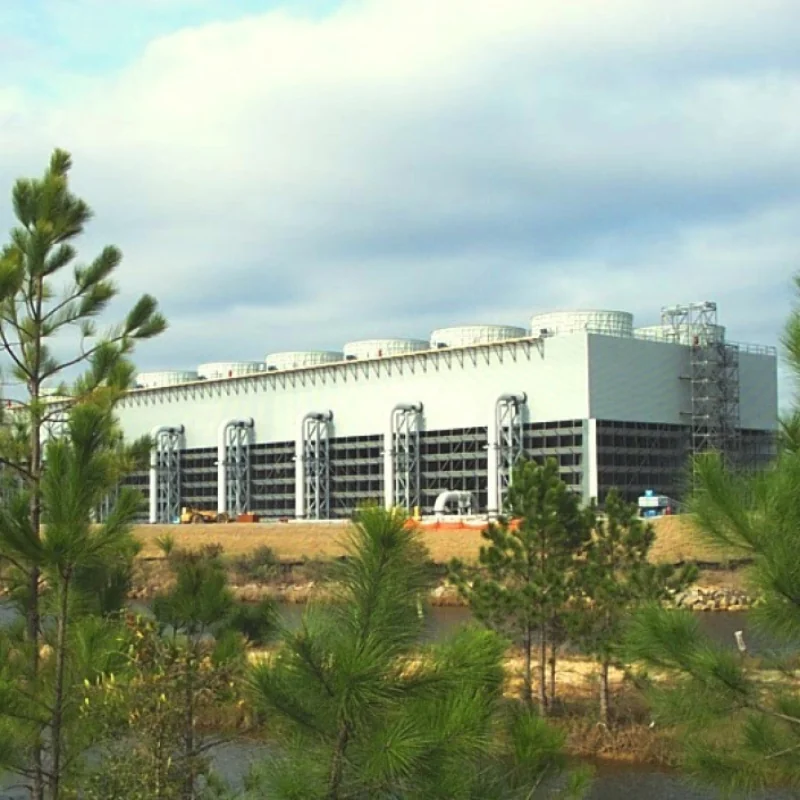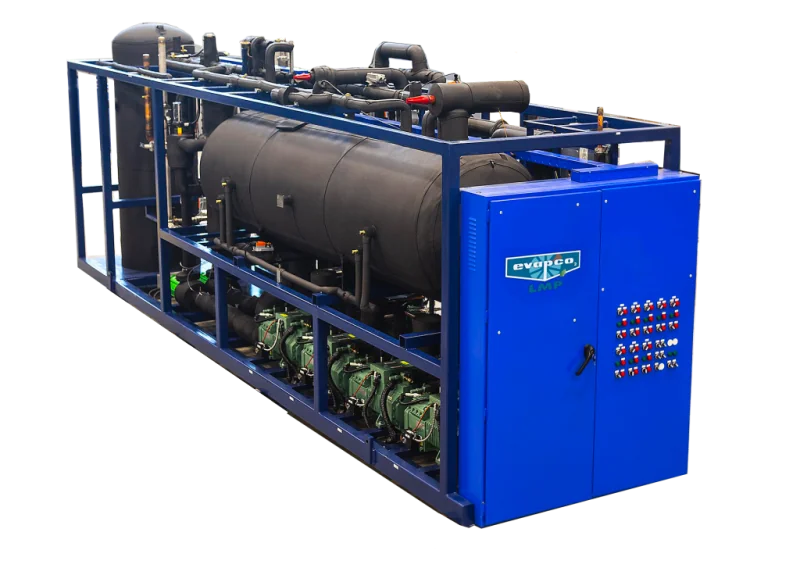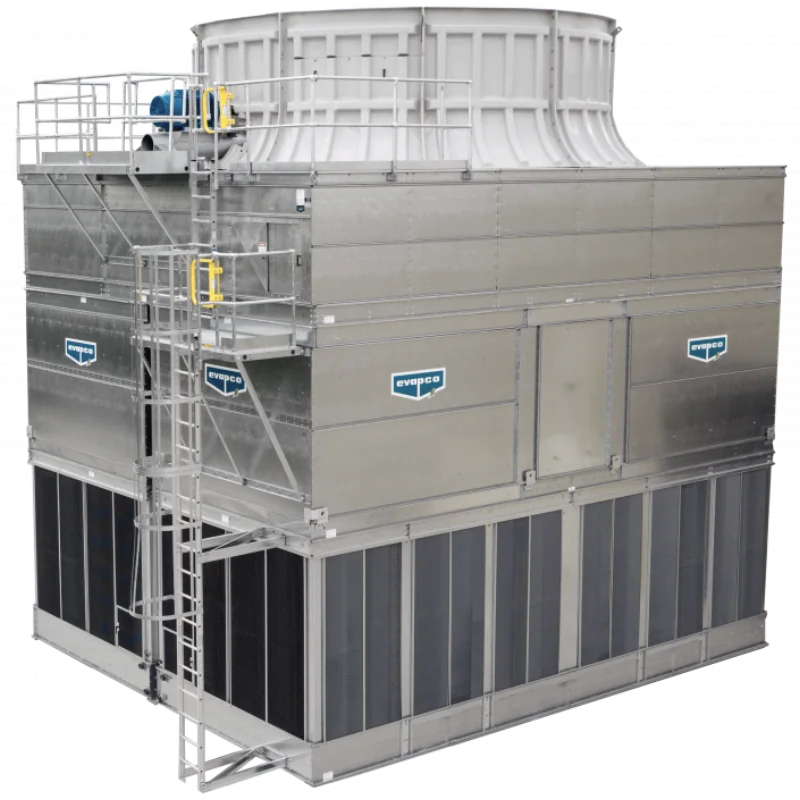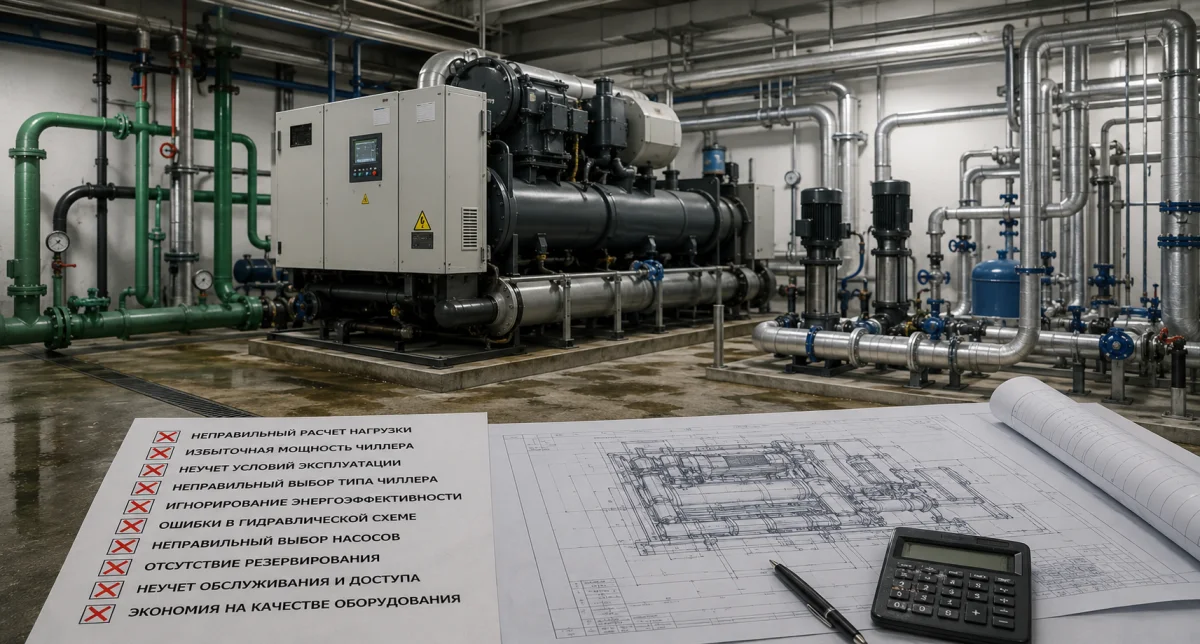
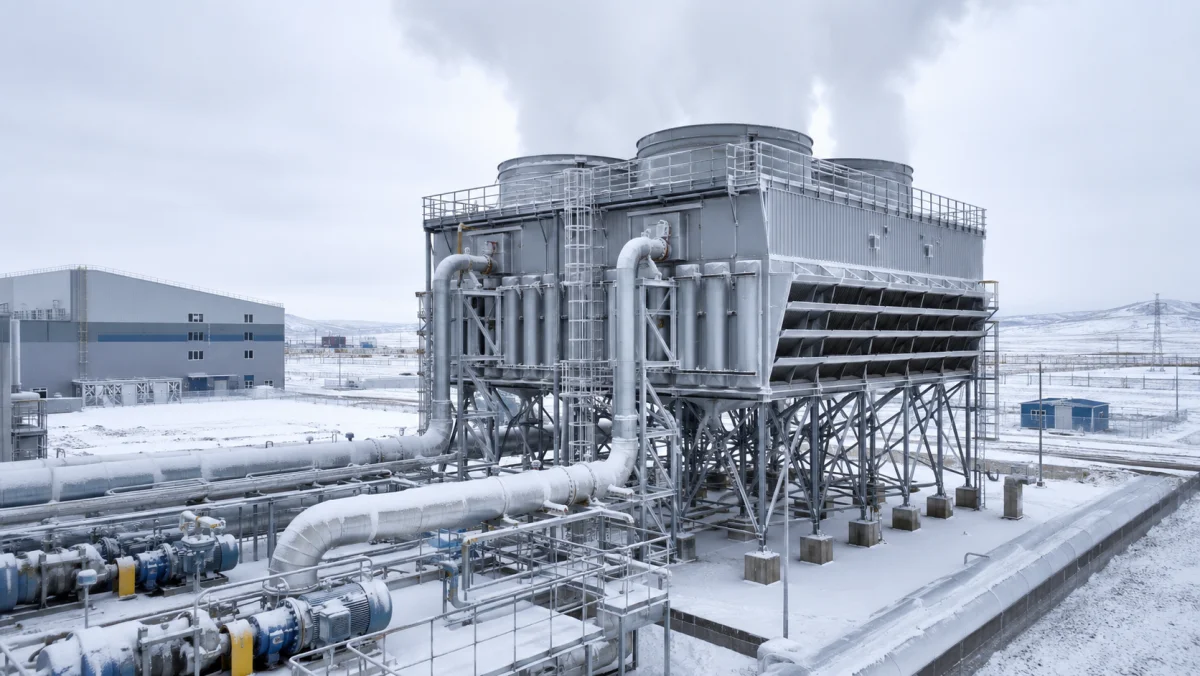
Cooling tower operation in winter requires a dedicated engineering strategy because low outdoor temperature improves heat rejection but also creates a serious icing risk. This is especially important in Kazakhstan, where long periods of frost can be combined with strong wind and rapid temperature changes. Incorrect controls, uneven water distribution or excessive airflow may freeze the fill, basin, piping and fan section.
Winter operation must be considered during design. A basin heater alone is not enough if summer control settings remain unchanged. Engineers must define minimum heat load, fan and pump sequences, start and stop procedures, drainage of inactive sections, wind protection and emergency actions.
Why a cooling tower freezes
Water is exposed directly to cold outdoor air. Part of it evaporates and the remaining water cools. When a surface or local zone falls below freezing, ice begins to form. The risk is highest at low heat load, uneven spray coverage, excessive airflow and strong crosswind.
Cooling tower freezing often starts on air inlets, fill, drift eliminators, basin edges and low-flow areas. Ice changes airflow, adds structural weight and may damage casing components. Continued accumulation reduces performance and creates a safety hazard.
Maintaining minimum heat load
Controls must maintain a minimum leaving-water temperature and prevent overcooling by reducing airflow, stopping fans or cells, using bypass control and adjusting flow. With several cells, load is better concentrated on fewer active sections, while inactive parts are fully drained or otherwise protected.
Fan control
Variable-frequency drives reduce fan speed gradually according to water temperature. At lower load, fans are stopped. Some towers permit temporary fan reversal to remove ice from air inlets, but this operating mode must be approved by the manufacturer.
Reverse operation is not a universal de-icing method. Incorrect rotation may increase blade stress, affect motor cooling and move ice to another part of the tower. The sequence should consider temperature, vibration and the condition of each cell.
Basin heating
Cooling tower basin heating prevents standing water from freezing during shutdown or very low load. Electric heaters, steam coils or hot-water heat exchangers may be used. Capacity depends on water volume, outdoor design temperature, insulation and expected shutdown duration.
A basin heater does not protect fill, nozzles or exposed piping while water is circulating through cold sections. It is only one element of freeze protection. The system also needs level sensors, dry-fire protection and, on critical sites, reliable backup power.
Piping, pumps and drainage
Outdoor piping should slope toward drain points. Inactive branches must drain automatically or through a clear procedure. Valves, strainers and small lines should be protected by warm locations, insulation or heat tracing. After an emergency shutdown, vulnerable sections must be drained before the water freezes.
Uniform water distribution
Blocked nozzles, incorrect pressure and uneven spray create zones that freeze rapidly. Pumps, headers, nozzles, fill and basin level should be checked before winter. At low load, some cells should be stopped while proper flow is maintained through the active sections.
Winter controls and alarms
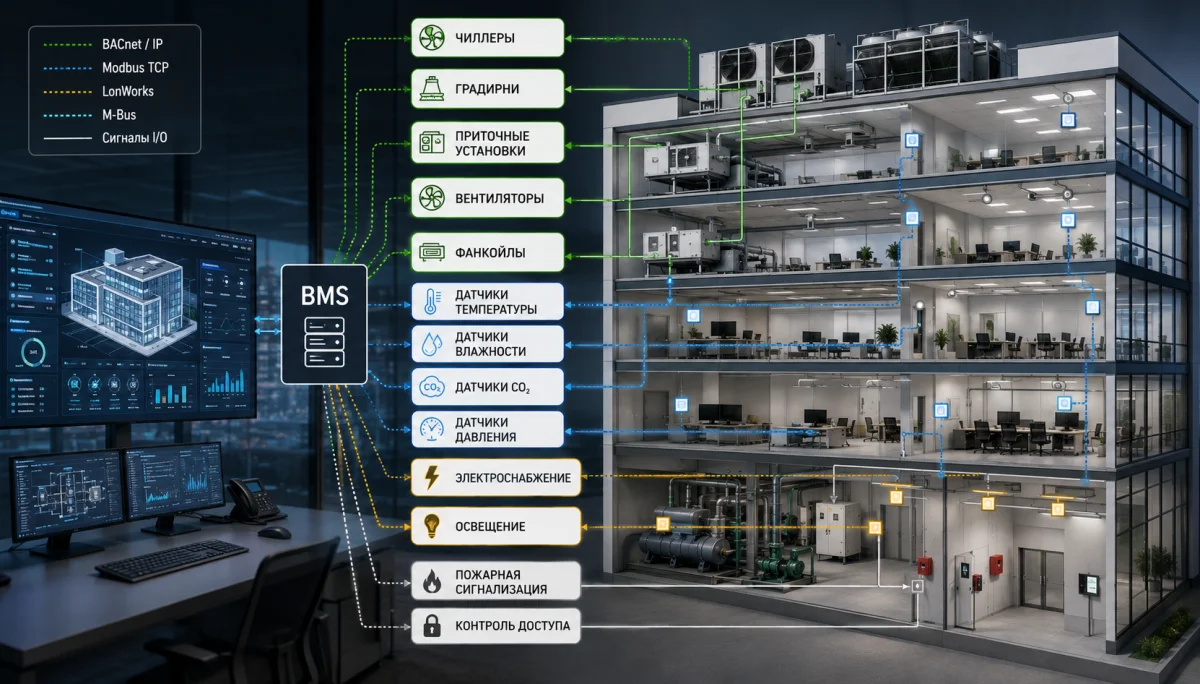
Winter cooling tower operation should be controlled from water temperature, outdoor temperature and equipment status. The controller manages fans, pumps, cells, bypass valves and basin heaters. After power loss, the system must stop safely and drain vulnerable sections. Continuous processes may require backup power or a separate heat-rejection path.
Starting below freezing
A cooling tower below freezing requires a controlled start sequence. Operators first inspect for ice and confirm basin, valves and spray nozzles are ready. Warm water circulation is established before fans start at minimum speed.
Starting a cold, partly filled tower is dangerous because water may freeze before it spreads evenly across the fill. After startup, operators monitor leaving-water temperature, motor current, vibration and ice formation at the air inlets.
Shutdown and seasonal preservation
Cooling tower preservation is required for a long shutdown. Water is drained completely from the basin, piping, pumps, nozzles and coils unless a properly specified antifreeze fluid is used. The unit is cleaned, deposits are removed and coatings and drains are inspected.
Water-glycol mixtures must be checked for material compatibility, required concentration and hydraulic impact. Too little glycol does not protect at design temperature, while excessive concentration increases viscosity, pump power and heat-transfer resistance.
Preventive maintenance during winter
Before the cold season, operators should test basin heaters, heat tracing, drain valves, fan controls, level sensors and emergency sequences. Spray nozzles and fill should be cleaned so that water remains evenly distributed at reduced load.
During operation, inspections should focus on early ice formation, abnormal vibration, changes in motor current and blocked drainage. Small ice deposits are easier to control than a fully frozen cell. Maintenance work must follow the manufacturer’s safe de-icing procedure and must not involve striking fill, louvers or fan blades.
Common operating mistakes
- running every cell at minimum load;
- excessive fan speed during severe frost;
- failing to drain inactive branches;
- relying only on basin heating;
- blocked nozzles and uneven spray coverage;
- no emergency sequence for power failure;
- using glycol without concentration and hydraulic checks.
Conclusion
Cooling tower operation in winter in Kazakhstan is practical when the tower has suitable construction, controls and maintenance procedures. The main measures are maintaining minimum heat load, controlling fans, heating the basin, draining inactive sections, preserving spray coverage and inspecting for ice. NIKLAND engineers design winter cooling-tower modes for regional design temperature, wind exposure, tower type and process requirements.