Air-cooled or water-cooled chiller selection is one of the main decisions in building and process cooling design. Both types cool water or a water-glycol mixture for fan coils, air-handling units and process equipment. The difference is how heat is rejected from the refrigeration cycle.
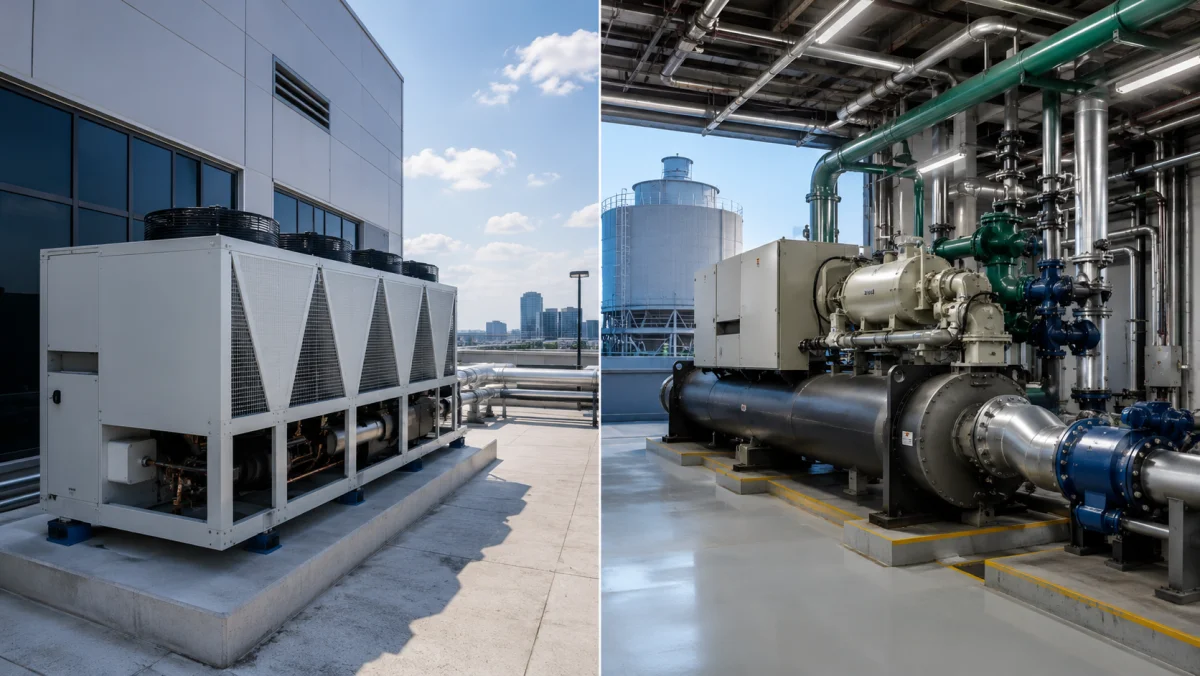
An air-cooled chiller rejects heat directly to outdoor air through finned coils and fans. A water-cooled chiller transfers heat to a separate condenser-water loop connected to a cooling tower, dry cooler or another heat-rejection device. The complete system, not only the chiller itself, must therefore be compared.
How an air-cooled chiller works
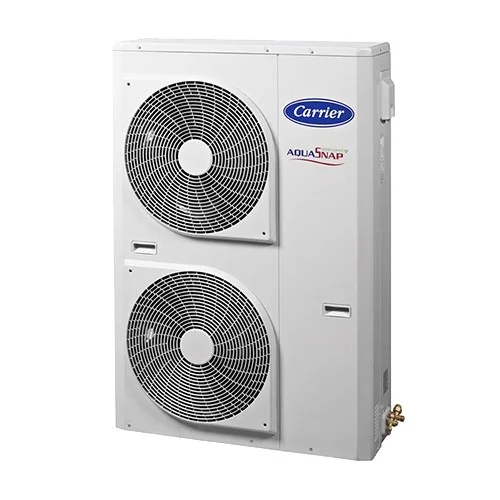
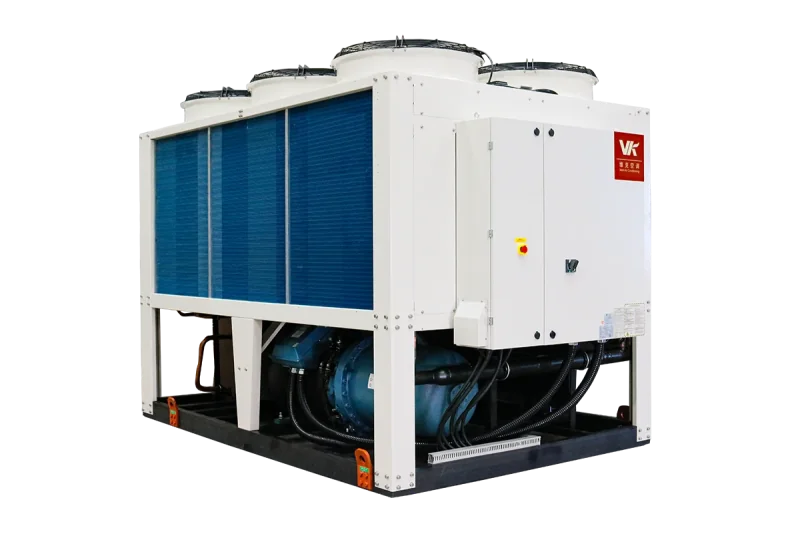
An air-cooled chiller is installed on a roof or external platform. Fans draw outdoor air across the condenser where refrigerant releases heat. No cooling tower or condenser-water pump is required, so installation and commissioning are simpler.
How a water-cooled chiller works
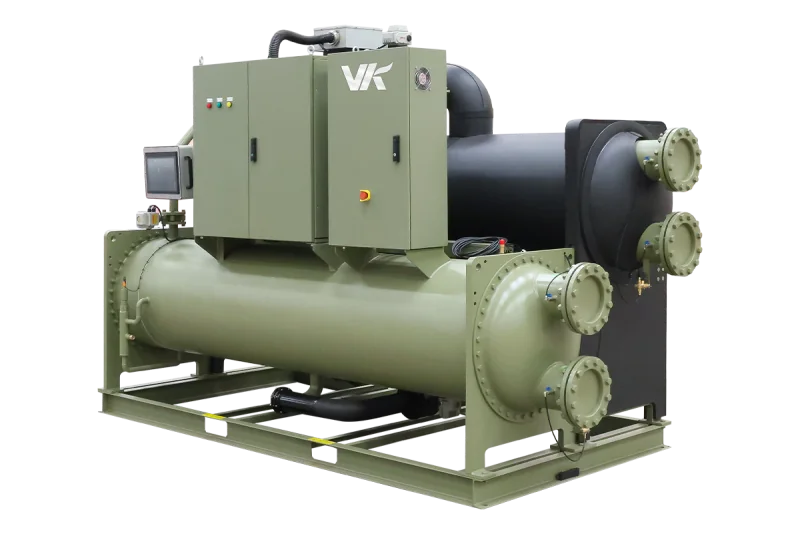
A water-cooled chiller is installed in a plant room. Its condenser transfers heat to water that is cooled in a tower. Pumps, piping and water treatment add complexity, but stable condensing conditions support high efficiency at large loads.
Main comparison
| Parameter | Air-cooled chiller | Water-cooled chiller |
|---|---|---|
| Heat rejection | Outdoor air | Water and cooling tower |
| Typical location | Outdoors | Plant room |
| System complexity | Lower | Higher |
| Initial cost | Usually lower | Usually higher |
| Large-load efficiency | Moderate | Often higher |
| Water use | None | Required with a wet tower |
Advantages of air-cooled chillers
- no cooling tower or condenser-water loop;
- simpler design and commissioning;
- less auxiliary equipment;
- no evaporative water use;
- good suitability for medium commercial buildings.
Air cooling is practical where space or water is limited, operation is seasonal or the project must be completed quickly.
Limitations of air cooling
High outdoor temperature raises condensing pressure, reduces capacity and increases power use. Fan sound, coil contamination and hot-air recirculation must be controlled with suitable spacing and service access.
Advantages of water-cooled chillers
- high efficiency on large projects;
- stable condensing-water temperature;
- compact footprint relative to capacity;
- less outdoor noise;
- large screw and centrifugal options.
With high load and long annual operating hours, energy savings may offset the higher plant cost.
Limitations of water cooling
A machine room, cooling tower, pumps, piping and more complex controls are required. Wet towers need water treatment, blowdown, biological control and freeze protection and consume water through evaporation.
Energy efficiency
At equal capacity, a water-cooled machine often operates more efficiently because condenser-water temperature can be lower than the outdoor dry-bulb temperature used by an air-cooled condenser. The advantage is most noticeable in hot weather and at continuous high load.
The complete plant must be evaluated. Water-cooled systems also consume power in condenser-water pumps and cooling-tower fans. Air-cooled systems use condenser fans. A proper comparison uses annual total-system energy rather than one catalog rating.
Winter operation
An air-cooled chiller used for year-round cooling needs low-ambient controls, variable-speed fans and stable condensing-pressure control. Outdoor water circuits require glycol or another form of freeze protection.
In a water-cooled system, the cooling tower needs careful winter control. Basin heating, fan operation, drainage and minimum water temperature must be considered. Some projects use dry coolers or free cooling during cold weather.
Maintenance
Air-cooled chillers require regular cleaning of finned condenser coils and inspection of fans, compressors, refrigerant circuits and electrical connections. Dirty coils quickly increase pressure and power use.
Water-cooled plants additionally require condenser cleaning, tower service, pump maintenance, strainer checks and water-quality control. Poor water treatment causes scale and reduces heat-transfer efficiency.
Lifecycle comparison
A proper economic comparison includes equipment, construction, electrical infrastructure, water, treatment chemicals, planned service and repair. Air-cooled systems must be assessed at high summer ambient conditions, while water-cooled plants must include pumps, tower fans, water use and treatment.
The result should be evaluated over the expected service life rather than from purchase price alone. A higher initial investment may be justified by lower annual energy use, but only when the building operates long enough and the load profile supports that advantage.
Choosing a system for the project
Small and medium offices, shops, hotels and factories with variable or seasonal loads often favor air-cooled chillers. Large projects with continuous high load should compare water-cooled systems using annual total energy.
Available space, water, electrical capacity, sound limits, operating hours, redundancy and acceptable downtime must be considered. Some projects use several air-cooled machines, while others use a main water-cooled plant with standby cooling.
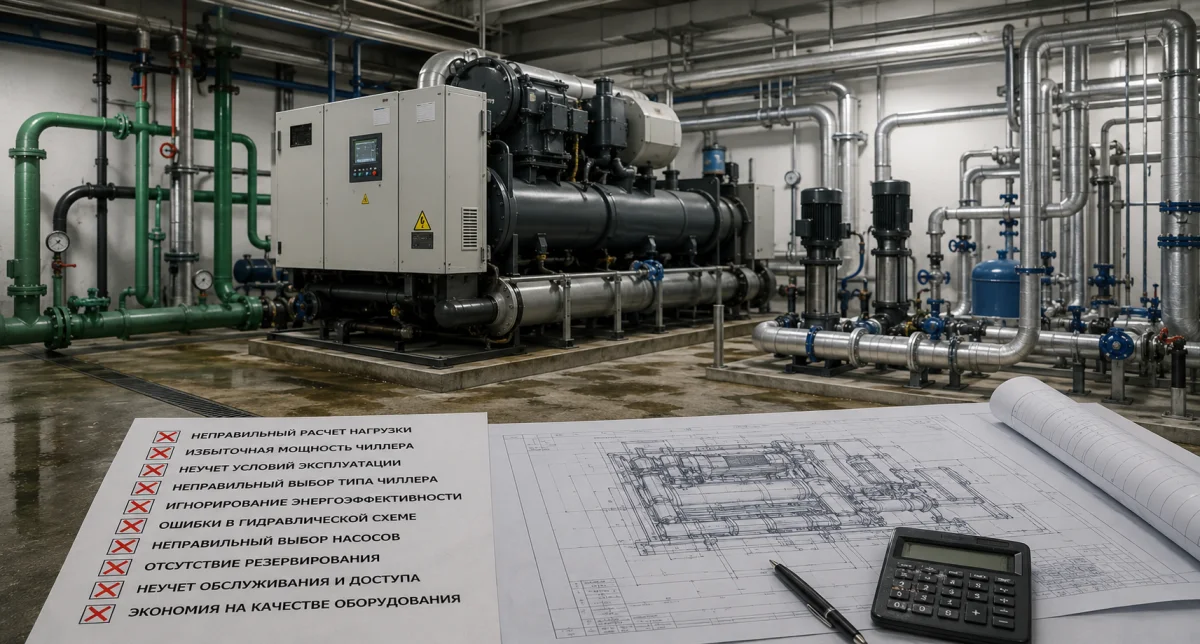
Common selection mistakes
- comparing only the chiller purchase price;
- ignoring design outdoor temperature;
- performing no annual energy analysis;
- underestimating noise and hot-air recirculation;
- ignoring water and treatment costs;
- failing to design winter operation;
- omitting redundancy and future expansion.
Conclusion
The answer to which chiller is better depends on the project. Air-cooled chillers are simpler, usually cheaper to install and require no water. Water-cooled chillers are more complex but often more efficient at high capacity and long operating hours. NIKLAND engineers perform detailed chiller comparisons, calculate annual operating conditions and select systems for Kazakhstan climate, lifecycle cost and reliability requirements.