A chiller with free cooling uses low outdoor-air temperature to cool the heat-transfer fluid and reduce compressor operating hours. When ambient conditions are sufficiently cold, part or all of the cooling load is covered without the normal vapor-compression cycle. This operating method is known as free cooling.
The technology is especially useful for facilities that require cooling throughout the year, including data centers, server rooms, telecommunications sites, production lines and buildings with continuous heat gains. The more annual hours during which outdoor air is colder than the returning fluid, the greater the potential energy savings.
What free cooling means
Free cooling uses low outdoor temperature as a natural cooling source. In a conventional chiller, heat from water or glycol is transferred by refrigerant and rejected through the condenser. The compressor is normally the largest electrical consumer.
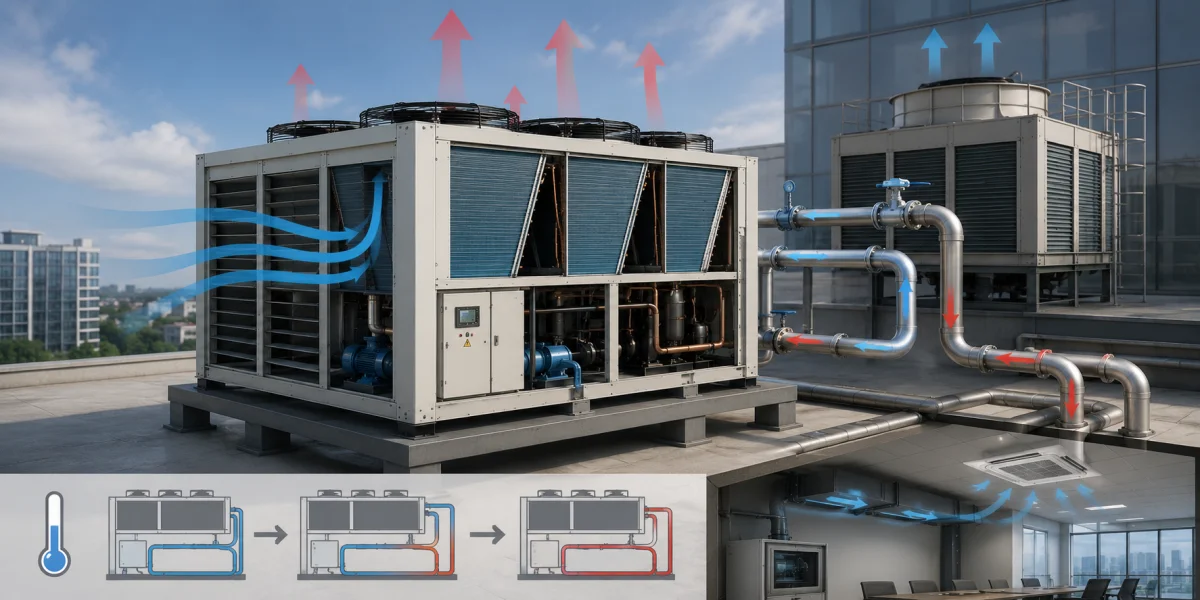
In free-cooling operation, the fluid passes through an additional outdoor-air heat exchanger. Fans move ambient air across the coil and cool the liquid directly. Compressors either stop completely or operate only to supply the remaining capacity.
How a free-cooling chiller is built
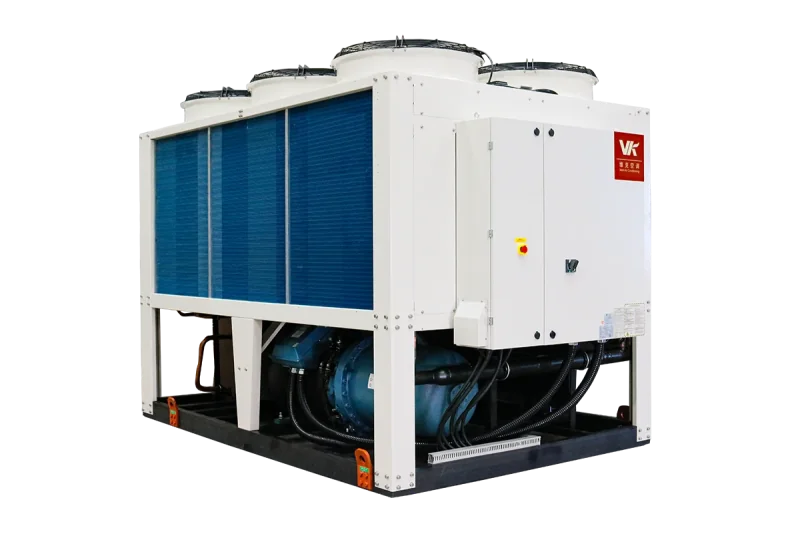
A free-cooling chiller includes a refrigeration circuit, air-cooled condenser, free-cooling coil, fans, control valves and an integrated controller. The controller compares outdoor temperature, return-fluid temperature and the required leaving-water setpoint before selecting the appropriate operating mode.
Three operating modes
Mechanical cooling
At high ambient temperature, free cooling cannot provide a useful temperature difference. The chiller operates as a conventional refrigeration machine: compressors move heat from the evaporator to the condenser and fans reject it outdoors.
Partial free cooling
When outdoor air becomes colder than the returning fluid, the free-cooling coil precools the liquid. Compressors then lower it to the required supply temperature. This mixed mode reduces refrigeration load and electrical consumption.
Full free cooling
At sufficiently low ambient temperature, the fluid is cooled without compressors. The main electrical consumers are fans, pumps and controls. This mode produces the greatest savings, although electricity is still required to move air and liquid.
When free cooling becomes available
There is no single activation temperature. It depends on return-water temperature, the required supply setpoint, heat-exchanger size, glycol concentration, liquid flow and the control strategy. The higher the allowable chilled-water temperature, the earlier free cooling can begin.
A system supplying 15–18 °C water for server cooling can use ambient air for more hours than a system requiring 6–7 °C water for traditional fan coils. Raising the water-temperature schedule can therefore increase annual free-cooling hours.
Free cooling for data centers
Free cooling for data centers is effective because the cooling load exists throughout the year. Servers release heat in every season, so winter and shoulder-season ambient conditions can replace part of the compressor capacity.
Higher chilled-water temperatures, separated hot and cold aisles and accurate fan regulation provide additional benefits. The higher the return-fluid temperature, the greater the temperature difference available across the free-cooling coil.
Data centers also require N+1 redundancy, independent pump arrangements, fluid-quality monitoring and service access without a complete shutdown. Energy savings must never reduce reliability or allow room conditions to exceed equipment limits.
Main advantages
- fewer compressor operating hours;
- lower annual cooling energy consumption;
- reduced compressor wear;
- year-round cooling during low ambient conditions;
- higher seasonal energy efficiency;
- automatic mode changes without interrupting chilled-water supply.
What determines the savings
Energy-efficient cooling depends on more than a free-cooling label. The analysis must include regional climate data, operating hours, water-temperature schedule, actual load, fan and pump power, heat-exchanger pressure loss and control settings.
A seasonally operated building with little winter cooling may use the additional coil only rarely. A data center or industrial process with a constant load can achieve many more useful hours and usually a shorter payback period.
How to estimate annual performance
The calculation uses hourly climate data and the facility cooling-load profile. For each ambient-temperature range, the designer determines available free-cooling capacity and the power of compressors, fans and pumps. Annual consumption is then compared with that of a conventional chiller.
- Define supply and return fluid temperatures.
- Prepare an hourly cooling-load profile.
- Use climate data for the actual city.
- Calculate full and partial free-cooling hours.
- Include fan and pump electricity.
- Compare capital and operating costs.
Water or glycol
Plain water can freeze in an outdoor coil during subzero conditions, so many systems use a water-glycol mixture. Concentration is selected from the minimum design temperature with an appropriate safety margin.
Glycol increases viscosity, raises pump-head requirements and reduces heat-transfer performance. These effects must be included when selecting heat exchangers, flow rates and pumps. Excessive concentration also reduces system efficiency.
Integrated chiller or separate dry cooler
Free cooling can be integrated into the chiller or provided by a separate dry cooler and intermediate heat exchanger. An integrated unit is compact and arrives with coordinated controls. A separate arrangement is useful for retrofits and large cooling plants.
Both arrangements require verification of flow rates, pressure losses, control valves, minimum system volume and pump interaction. Incorrect piping can reduce the available temperature difference and remove much of the expected energy benefit.
Controls and maintenance
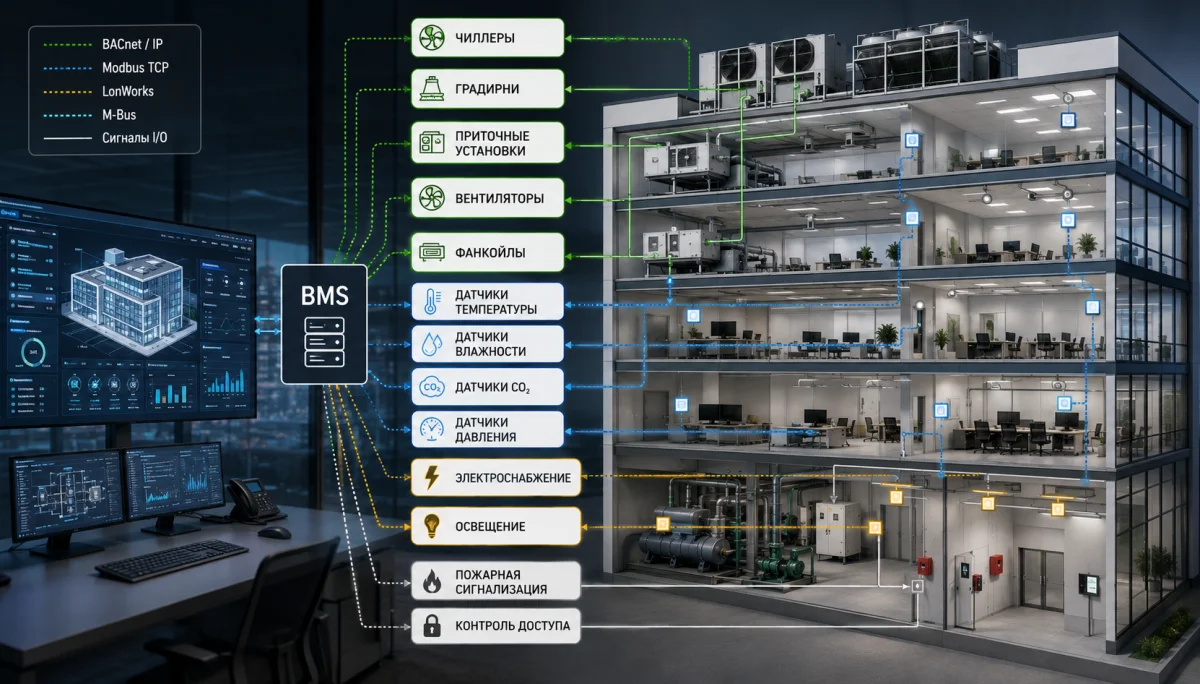
Transitions between mechanical, mixed and full free cooling should occur without unstable leaving-water temperature. Variable-speed fans, inverter compressors and modulating valves provide smooth control. BMS integration can display temperatures, free-cooling percentage and actual energy use.
Maintenance includes cleaning the finned coil and checking fans, valves, sensors, pumps and glycol condition. A dirty heat exchanger reduces heat transfer, causing compressors to start earlier and operate for longer periods.
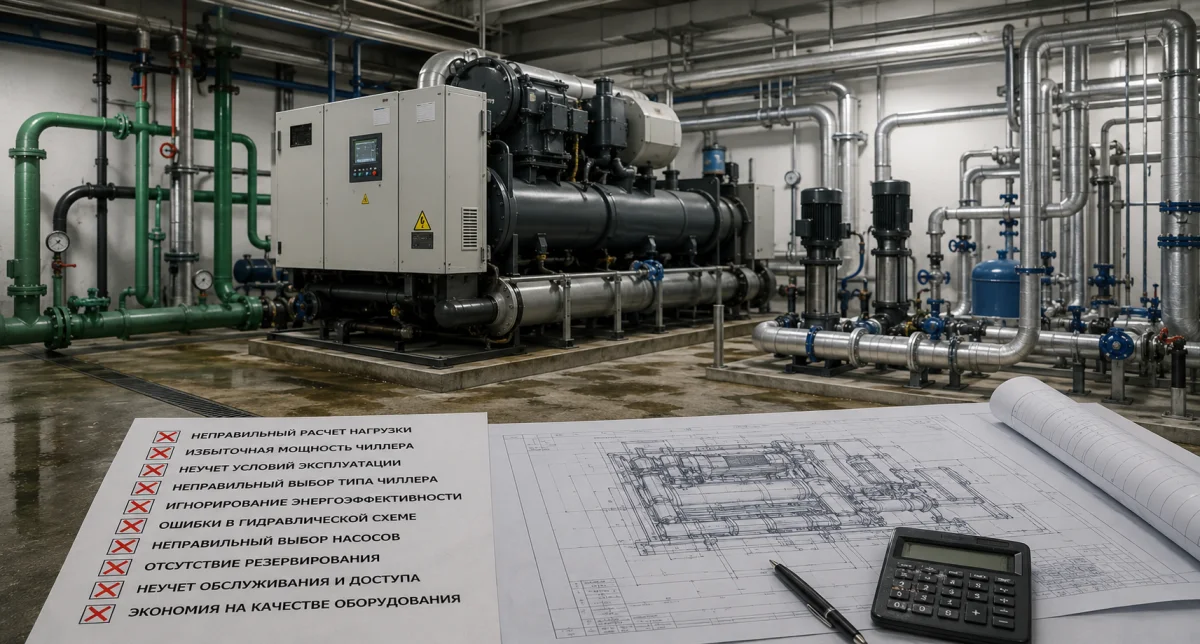
Common mistakes
- selection without an annual energy calculation;
- using average climate data instead of the actual city;
- water temperatures that are unnecessarily low;
- excluding fan and pump electricity;
- incorrect glycol concentration;
- warm-air recirculation around the heat exchanger;
- insufficient redundancy for a critical facility;
- incorrect mode-change setpoints.
Conclusion
A chiller with free cooling is especially valuable where cooling is needed for most of the year and outdoor temperature is often below the returning-fluid temperature. Free cooling reduces compressor load, lowers electricity use and improves seasonal efficiency. Reliable results require an analysis of climate hours, water temperatures, hydraulics, glycol, controls and redundancy. NIKLAND selects free-cooling chillers for data centers, commercial buildings and industrial facilities according to the actual operating profile.