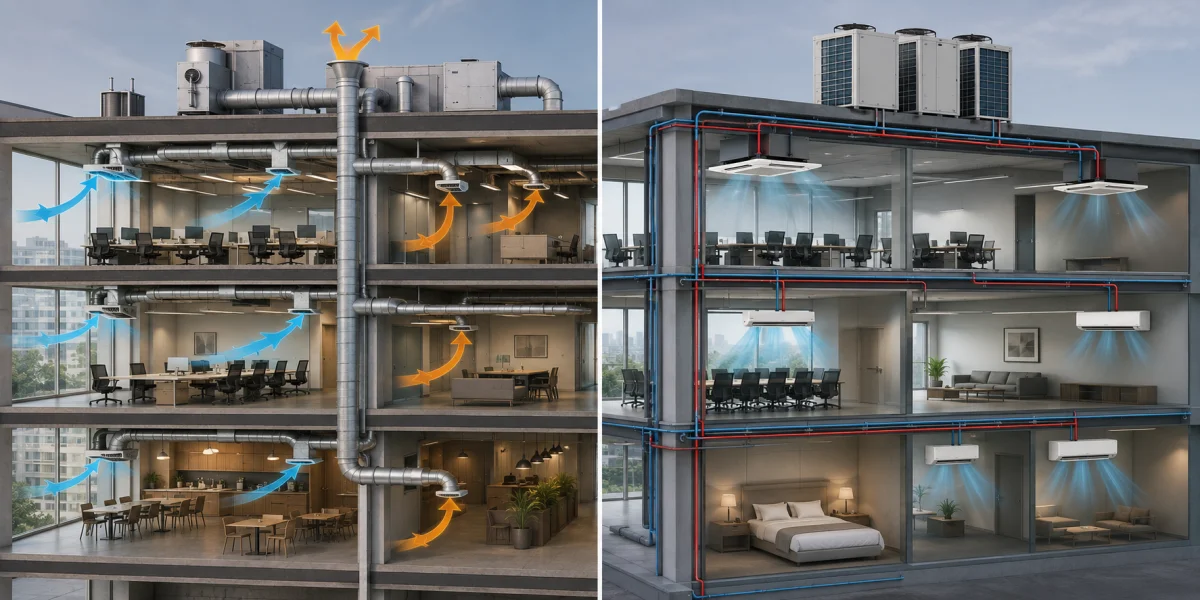
The main difference between ventilation and air conditioning is the purpose of each system. Ventilation creates air exchange by supplying outdoor air, removing contaminated air and controlling airflow between rooms. Air conditioning changes indoor temperature and humidity, but most residential and commercial air conditioners do not provide the required outdoor-air supply.
Ventilation and air conditioning normally work together. Ventilation provides fresh air and removes carbon dioxide, odors and moisture, while air conditioning removes heat or provides heating. Using one system as a substitute for the other can leave a room cool but stuffy, or fresh but too hot or cold.
What ventilation does
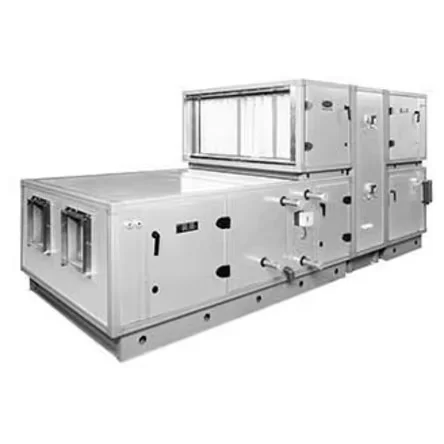
A building ventilation system supplies outdoor air and removes used air. A supply unit may filter, heat, cool and dehumidify incoming air, but its essential function is to provide calculated air exchange. Extract ventilation removes carbon dioxide, odors, moisture, dust and process pollutants.
Air balance controls the direction of movement. Offices and retail areas normally operate near balance or slightly positive. Toilets, kitchens and polluted process areas operate negative so that contaminants do not spread into clean rooms.
What an air conditioner does
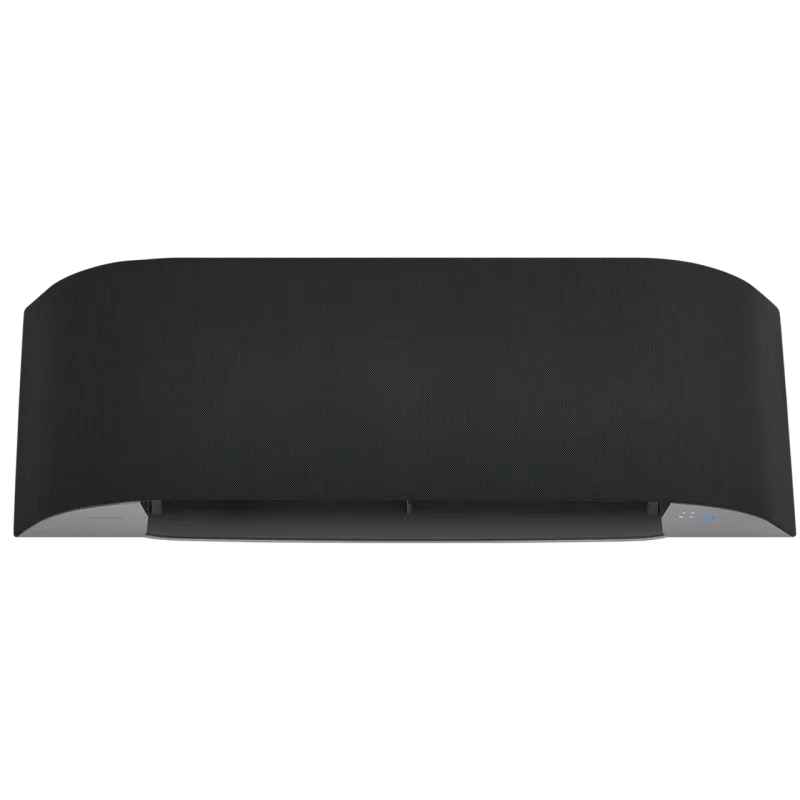
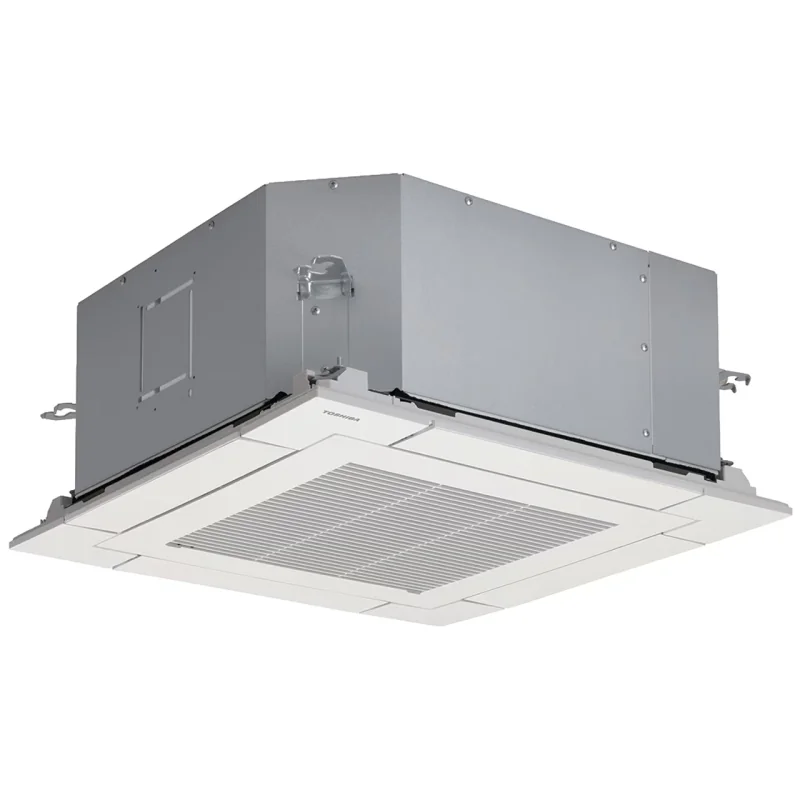
An air conditioner absorbs heat from room air and rejects it outdoors. In heating mode, the refrigeration cycle reverses and transfers heat into the building. The indoor unit circulates room air through a heat exchanger, so most airflow remains inside the space.
A split, multi-split or standard VRF system controls temperature, provides some dehumidification during cooling and mixes room air. It does not remove accumulated carbon dioxide or replace air extracted from toilets or kitchens unless a separate outdoor-air system is installed.
Does an air conditioner supply fresh air?
For most products, the answer to whether an air conditioner supplies fresh air is no. Pipes between indoor and outdoor units carry refrigerant, not ventilation air. The outdoor unit does not normally send outdoor air into the room.
Some specialized products provide limited outdoor-air intake or connect to a ventilation system, but this must be confirmed in technical documentation. The presence of an outdoor unit does not mean that ventilation is included.
Is outdoor-air supply necessary?
The answer to is outdoor-air supply necessary depends on occupancy, room use and pollutant sources rather than on whether an air conditioner is present. People release carbon dioxide, moisture and odors. Shops add visitors, while factories may generate dust, vapor, heat and process emissions.
Without organized supply, air enters through doors, cracks and windows. This airflow is unstable, unfiltered and dependent on weather. In winter it creates drafts and heating load, while in summer it introduces dust and hot air.
Main differences
| Parameter | Ventilation | Air conditioning |
|---|---|---|
| Main purpose | Air exchange | Temperature and humidity |
| Outdoor-air supply | Yes | Usually no |
| Removal of contaminated air | Yes | No |
| Room cooling | Possible with a cooling coil | Main function |
| Outdoor-air filtration | Yes | Not part of normal recirculation |
| Room pressure control | Yes | No |
Ventilation and air conditioning in offices
Office ventilation is usually calculated by occupancy and room use. Supply air enters occupied areas, while extract is taken from toilets, kitchens and common zones. Air conditioners remove heat from people, computers, lighting and solar gain.
With air conditioning alone, temperature may be comfortable while carbon dioxide continues to rise. Occupants can feel sleepy, tired or stuffy even when the thermostat shows a normal value.
Supply units with cooling
A modern supply-air unit can include filters, heat recovery, heating and cooling coils. It therefore provides ventilation and also conditions outdoor air. Its cooling capacity, however, may not cover all internal heat gains in the room.
Ventilation often treats only the hygienic outdoor-air quantity, while fan coils, VRF or split systems handle room loads. This arrangement allows air quality and temperature to be controlled independently.
Indoor microclimate
Indoor microclimate includes temperature, humidity, air speed, air quality and thermal comfort. Air conditioning mainly affects temperature and partly humidity. Ventilation controls pollutant concentration and freshness.
The systems must be coordinated. Supply air that is too cold creates drafts, while poorly positioned indoor units create local cold zones. Diffusers and air-conditioning units should be arranged with combined airflow patterns in mind.
How the combined system is designed
Outdoor airflow is first calculated by occupancy, air changes, moisture and contaminants. The supply and extract balance is then prepared. Room cooling and heating loads are calculated separately.
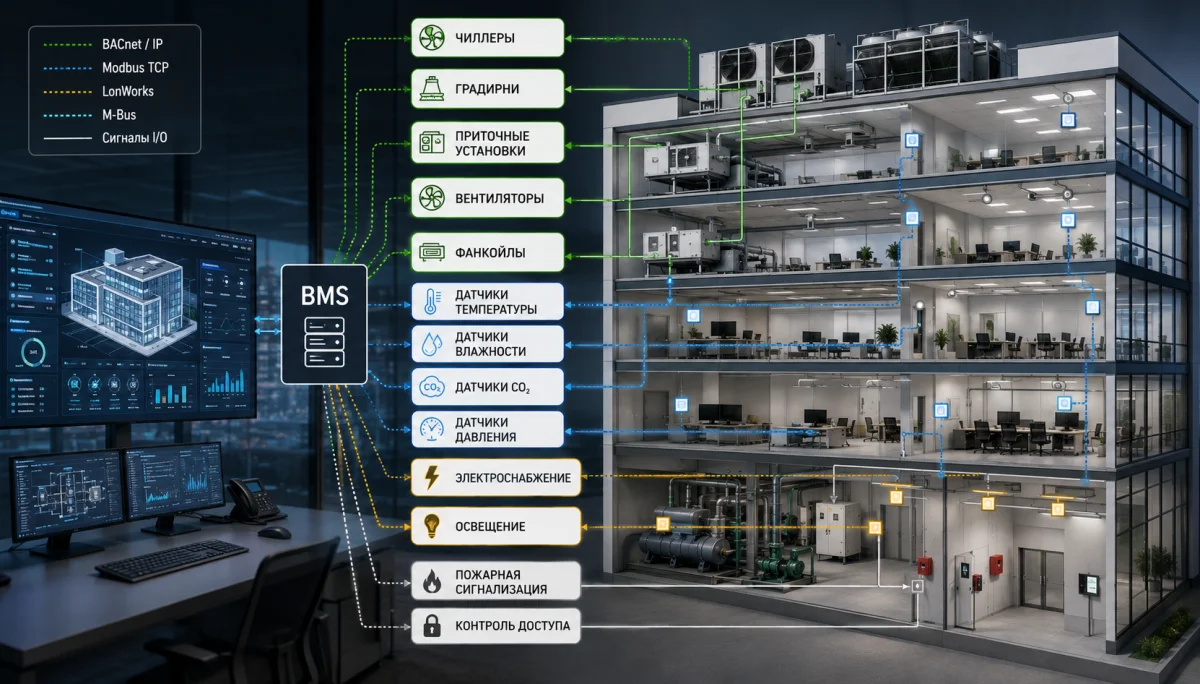
Equipment capacities and control sequences are coordinated. Extract operation must have replacement air, and air conditioning must include the heat and moisture load of outdoor air. Central monitoring can combine both systems in the BMS.
Common mistakes
- assuming the outdoor unit supplies outdoor air;
- sizing ventilation only by floor area;
- calculating air conditioning without outdoor-air load;
- providing strong extract without replacement air;
- treating window opening as a complete ventilation system;
- using recirculation instead of fresh-air supply.
Both systems are essential.
Conclusion
The difference between ventilation and air conditioning is that ventilation replaces air, while air conditioning changes its temperature and humidity. Most offices, shops, hotels and industrial buildings require both. NIKLAND engineers design ventilation and air conditioning as one coordinated system based on air exchange, thermal loads, building use and Kazakhstan climate conditions.