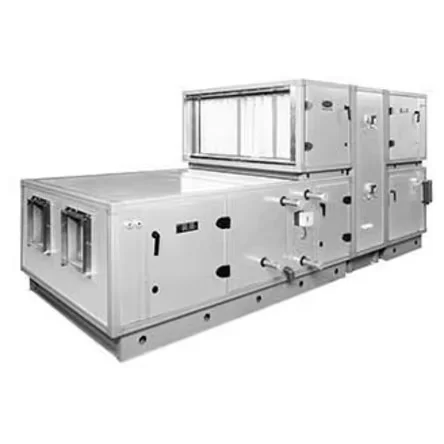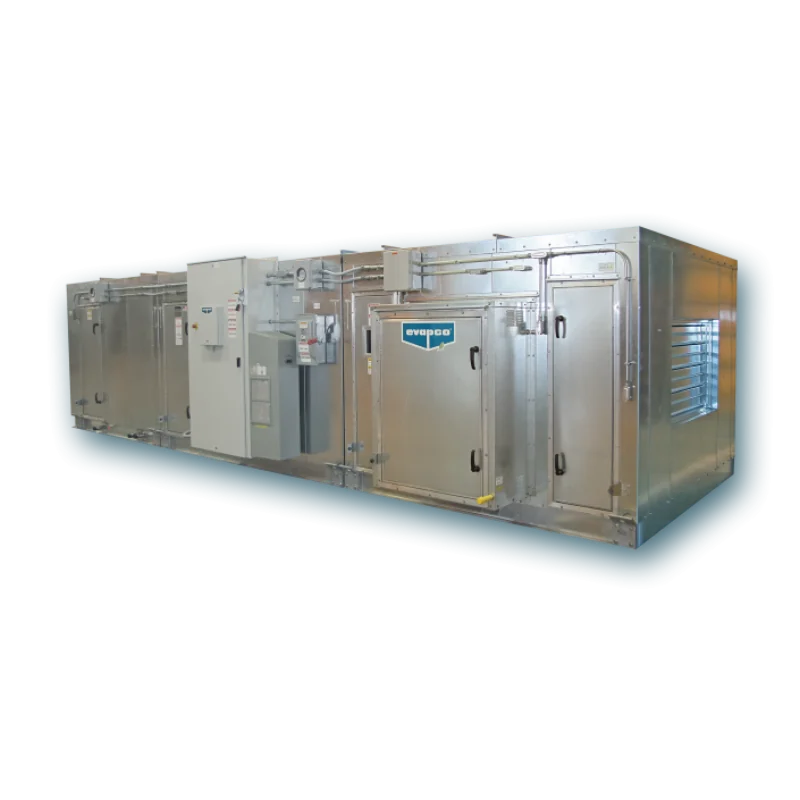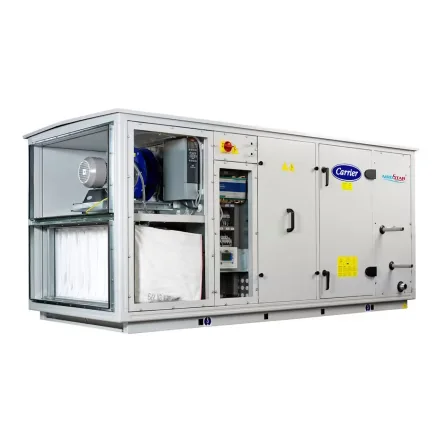
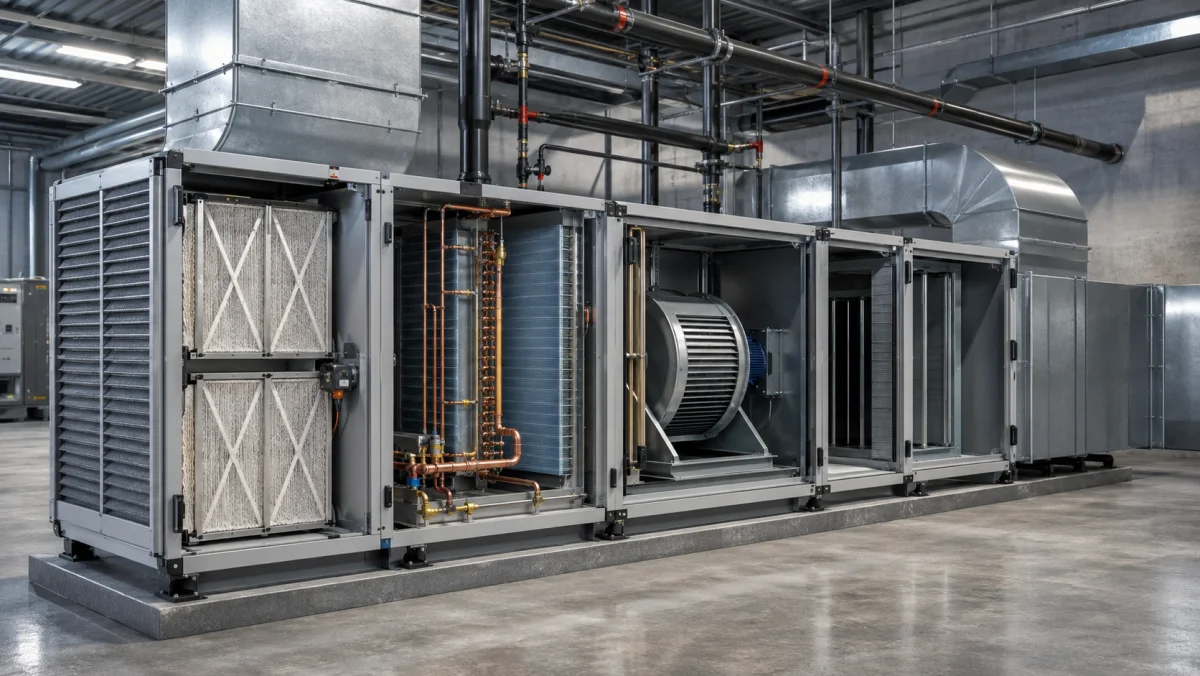
A central air-handling unit, often described as a central air conditioner, is a large HVAC unit that prepares air for one room, several zones or an entire building. Depending on the design, it filters, heats, cools, dehumidifies, humidifies and moves air through a duct network. Unlike a local room air conditioner, the equipment is installed in a plant room, ventilation chamber, on a roof or on a dedicated external platform.
The unit is commonly built as a sectional or modular assembly. Functional modules are selected for the required airflow and supply-air conditions. The design of a central air conditioner for an office, production facility, shopping center or medical building may therefore be significantly different.
Purpose of a central air-handling unit
The main purpose is controlled air treatment before distribution to occupied spaces. The unit may process outdoor air, a mixture of outdoor and return air, or operate with extract ventilation and heat recovery. One installation can control airflow, temperature, cleanliness and, when required, humidity for a large hall, production area or several rooms.
Difference from a supply-air unit
A basic supply-air unit introduces, filters and heats outdoor air. A central air conditioner normally provides more complete treatment, including cooling, dehumidification, humidification and heat recovery. The term ventilation unit is broader and includes supply, extract and combined units. In practice, the installed sections and leaving-air conditions matter more than the name.
Filtration section
Filters remove dust and protect occupied spaces and internal components. A coarse pre-filter is usually followed by a more efficient stage. Medical, clean or process environments may require high-efficiency filtration or specialized solutions.
A dirty filter increases pressure drop and reduces airflow. Differential-pressure sensors therefore indicate when replacement is required. Filter selection must balance the required cleanliness level, allowable resistance and operating cost.
Air-heating section
The heating coil maintains supply-air temperature during cold weather and protects downstream sections. A water coil connects to the building heating system, while an electric heater connects directly to the electrical supply. Water heating is usually economical where a heat source is available, but requires piping, a control valve, circulation and frost protection.
Heating capacity is determined from airflow, outdoor design temperature and the required leaving-air temperature. In Kazakhstan conditions, correct winter sizing, capacity margin and a reliable preheating sequence are particularly important.
Cooling and dehumidification section
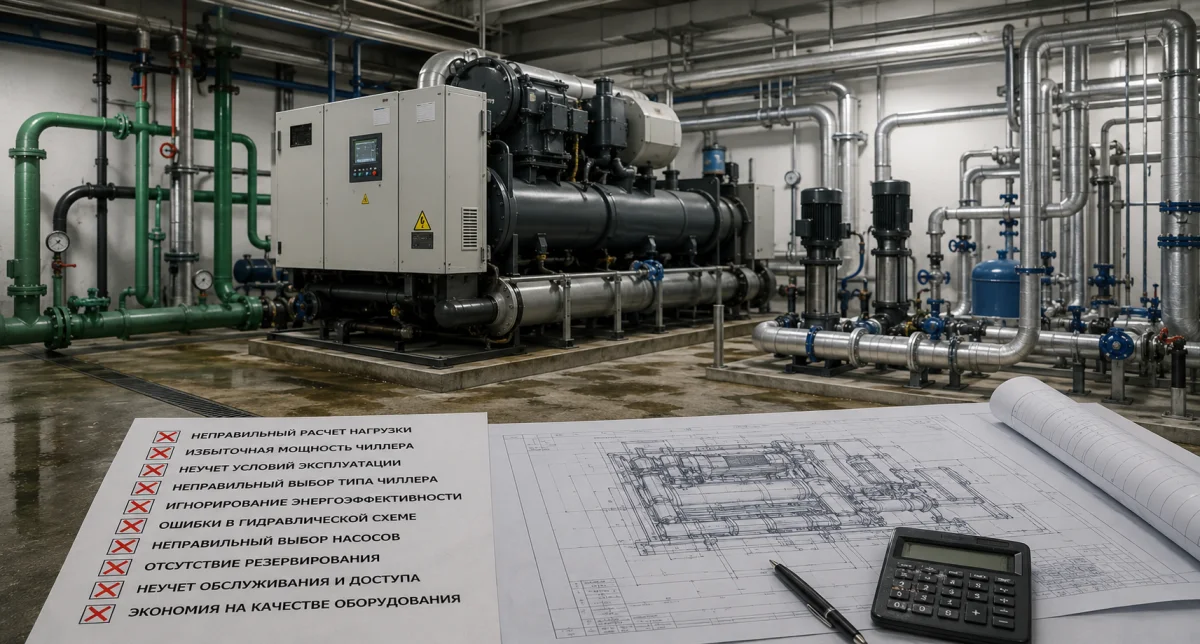
The cooling coil lowers the supply-air temperature. A chilled-water coil receives water or a water-glycol mixture from a chiller. A direct-expansion coil uses refrigerant supplied by a condensing unit.
When the coil surface is colder than the air dew point, moisture condenses and the air is dehumidified. A sloped drain pan, trap and drainage pipe are installed below the coil. Incorrect condensate drainage can cause leakage, odors and microbiological contamination.
Fan section
The fan produces pressure to move air through unit sections, ducts, dampers and terminal devices. Modern units commonly use plug fans with efficient EC motors or motors controlled by variable-frequency drives.
The operating point is selected from the design airflow and total system resistance. Insufficient pressure reduces ventilation, while an oversized fan increases noise and energy use. Speed control can maintain constant airflow or duct pressure as filters become dirty and dampers change position.
Central air conditioner operating principle
- outdoor and, when permitted, return air enter through controlled dampers;
- filters remove dust and protect the equipment;
- the heat-recovery section uses exhaust-air energy when included;
- the heating or cooling coil adjusts the air temperature;
- humidification or cooling modifies the moisture level;
- the fan supplies treated air to the duct network;
- the control system manages sensors, dampers, pumps and safety functions.
Controls and equipment protection
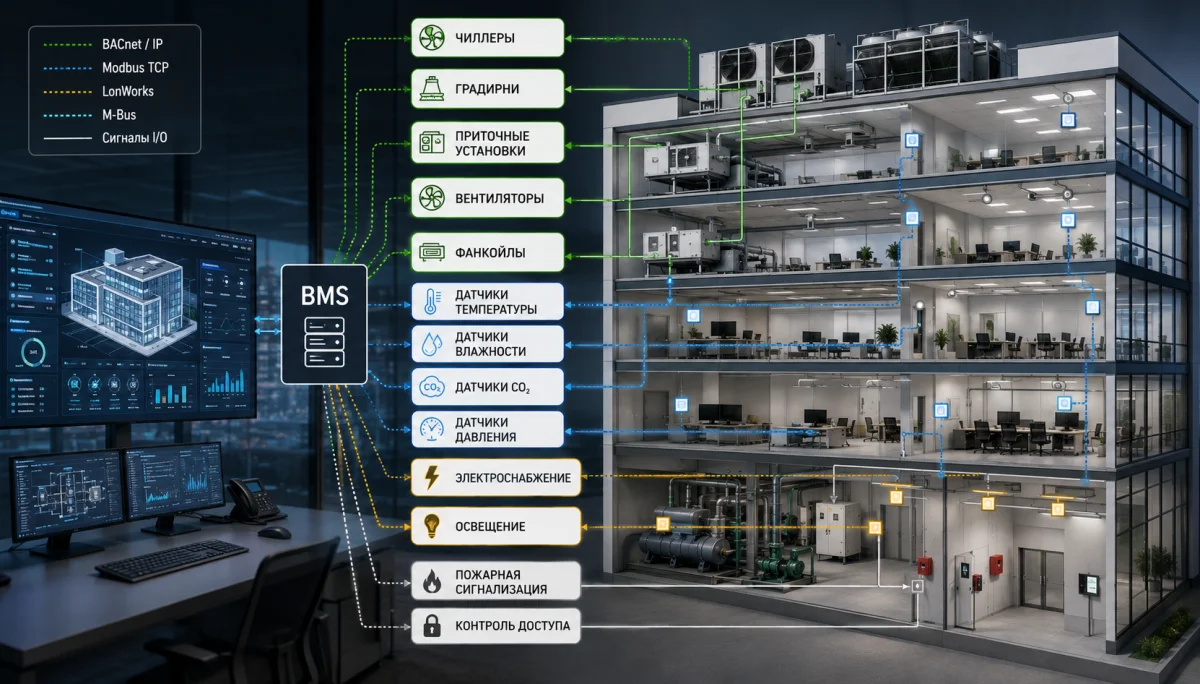
The control system maintains temperature, regulates valves and fan speed and monitors filter pressure drop, fire signals, coil frost risk, pressure and pumps. With BMS integration, operators can view temperatures, alarms and schedules and adjust setpoints.
Selection and design criteria
Selection starts with the required ventilation rate and heat-and-moisture load. Engineers then define outdoor and supply-air conditions, external static pressure, filtration class, heating and cooling sources and the need for heat recovery or humidification. Plant-room dimensions, delivery routes, service clearances, electrical supply and drainage must also be checked.
Section sequence and maintenance
The order of sections depends on the project. A typical arrangement includes an intake section, filters, heat recovery, heating or cooling coils, a fan and sound attenuation. Where humidification is used, sufficient absorption distance and droplet separation are required. The order may change to protect coils, meet temperature conditions or fit the available plant-room layout.
Routine maintenance includes filter replacement, coil and drain-pan cleaning and inspection of drainage, dampers, sensors, actuators and fans. Before winter, technicians test water-coil frost protection and the preheating sequence. Before summer, they confirm cooling capacity, condensate removal and the condition of the cooling coil. Maintenance access must be included in the design rather than left as unused space after installation.
Conclusion
A central air-handling unit is not one standard machine but an engineered sequence of sections for complete air treatment. Its performance depends on module selection, design airflow, heating and cooling sources, ductwork and controls. NIKLAND engineers select and design central air conditioners and ventilation units for the building purpose, Kazakhstan climate, ventilation requirements and future maintenance.