
Odor control
Balanced kitchen exhaust and make-up air prevent odors from entering dining areas.
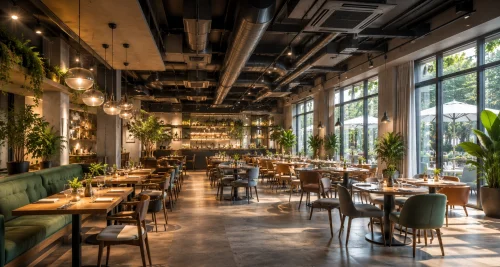
Design, supply, installation and maintenance of ventilation and air-conditioning systems for restaurants, cafés, bars, food courts and commercial kitchens.
Request a project estimate →Food-service properties combine dining halls, kitchens, bars, dishwashing and service spaces with different heat and air requirements. NIKLAND balances exhaust, make-up air and cooling as one system.
Balanced kitchen exhaust and make-up air prevent odors from entering dining areas.
Cooling, airflow and acoustic measures are selected without drafts or excessive noise.
Ventilation removes heat, grease and moisture while supporting cooking equipment operation.
Automation adjusts output to occupancy and kitchen load, reducing unnecessary energy use.
Hoods, grease filtration, ductwork and exhaust fans for cooking areas.
View equipment →Balanced fresh air for kitchens, dining halls, bars and service spaces.
View equipment →VRF, chillers, fan coils and rooftop units for guest and back-of-house areas.
View equipment →Schedules, fan control, alarms, energy monitoring and BMS integration.
View equipment →We review seat count, kitchen equipment, schedules, heat gains and utility limits.
We calculate exhaust, make-up air, cooling, routes and control logic.
We coordinate delivery, installation, balancing, commissioning and documentation.
We clean systems, replace filters and restore operating parameters.
Restaurants and cafés require HVAC systems that maintain guest comfort, remove heat and odors from kitchens and keep airflow stable as occupancy changes. A single property may include dining areas, kitchens, bars, dishwashing zones, cold rooms, storage and service spaces, each with different ventilation requirements. NIKLAND begins with seat count, kitchen equipment, heat gains, operating schedules, exhaust volume and make-up air calculations. Depending on the venue, the solution may include
air handling units, kitchen hoods, grease and odor filtration, chillers, fan coils, VRF systems, rooftop units, air curtains, automation and monitoring. Particular attention is given to supply and exhaust balance, low noise, odor control and maintenance without closing the venue. This helps restaurants and cafés in Kazakhstan maintain comfort, reduce energy use and keep kitchen operation stable.
NIKLAND’s engineering approach to restaurants and cafés begins with an analysis of seating capacity, operating schedules, kitchen processes, equipment heat gains and peak occupancy. For venues in Taraz, exhaust and make-up air volumes are calculated separately for hot kitchens, preparation areas, dining rooms, bars, dishwashing zones, storage rooms and service spaces. Depending on the concept and building conditions, the solution may include kitchen hoods, air handling units, grease and odor filtration, chillers, VRF systems, fan coil units, rooftop units, air curtains and automated controls. The final configuration is selected with regard to cooking equipment, available electrical and heating capacity, duct-routing limitations, noise requirements and access for regular cleaning. Engineers coordinate exhaust ducts, fresh-air routes, drainage, outdoor units and service areas with the architecture and interior design. During installation, particular attention is paid to airflow balance, airtightness, thermal and acoustic insulation, vibration isolation, drainage and commissioning under actual kitchen loads. Automation adjusts system capacity according to occupancy and kitchen operation while maintaining the required pressure difference between cooking and dining areas. After handover, NIKLAND provides scheduled maintenance, hood and duct cleaning, filter replacement, equipment diagnostics, airflow checks and automation testing. This approach helps restaurants maintain guest comfort, stable kitchen operation and controlled energy consumption.
Submit a request — our engineers will contact you within 24 hours and suggest a solution for your facility.